
You’ve picked your trail, packed your gear, and set your date—but are you truly ready? Without a solid hiking exercise plan, even the most scenic paths can turn into painful struggles. The truth is, hiking isn’t just walking: it’s climbing, balancing, carrying weight, and enduring for hours on uneven terrain. And your body needs targeted preparation to handle it all.
A well-structured hiking exercise plan doesn’t just build stamina—it prevents injury, boosts confidence, and transforms grueling ascents into empowering experiences. Based on expert training frameworks, this guide delivers a complete, science-backed system that prioritizes strength, endurance, balance, and recovery. Whether you’re prepping for a weekend day hike or a thru-hike on the PCT, you’ll learn how to train smarter with progressive phases, essential exercises, and real-world simulations.
By the end, you’ll know exactly how to build a personalized plan that matches your goals, fitness level, and trail demands—so you can step onto the trail strong, steady, and prepared.
Build Strength First: The Foundation of Injury-Free Hiking
Most hikers jump straight into long walks or treadmill sessions, but that’s putting the cart before the horse. Strength training is the non-negotiable foundation of any effective hiking exercise plan. Strong muscles, tendons, and joints absorb impact, support heavy loads, and stabilize your body on rocky descents.
Think of your body like a vehicle: endurance is the gas tank, but strength is the suspension. Without a strong frame, every mile takes a toll. If your max squat is 200 lbs and you’re carrying a 40-lb pack, you’re working at just 20% of your capacity. But if your legs are weak, that same load could push you to 50% or more—making every step feel four times harder.
Target the Muscles That Power Your Hike
Hiking is full-body work. These key muscle groups do the heavy lifting:
- Quadriceps and glutes drive you uphill
- Hamstrings and calves control descents and stabilize your stride
- Core (abs, obliques, lower back) supports your spine under load
- Traps and shoulders bear the backpack’s weight
- Hip stabilizers (glute medius, VMO) protect your knees on uneven ground
Ignoring any of these areas increases injury risk and reduces endurance. A balanced strength program ensures no weak links.
Essential Strength Exercises for Trail Performance

Squats: Build Leg Power for Ascents
Squats are the gold standard for hiking prep. They build powerful quads and glutes needed to conquer steep climbs. Start with bodyweight squats: feet shoulder-width apart, chest up, lower until thighs are parallel to the floor. Keep your knees aligned with your toes—never let them cave inward.
Progress by adding dumbbells, a barbell, or a weighted vest. For trail-specific strength, try Bulgarian split squats—one foot elevated behind you. This variation builds unilateral strength, improves balance, and corrects imbalances between legs.
Lunges: Train Unilateral Stability
Lunges mimic the step-by-step motion of hiking. Step forward, lower your back knee toward the ground, and keep your torso upright. This strengthens each leg independently—critical for navigating rocky or uneven terrain.
Add dumbbells for resistance, or perform walking lunges to build endurance. Try reverse lunges (step backward) to reduce knee strain and emphasize hamstrings—key for downhill control.
Step-Ups: Simulate Real Trail Steps
Step-ups are one of the most specific exercises for hiking. Use a box or stair 8–18 inches high. Step up with one foot, driving through the heel, then bring the other foot up. Step down with control.
This movement builds the exact motion used on trails. For advanced training, try lateral step-ups or add weight. Reverse step-ups—stepping down slowly—are excellent for building eccentric strength in your quads, which protects your knees during long descents.
Core and Stability: Carry Your Pack with Control
A weak core leads to lower back pain and poor posture. Planks build endurance in your abs and lower back. Hold a forearm or high plank for 30–60 seconds, keeping your body in a straight line.
Add side planks with leg raises to target obliques and hip abductors—critical for preventing hip drop on sloped trails. Russian twists build rotational strength, helping you stay balanced when shifting your pack.
Try the Vit position: lie on your back, knees bent, heels just off the floor. Draw your knees toward your chest. This activates deep core muscles and hip flexors. Progress by extending one leg at a time.
Upper Body: Prevent Shoulder and Back Pain
Most hikers ignore upper body training—until their shoulders ache. Shrugs with dumbbells strengthen the trapezius muscles, which carry pack straps. Perform 3–4 sets of 12–20 reps with slow, controlled motion—no jerking.
Bent-over rows counteract the forward pull of a backpack by strengthening your upper back and rear shoulders. Farmer’s carries—walking with heavy dumbbells—build grip, core, and shoulder stability under load.
For full-body integration, try the squat curl overhead press: squat, curl the weights, then press them overhead. This mimics the motion of lifting a pack and builds functional strength.
Follow a 12-Week Progressive Training Plan
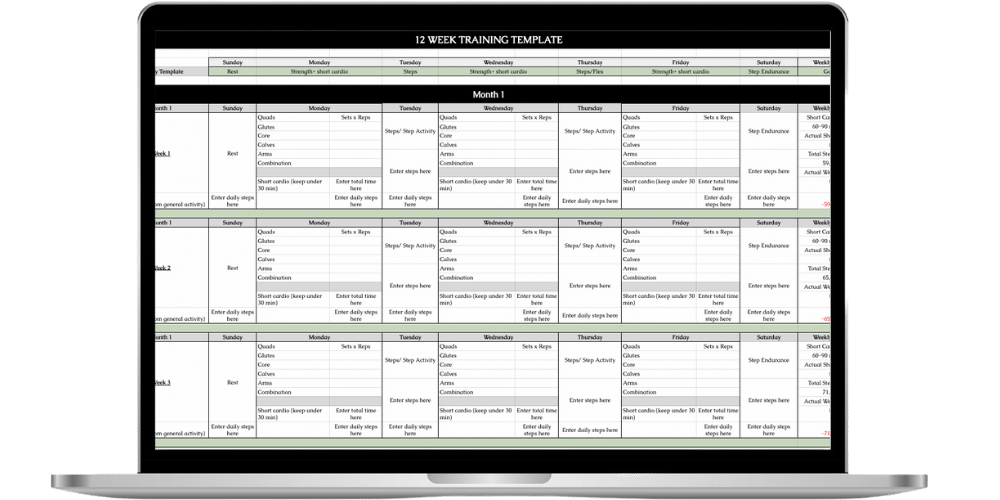
A great hiking exercise plan isn’t random—it follows a clear progression. Jumping straight into long hikes with a heavy pack risks injury. Instead, follow a three-phase system that builds resilience, then endurance, then trail readiness.
Phase 1: Strength Foundation (Weeks 1–8)
Your first two months should focus on building strength. This phase strengthens muscles, tendons, and ligaments—your body’s armor against trail stress.
- Strength training: 2–3 days per week (lower body, upper body, core)
- Cardio: 2–3 days (brisk walking, cycling, stair climbing)
- No heavy packs yet—focus on form and consistency
Start with bodyweight or light weights. Gradually increase resistance. By week 8, you should be comfortable with weighted squats, lunges, and step-ups.
Phase 2: Hybrid Strength & Endurance (Weeks 9–12)
Now shift toward trail-specific conditioning. Maintain strength training but increase reps (12–20) to build muscular endurance. Reduce weight slightly and focus on fatigue resistance.
- Strength: 2x/week, higher reps
- Endurance: 3–4x/week (incline walking, rucking, stair climbing)
- Begin pack training: Start with 50% of your expected pack weight
Add long hikes of 60+ minutes once or twice a week. Use real trails or substitute with treadmill hikes (10–15% incline, 2.7–3.2 mph). This phase bridges gym strength to trail performance.
Phase 3: Taper and Peak (Final 2–4 Weeks)
In the final weeks, simulate actual hiking conditions. Your body needs to adapt to full pack weight, long miles, and elevation.
- All hikes include a loaded pack, progressing to full weight
- Reduce strength training to 1–2 sessions with light or no weight to avoid soreness
- Increase recovery time—your body needs to supercompensate
- Rest more, hydrate well, and prioritize sleep
This tapering phase ensures you arrive at the trailhead fresh, strong, and ready to perform.
Train Endurance Like You Hike: Specificity Wins
Cardio alone won’t prepare you for hiking. You need specific endurance—the ability to walk uphill for hours with a pack. Generic running or cycling helps, but real progress comes from trail-like training.
Hike with a Weighted Pack
This is the single best way to train. Start with 5–10 lbs and increase weekly. Use a backpack with water bottles or sandbags. Aim to reach 50% of your final pack weight by mid-program, then full weight by the end.
- Frequency: 1–2x/week
- Terrain: Trails with elevation are ideal; stairs or treadmill work too
- Goal: Build time on your feet, not just speed
Incline Walking: Train Hills at Home
No mountains nearby? Use a treadmill. Set the incline to 10–15%, speed to 2.7–3.2 mph, and walk for 30–45 minutes.
- Progress by adding weight, increasing time, or raising the incline
- Mimic real hikes by varying the incline every 5 minutes
This builds uphill stamina and strengthens the same muscles used on trails.
Stair Climbing Builds Elevation Power
Stairs are nature’s stairmaster. Use stadium steps, building stairwells, or a stair climber machine.
- Session: 20–30 minutes at moderate pace
- Advanced: Carry a weighted backpack
- Benefit: Directly trains ascent mechanics and quad endurance
Rucking: Loaded Walking for Stamina
Rucking—walking with a loaded backpack—is a military-tested method for building hiking endurance. Advanced hikers aim to complete a 3-mile flat loop with 40 lbs in under 45 minutes.
- Start light (10–20 lbs), increase weight gradually
- Use proper posture: shoulders down, spine neutral, core engaged
- Build volume slowly to avoid joint strain
Prevent Injuries with Balance and Stability Training
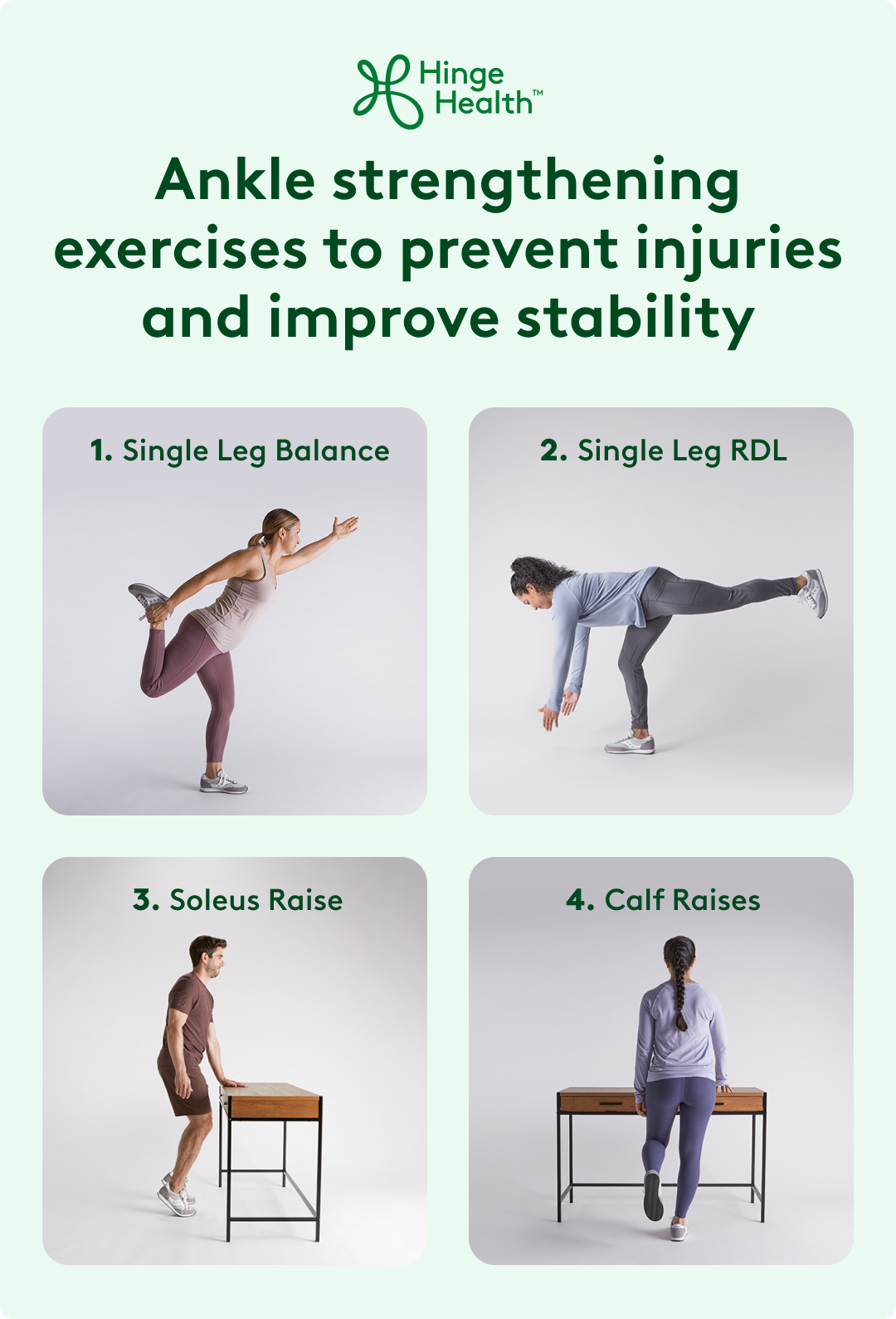
Hiking isn’t flat. Rocks, roots, and loose gravel demand constant balance. Without stability training, you’re at higher risk for ankle rolls, knee pain, and falls.
Strengthen Key Stabilizer Muscles
- VMO (inner quad): Prevents knee collapse inward
- Glute medius: Stops hip drop on uneven terrain
- Tibialis anterior: Controls foot drop and prevents shin splints
- Foot and ankle muscles: Critical for agility and shock absorption
Improve Balance with These Drills
Single-Leg Stands
Stand on one leg for 30 seconds. Close your eyes to increase difficulty. Stand on a foam pad for instability.
Hip Clock Exercise
On one leg, move your opposite leg to 12, 3, 6, and 9 o’clock positions—like hands on a clock. This builds dynamic hip control.
Backward Walking
Walk backward on flat ground or a 15% incline treadmill. This strengthens muscles used in downhill hiking and reduces eccentric load on quads.
Plyometric Hops
- Two-legged hops: Soft landings, absorb impact
- Single-leg hops: Improve ankle stability
- Side-to-side hops: Train lateral agility
- Focus on control, not height—land quietly and stabilize
Recover Smart: Mobility, Flexibility, and Rest
Training hard means nothing without recovery. Tight muscles, poor mobility, and fatigue lead to injury and burnout.
Warm Up Before Every Session
Spend 5–10 minutes preparing your body:
– Brisk walk or stair climb
– Leg swings (forward, side-to-side)
– Arm circles
– Bodyweight lunges with twist
– Controlled hip swings
Cool Down and Stretch
Post-workout stretching maintains flexibility and speeds recovery.
- Pigeon pose: Opens hips and piriformis
- Seated forward fold: Stretches hamstrings and lower back
- Figure-4 stretch: Deep glute and hip rotator release
- World’s greatest stretch: Full-body mobility
- Couch stretch: Targets hip flexors and quads
- Assisted hamstring stretch: Use a strap for deeper reach
Foam Roll for Faster Recovery
Roll these areas for 1–2 minutes each:
– Calves
– Quads
– Hamstrings
– IT band
– Upper back
Foam rolling reduces muscle tightness, improves blood flow, and prevents injury.
Prioritize Rest and Nutrition
- Sleep: 7–9 hours/night
- Hydration: Drink 0.75–1.5 gallons of water daily
- Nutrition: Eat protein and carbs after workouts to repair muscles
- Rest days: At least one full day off per week
Tailor Your Plan to Your Hiking Goal
Not all hikes are the same. Customize your training based on your objective.
Day Hiking (6–8 Weeks Prep)
- Focus: Cardio, leg strength, balance
- Pack weight: 10–20 lbs
- Simulate: 6–10 miles with 1,000–2,000 ft elevation gain
- Training: 3–4 workouts/week, include one long hike
Backpacking (8–12 Weeks Prep)
- Focus: Strength-endurance, joint resilience, pack acclimation
- Pack weight: 30–50 lbs
- Long hikes: 10–15 miles with full pack
- Minimum standards:
- Complete 10–13 miles in under 4 hours
- Fully recover within 24 hours
- Ruck 3 miles with 40 lbs in under 45 minutes
Thru-Hiking (11–12 Weeks Prep)
- Program: 6–7 days/week, progressive volume
- Daily mileage build-up:
- Week 1: 4–5 miles
- Mid-program: 8–10 miles
- Final weeks: 10+ miles daily
- Rucking: Build volume efficiently
- Footwear: Train in your hiking shoes
- Gear testing: Practice packing and adjusting your pack
Adapt for Your Fitness Level
Beginners: Modify, Don’t Skip
- Cut workout volume in half
- Use 50% of recommended weights
- Focus on form and consistency
- Replace HIIT with brisk walking
- Key rule: Never skip—modify instead
Intermediate to Advanced: Push Progress
- Maintain full workout volume
- Add rucking, stair climbing, and long hikes
- Track progress: ruck times, step counts, hike durations
- Use periodized programming with strength and endurance phases
Fuel Your Training and Hikes
Pre-Hike Nutrition (1–3 Days Before)
- Carb load: Add 100–200g carbs daily to fill glycogen stores
- Hydrate: Drink 0.75–1.5 gallons of water
- Electrolytes: Add sodium to maintain balance
During the Hike
- Eat every 30–60 minutes: Nuts, trail mix, jerky, energy bars
- Drink regularly—don’t wait for thirst
- Use electrolyte tablets in water
- Stop and refuel—don’t push through fatigue
Train Your Mind: Mental Toughness Matters
Hiking is as mental as it is physical. Build resilience with:
– Cold showers or breath holds
– Daily hard tasks (e.g., extra reps, early workouts)
– Visualization: Mentally rehearse tough trail sections
– Mindfulness: Stay present during long hikes
– Goal setting: Use benchmarks to build confidence
Prevent Common Injuries
Knee Pain
- Strengthen VMO and glutes
- Avoid sudden mileage increases
- Use proper form on descents
Shin Splints
- Improve tibialis strength
- Wear supportive shoes
- Increase mileage slowly
Ankle Sprains
- Do balance drills
- Strengthen foot muscles
- Use ankle mobility work
Lower Back Pain
- Strengthen core
- Check pack fit
- Maintain upright posture
Shoulder Pain
- Train traps and upper back
- Adjust pack straps
- Avoid slouching
Final Note
A great hiking exercise plan isn’t about extreme workouts—it’s about smart, consistent training that prepares your body for the trail. Start with strength, progress to endurance, and never skip recovery. Train specifically, test your gear, and build mental resilience.
Whether you’re hiking for a few hours or a few months, the right preparation turns challenge into triumph. Now go train—and then go hike.