
You likely use one every night without realizing the technical difference between the hardware and the light it produces. Whether you are driving down a dark highway or hiking a trail, knowing what’s a headlamp helps you choose better gear and stay safe on the road.
This guide clarifies the device versus the beam, traces the evolution from acetylene flames to smart LEDs, and explains global safety standards. You will learn how to maintain your current system and understand the complex optics protecting drivers worldwide.
Headlamp vs Headlight: Clearing the Technical Confusion

Many people use these terms interchangeably, but a precise technical distinction exists within the industry. A headlamp is the physical assembly containing the housing, lens, reflector, and bulb. A headlight refers strictly to the beam of light projected onto the road surface.
This difference matters when ordering parts or discussing safety regulations. If your car light fails, you might replace the bulb inside the headlamp unit. If a driver complains about glare, they are reacting to your headlight beam pattern, not the physical device itself.
Why Regional Terminology Varies
Language usage changes significantly based on geography and context. Understanding these differences prevents confusion when buying parts or traveling abroad.
- United States: “Headlight” is the colloquial preference for both the device and the beam.
- United Kingdom: “Head torch” is the standard term for wearable lights to avoid confusion with vehicle lights.
- Canada and Australia: These regions mix U.S. and U.K. terms, often using “headlamp” in regulations but “headlight” in casual speech.
Practical Consequences of Wrong Terminology
Using the incorrect term can lead to purchasing errors or safety violations. You might buy a replacement bulb when you actually need a full housing unit. Additionally, installing U.S.-spec headlamps in Europe without adjustment can violate strict beam pattern laws.
Always verify if a guide or product listing refers to the device (headlamp) or the light output (headlight). This simple check ensures you get the correct component for your specific vehicle or activity.
Automotive Headlamps: From Acetylene Flames to LEDs
The journey of automotive lighting began long before electricity. Early horseless carriages relied on modified carriage lamps burning candles, oil, or kerosene. These provided minimal light and struggled against wind and rain during travel.
By the late 1880s, acetylene gas systems became popular. These lamps burned combustible gas generated onboard from calcium carbide and water. The flame was bright and wind-resistant, making it ideal for the rough roads of the early 1900s.
The Electric Revolution (1898–1920s)
Electric headlamps first appeared in 1898 on the Columbia Electric Car. Adoption was initially slow because filaments burned out quickly and dynamos struggled to generate sufficient current.
Key milestones transformed this technology rapidly:
* 1908: Peerless made electric headlamps standard equipment.
* 1912: Cadillac integrated the Delco electrical system, combining lighting with ignition.
* 1917: Drivers could finally dim lights via an interior lever without stopping.
* 1924: The Bilux bulb introduced dual filaments for high and low beams in one unit.
The Sealed-Beam Era Stifled Design
In 1940, U.S. regulators mandated 7-inch round sealed-beam headlamps for all vehicles. This rule froze automotive lighting design for nearly two decades. The sealed unit combined the bulb, reflector, and lens into a single replaceable piece.
While this prevented reflector tarnish and simplified aiming, it blocked aerodynamic innovation. Cars could not have sleek front ends, and the entire unit required replacement when a bulb failed. Regulations slowly evolved to allow quad lamps in 1957 and rectangular shapes in 1974.
Modern Replaceable Bulb Systems
A major regulatory shift in 1983 allowed replaceable-bulb, non-standard shape headlamps. The 1984 Lincoln Mark VII was the first U.S. car since 1939 to feature this modern design. This change enabled halogen technology to dominate, offering brighter light and longer life.
Later decades introduced High-Intensity Discharge (HID) xenon lights and eventually LEDs. Today, adaptive digital matrix LED systems use cameras to adjust beams in real time, marking a leap from static illumination to intelligent lighting.
Wearable Headlamps: Hands-Free Lighting Solutions
When asking what’s a headlamp in a non-automotive context, the answer involves portable, wearable gear. Also known as head torches, these devices strap to the head to provide hands-free visibility. They are essential for caving, mining, trail running, and emergency response.
These lights allow users to keep both hands free for climbing ropes, using tools, or performing medical procedures. Unlike vehicle lights, they prioritize weight distribution and battery efficiency over extreme distance.
Key Features for Selection
Choosing the right wearable headlamp depends on your specific activity and environment. Consider these critical specifications before purchasing.
- Brightness: Look for 100–300 lumens for hiking and 500+ for technical climbing.
- Battery Life: Rechargeable lithium-ion offers convenience, while AAA options provide easy backup.
- Weight: Units under 100 grams prevent neck strain during extended wear.
- Water Resistance: An IPX4 rating or higher ensures functionality in rain or snow.
- Red Light Mode: This preserves night vision and prevents disturbing others in group settings.
Practical Application in Night Hiking
Imagine hiking a mountain trail after sunset where phone flashlights fail to illuminate obstacles while your hands are busy. A headlamp keeps your path lit while you climb, check maps, or adjust gear without interruption.
Pro Tip: Angle the beam slightly downward to avoid blinding companions walking behind you. This simple adjustment maintains group safety and visibility.
How Headlamps Work: Optics and Beam Patterns
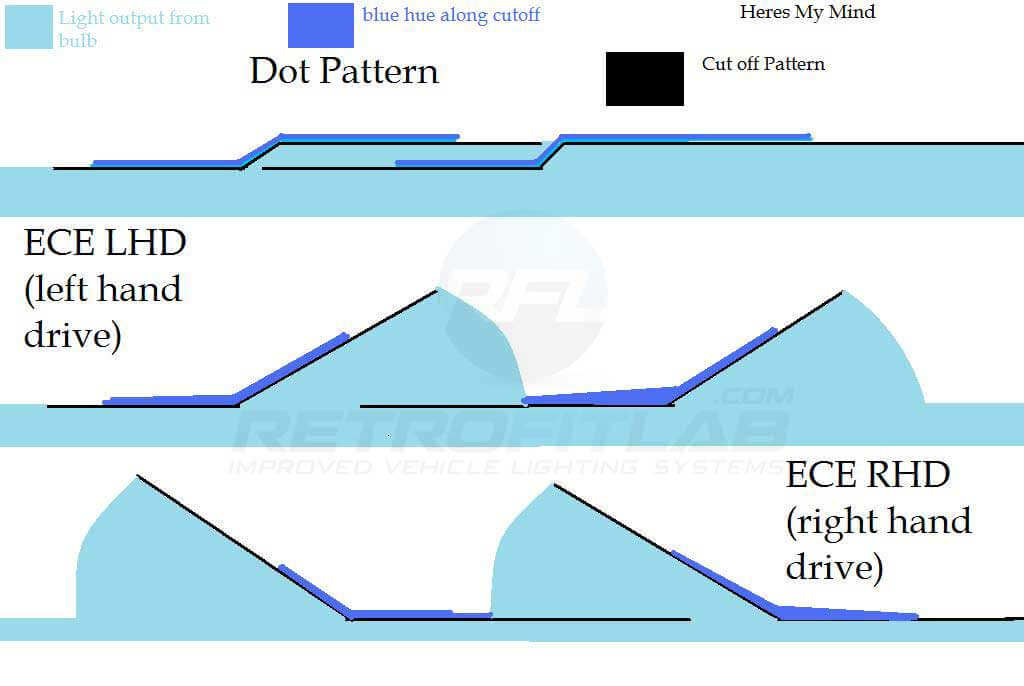
Every automotive headlamp must produce two distinct beams to ensure safety. The low beam illuminates the road without blinding others, while the high beam maximizes forward visibility when the road is clear.
The optical system determines how effectively the light is distributed. Poorly designed optics waste energy and create dangerous glare for oncoming traffic. Understanding these patterns helps you aim your lights correctly.
Low Beam vs High Beam Functions
The low beam, or dipped beam, features a sharp cutoff line. In right-traffic countries, this line dips down and to the right to light roadside signs while keeping the left side dark for oncoming drivers.
The high beam provides a center-weighted, wide spread with no glare control. It should never be used within 500 feet of oncoming traffic. In fog or rain, high beams cause backdazzle by reflecting light off water droplets directly back at the driver.
Reflector vs Projector Optical Systems
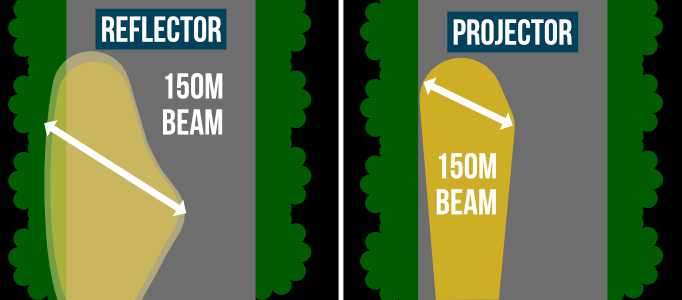
Optical technology varies significantly between vehicle types and eras. Each system has distinct advantages and limitations regarding cost and precision.
- Reflector Headlamps: Light bounces off a shaped reflector into a lens. These are cost-effective and common in halogen systems but offer less precise beam control.
- Projector Headlamps: A lens focuses light with a cutoff shield for sharp edges. These are standard in HID and LED systems, offering cleaner cutoffs and better glare control.
Projector beams are particularly effective for low-beam precision, ensuring light stays on the road rather than in other drivers’ eyes.
Global Standards: ECE vs SAE Regulations

Regulatory bodies define how headlamps perform, leading to significant differences between regions. The Economic Commission for Europe (ECE) standards are used in most industrialized countries outside North America.
The Society of Automotive Engineers (SAE) standards, incorporated into FMVSS 108, govern the United States and Canada. These differing philosophies impact glare control, aiming, and light intensity.
ECE Regulations Prioritize Glare Control
ECE standards enforce strict asymmetric cutoffs to minimize glare for other road users. The aiming angle is linked to mounting height, ensuring that tall trucks do not blind smaller cars.
These regulations also permit higher high-beam intensity, reaching up to 140,000 candela. Daytime Running Lights (DRLs) have been mandatory for new cars in the European Union since 2011 to increase conspicuity.
SAE Standards Focus on Seeing Distance
U.S. regulations historically permit more upward light and glare on low beams compared to ECE. Aiming is independent of mounting height, which can allow lifted trucks to dazzle lower vehicles.
High-beam caps are lower in the U.S., limited to 75,000 candela since 1978. DRLs remain optional, though many manufacturers include them. This approach reflects a driving culture focused on long-distance visibility on open roads.
Risks of Cross-Border Incompatibility
Using Japanese Domestic Market (JDM) or European-spec headlamps on U.S. vehicles can be illegal and dangerous. The beam pattern may dip the wrong way, dazzling oncoming traffic in right-hand drive countries.
If you import a vehicle, you must re-lens or adjust the headlamps to meet local standards. Failure to do so can result in failed inspections and increased accident risk due to improper light distribution.
Hidden Headlamps: A Stylish but Extinct Feature
Hidden headlamps, also known as pop-up lights, were a defining aesthetic of many classic cars. These units sat flush with the bodywork when off and deployed via vacuum actuators or electric motors when needed.
Iconic models like the 1967 Mercury Cougar and 1984 Corvette utilized this design to maintain sleek aerodynamic lines while hiding bulky lighting units. They offered a unique mechanical charm that modern cars lack.
Why Pop-Up Lights Disappeared
Despite their style, hidden headlamps faced insurmountable challenges regarding safety and reliability. International pedestrian protection regulations began prohibiting protruding parts that could increase injury risk during collisions.
Additional factors contributed to their demise:
* Aerodynamics: Modern designs achieve low drag coefficients without moving parts.
* Reliability: Motors and seals frequently failed, leaving lights stuck in the down position.
* Weight: The mechanism added unnecessary mass to the front end.
No mass-market car has used hidden headlamps since the 2004 Honda NSX-R. Modern styling achieves similar sleekness through advanced LED integration without the mechanical complexity.
Maintenance and Safety Tips for Longevity
Proper maintenance ensures your headlamps function safely and legally. Neglect can lead to reduced visibility, failed inspections, and increased accident risk. Regular checks are essential for all vehicle owners.
When to Replace Your Headlamp Unit
Several signs indicate your headlamp system needs attention. Ignoring these warnings compromises your ability to see and be seen at night.
- Diminished Brightness: Caused by lens yellowing or reflector oxidation.
- Flickering or Failure: Indicates a bad bulb, socket, or wiring issue.
- Misaligned Beam: Often occurs after front-end accidents or suspension work.
For sealed-beam units, you must replace the entire assembly. For modern replaceable-bulb systems, swapping the bulb is usually sufficient if the housing is intact.
Preventing Lens Degradation
Polycarbonate lenses yellow over time due to UV exposure and environmental contaminants. This hazing can cut light output by up to 80 percent, severely reducing night visibility.
Apply UV-protective coatings and clean lenses regularly to slow this process. If hazing occurs, headlamp restoration kits involving sanding, polishing, and sealing can restore clarity temporarily.
Critical Importance of Proper Aiming
Misaligned headlamps cause dangerous glare or poor road illumination. You should check your aim every 12 months or after any front-end repair.
Use a wall and tape marks to verify alignment, or visit a professional shop with specialized tools. Proper aiming ensures you see the road without blinding other drivers.
The Future of Headlamp Technology
Automotive lighting is evolving from simple illumination to intelligent communication. Adaptive systems now use cameras and sensors to detect other vehicles and adjust the beam accordingly.
Matrix LED technology allows specific segments of the beam to dim while keeping other areas bright. This enables drivers to keep high beams on continuously without dazzling oncoming traffic.
Regulatory Challenges for Smart Lights
Even advanced systems must comply with strict safety standards like FMVSS 108. The 2024 Tesla Model 3 recall regarding low-beam compliance highlights the complexity of validating software-controlled lights.
Regulators must balance innovation with safety to ensure new technologies do not introduce unforeseen hazards. Rigorous testing remains essential before these systems reach the mass market.
Sustainability Trends in Lighting
The industry is shifting toward more sustainable practices to reduce environmental impact. Longer-lasting LEDs significantly reduce waste compared to frequent halogen replacements.
Manufacturers are also exploring recyclable housing materials and energy-efficient designs. These improvements support the broader goals of electric vehicle range extension and resource conservation.
Frequently Asked Questions About Headlamps
What is the main difference between a headlamp and a headlight?
A headlamp is the physical device containing the bulb and housing, while a headlight is the actual beam of light produced. This distinction is crucial for technical discussions and part ordering.
Can I use European headlamps on a U.S. vehicle?
No, using European-spec headlamps on U.S. vehicles is generally illegal and dangerous. The beam patterns differ significantly, often causing excessive glare for oncoming traffic in right-hand drive countries.
Why did cars stop using pop-up hidden headlamps?
Hidden headlamps were discontinued primarily due to pedestrian safety regulations and reliability issues. Protruding mechanisms posed injury risks and were prone to mechanical failure over time.
How often should I check my headlamp alignment?
You should check your headlamp alignment every 12 months or after any front-end collision. Proper alignment ensures maximum visibility while preventing glare for other drivers.
What causes headlamp lenses to turn yellow?
UV exposure and environmental contaminants cause polycarbonate lenses to oxidize and turn yellow. This degradation reduces light output and can be mitigated with UV coatings and regular cleaning.
Are LED headlamps better than halogen ones?
LEDs offer longer life, better energy efficiency, and often superior beam control compared to halogens. However, they are more expensive to replace if the entire unit fails.
Key Takeaways for Understanding What’s a Headlamp
Knowing what’s a headlamp involves more than just identifying a light source; it requires understanding the device, its history, and its regulatory context. From the early acetylene flames to modern matrix LEDs, these devices have evolved to balance visibility with safety.
Remember that the headlamp is the hardware, while the headlight is the beam it produces. Maintaining proper alignment and cleaning your lenses ensures you comply with global standards and keep everyone safe on the road.
Take action today by inspecting your vehicle’s lighting system. Check for yellowing lenses, verify your beam aim, and consider upgrading to newer technology if your current setup lacks modern safety features.