
Steep inclines and rocky descents become much harder when your knees ache or your balance fails on uneven ground. The right trekking poles and hiking staffs provide essential support to reduce joint strain and boost your endurance significantly.
This guide explains how to choose trekking poles and hiking staffs by matching gear to your specific terrain and hiking style. You will learn about materials, locking mechanisms, and grip types to prevent injury and improve stability.
Match Your Poles to Specific Terrain Types
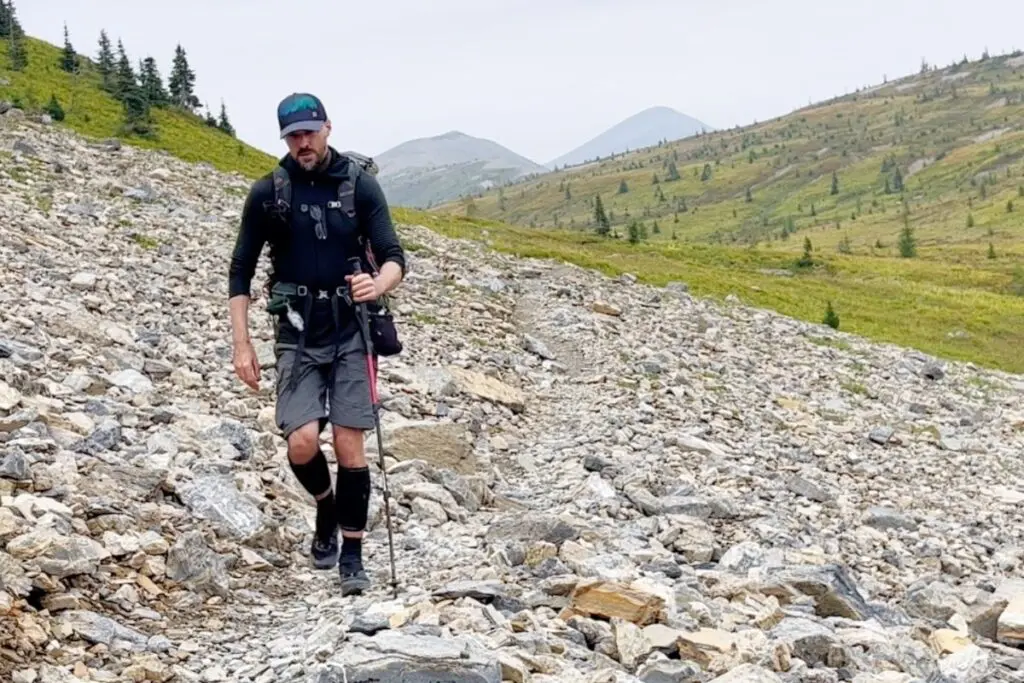
The ideal pole for alpine scrambling differs greatly from one used on flat forest paths. You must select equipment that handles your specific trail conditions effectively.
Dual Poles for Rugged Mountains
Adjustable twin trekking poles offer maximum stability on steep and rugged trails. They excel in mountainous regions with loose scree or during difficult river crossings.
- Distribute weight evenly across both arms
- Reduce knee impact by up to 25 percent on descents
- Engage upper body muscles for extra power
Single Staffs for Moderate Paths
A single hiking staff works well for well-maintained and flat to moderate trails. It is lighter and simpler than dual poles while still helping with basic balance.
- Ideal for low-angle trails and mild support needs
- Often made of wood like ash or hickory
- Best for hikers reducing pack weight
Compare Aluminum and Carbon Fiber Materials
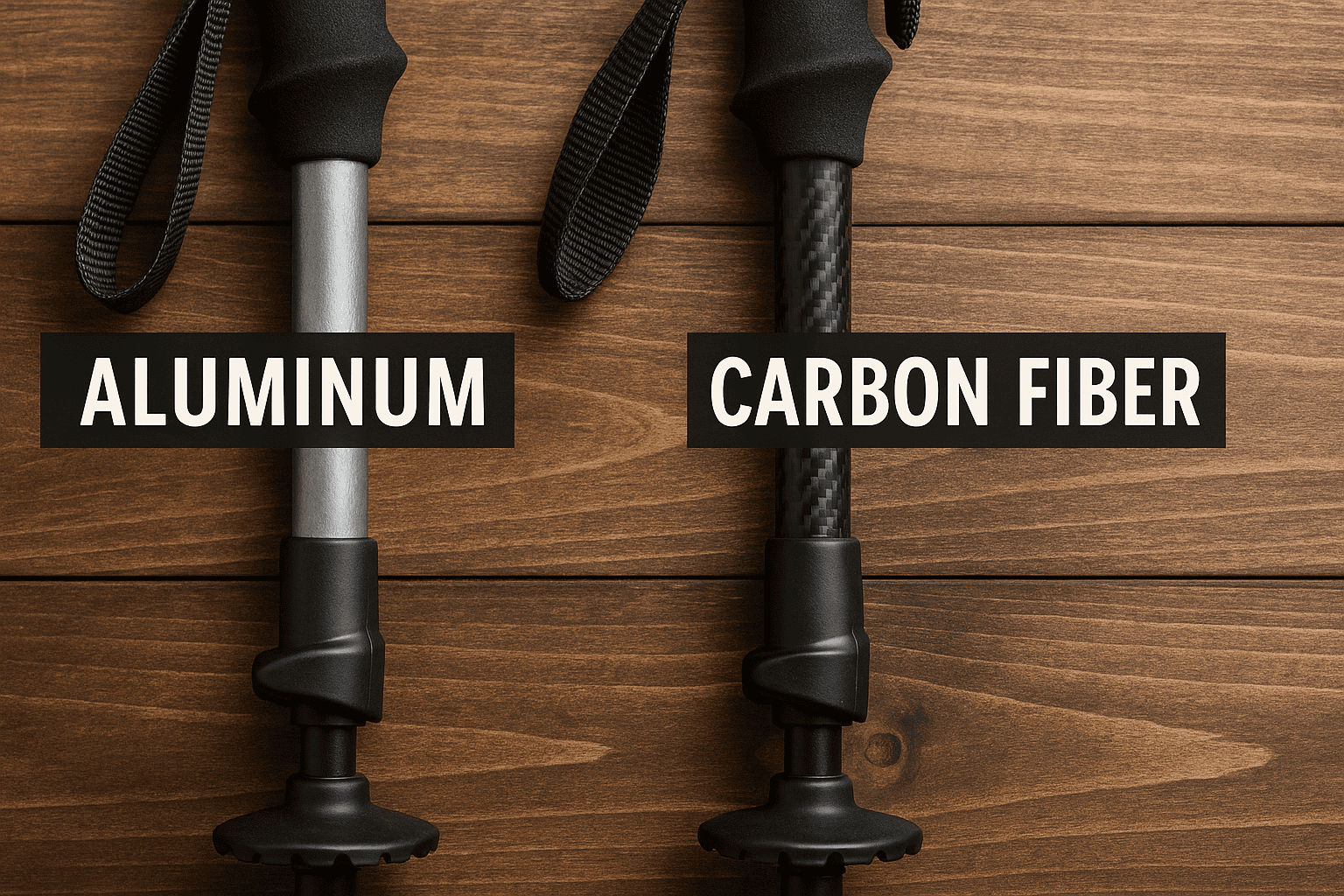
The material you choose affects weight, durability, cost, and vibration damping. These factors determine your comfort over many miles of hiking.
Benefits of Aluminum Poles
Aluminum poles typically use 7075-T9 aerospace grade metal for rugged performance. They are affordable and repairable if bent during a hike.
- Absorb vibrations better than early models
- Ideal for backpackers valuing durability over weight
- Slightly heavier than carbon fiber options
Advantages of Carbon Fiber
Carbon fiber poles weigh up to 30 percent less than aluminum models. They excel at reducing hand fatigue caused by trail shock during long distances.
- Lightweight design saves energy over miles
- Excellent vibration damping for sensitive hands
- Prone to catastrophic failure if cracked
Pro Tip: Avoid hybrid poles with carbon fiber lower shafts as these are more likely to snap under torsion stress.
Select the Right Adjustability System
Adjustable poles let you customize length for uphill, downhill, and flat sections efficiently. Fixed-length poles are lighter but lack this versatility.
Twist Lock Mechanisms
Twist locks tighten by rotating the shaft to secure the pole in place. They are compact and secure when properly tightened before use.
- Can loosen over time or jam with dirt
- Require cleaning and drying before adjusting
- Offer a sleek profile without external levers
Lever Lock Systems
Lever locks use a cam mechanism for fast and one-handed adjustment. They are easier to use with gloves and less prone to slippage.
- Slightly heavier than twist lock designs
- Can bend if over-tightened by the user
- Provide reliable security in wet conditions
Common Mistake: Failing to fully extend or lock both poles can cause a collapsed pole mid-stride and lead to falls.
Determine Correct Pole Length
Most hikers need poles adjustable between 100 and 135 centimeters for proper function. Stand in hiking boots with arms at your sides to find your starting length.
- Bend elbow to 90 degrees when pole tip touches ground
- Shorten poles by 5 to 10 cm for uphill climbs
- Lengthen slightly on steep descents for support
Evaluate Grip Quality and Material
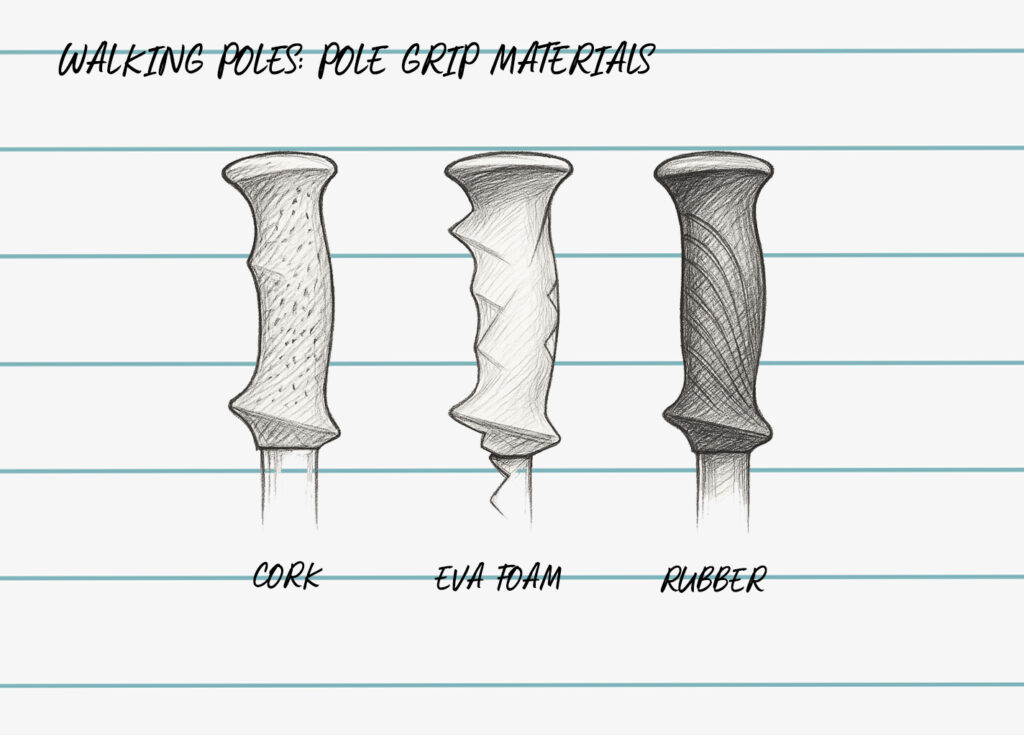
Your hands bear constant pressure so choosing the right grip prevents blisters and numbness. Different materials offer unique benefits for various conditions.
Cork Grips for Comfort
Cork grips mold to your hand over time and wick moisture away effectively. They offer excellent comfort on multi-day hikes in varied weather.
- Biodegradable and natural feeling
- Can crack in extreme dryness
- Ideal for long duration use
Foam and Rubber Options
EVA foam is soft, lightweight, and highly shock-absorbent for sensitive hands. Rubber grips provide superior traction in wet conditions and maximize power transfer.
- Foam absorbs water but dries quickly
- Rubber can cause sweat buildup over time
- Look for extended lower grips for steep descents
Expert Note: Extended lower grips let you choke down on the pole for better control during steep descents.
Test Wrist Straps for Proper Fit
Straps transfer energy from arms to poles and reduce grip strain when adjusted correctly. Poorly fitted straps can cause discomfort or inefficiency.
Adjusting Ergonomic Straps
Modern straps are anatomically shaped to pad the wrist and connect to the palm securely. Hold the pole with straps loose and grip through the strap from below.
- Pull the strap tight from below your hand
- Ensure hand releases freely while strap supports weight
- Avoid stiff or non-adjustable strap designs
Fix This Mistake: Many hikers wear straps like a leash which defeats the purpose. You should push down through the strap rather than just holding the grip.
Understand Basket and Tip Functions
Small parts like baskets and tips have a big impact on traction. The right combination prevents sinking and improves grip on various surfaces.
Removable Baskets for Terrain
Small baskets prevent poles from sinking into soft ground, mud, or snow effectively. Remove them on hard-packed trails to avoid snagging on roots or rocks.
- Essential for winter hiking or trail-breaking
- Prevent sinking in soft conditions
- Easy to swap based on terrain needs
Carbide Tips and Rubber Protectors
Carbide tips dig into rock, ice, and dirt for maximum traction. Rubber tips protect hard surfaces like pavement and preserve the carbide tips underneath.
- Most poles come with hardened steel or tungsten carbide
- Check for replaceable tips to extend pole life
- Carry extra rubber tips as they wear out quickly
Choose Between Single Staff and Dual Poles
Deciding between a single staff and dual poles depends on biomechanics and personal preference. Each option offers distinct advantages for different hikers.
Pros and Cons of Dual Trekking Poles
Dual poles distribute weight evenly and engage upper body muscles for up to 20 percent more calorie burn. They significantly reduce knee impact on uneven terrain.
- Improve balance on rough ground
- Can interfere with bushwhacking or snow trekking
- Higher cost and more gear to manage
When a Hiking Staff Makes Sense
A single hiking staff is simpler and lighter for minimalist hikers. It provides mild support for those with slight balance issues or older hikers.
- Offers natural flex and traditional charm
- Provides less support than dual poles
- Does not engage both arms symmetrically
Best For: Low-angle trails, older hikers needing mild support, or backpackers reducing pack weight significantly.
Check Shock Absorption Features
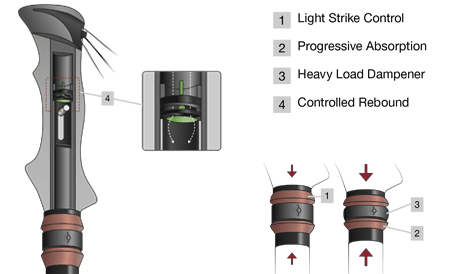
Some poles include internal springs to dampen impact especially on long descents. This feature helps reduce strain on wrists and elbows significantly.
Built-In Shock Systems
Poles with spring-loaded shafts absorb 20 to 30 percent of vibration during use. This reduces strain on joints for hikers with existing pain issues.
- Found in models like Black Diamond Alpine Trek
- Adds 3 to 5 ounces of weight per pole
- Creates potential mechanical failure points
Tip: If you have joint pain test shock-absorbing models. Otherwise prioritize lightweight rigidity for better energy return.
Prioritize Portability and Packability
Consider how you will store poles when not in use on the trail. Collapsible designs offer flexibility for travel and storage.
Collapsible Design and Stowed Length
Most adjustable poles break down to 25 to 35 inches when collapsed for storage. Ensure they fit in your backpack side pockets or can be strapped externally.
- Foldable poles offer ultra-compact storage
- Folding designs are less durable than telescoping
- Best for travel or emergency backup use
Weight Alert: Pairs under 1 pound total are standard while ultralight options dip below 14 ounces total weight.
Evaluate Durability and Warranty
Poles take abuse especially on rocky terrain or icy trails during harsh conditions. Build quality determines how long your investment lasts.
Signs of Build Quality
Look for two-section or three-section designs since fewer joints mean stronger construction. Reinforced stress points near locks and grips indicate high quality.
- Replaceable parts like tips and baskets
- Manufacturer warranty of 1 to 3 years
- Brands like Black Diamond and Leki offer strong service
Warning: Carbon fiber poles can fail suddenly. Inspect regularly for cracks especially after a drop or impact event.
Test Before You Buy Nothing Replaces Feel
Nothing replaces real-world feel when selecting the right poles for your needs. Testing ensures the gear matches your body and hiking style.
What to Assess In-Store
Test poles at an outdoor retailer if possible to check fit and function. Adjust the length to see if the lock stays secure under pressure.
- Grip them to ensure they fit your hand size
- Swing them to check if straps stay put
- Simulate a stride to feel balance and weight
Try This: Walk up and down a ramp or stairs to mimic actual trail movement before buying.
Maintain Your Poles for Longevity
Extend the life of your poles with simple care routines after every hike. Proper maintenance prevents premature wear and mechanical failure.
Cleaning and Storage Tips
Rinse shafts and joints with fresh water after muddy or salty hikes. Dry thoroughly before storing to prevent corrosion or mold growth.
- Disassemble twist locks occasionally to remove grit
- Store unadjusted and dry in a cool place
- Replace worn baskets and rubber tips promptly
Pro Move: Carry a small repair kit with a spare basket, rubber tip, and zip-tie for emergency pole binding on the trail.
Frequently Asked Questions About Choosing Trekking Poles
What length should my trekking poles be?
Stand in hiking boots with arms at your sides and bend elbows to 90 degrees. The pole tip should touch the ground at this angle for optimal length.
Are carbon fiber poles worth the extra cost?
Carbon fiber is worth it for long-distance hikers who need lightweight gear and vibration damping. However, aluminum is better for rugged terrain where durability matters most.
Can I use trekking poles on pavement?
Yes, but you should use rubber tips to protect the carbide points and prevent slipping on hard surfaces. This also reduces noise and vibration on concrete.
Do I need two poles or just one staff?
Dual poles provide better balance and reduce knee strain more effectively than a single staff. A single staff suits minimalist hikers or those on flat, easy trails.
How do I stop my twist locks from slipping?
Clean and dry the internal mechanisms regularly to remove dirt and grit. Ensure you tighten them fully before putting weight on the poles during hiking.
Key Takeaways for Choosing Trekking Poles and Hiking Staffs
Selecting the right support gear requires matching materials and features to your specific hiking environment and physical needs. Whether you choose durable aluminum or lightweight carbon fiber, proper fit and maintenance ensure safety and comfort on every trail.
Focus on grip comfort, locking reliability, and correct length to maximize the benefits of your investment. Test different options in person if possible and prioritize functionality over price to enjoy safer and more efficient hikes.