
The Wind River Mountains in western Wyoming are a backcountry haven for climbers and hikers drawn to raw alpine terrain, soaring granite spires, and pristine wilderness. Stretching over 110 miles through the Bridger-Teton and Shoshone National Forests, this rugged range offers some of the most challenging and rewarding outdoor experiences in the Lower 48. From the legendary rock climbs of the Cirque of the Towers to the remote high-altitude expanse of Titcomb Basin, climbing and hiking in the Wind River Mountains demands self-reliance, solid skills, and deep respect for nature. With no roads cutting through its heart, the Winds remain one of America’s last true wild places—where solitude is not a luxury, but a guarantee.
Whether you’re attempting the Northeast Face of Pingora, backpacking beneath Gannett Peak, or summiting Haystack Mountain for panoramic views, success in the Winds hinges on preparation. This guide delivers everything you need: best times to go, key climbing zones, essential gear, access logistics, safety considerations, and expert tips from seasoned guides and the definitive Joe Kelsey guidebook. Read on to plan a safe, memorable, and transformative adventure in one of North America’s most spectacular mountain ranges.
Choose the Best Season for Your Adventure
Climb and Hike from July to August for Optimal Conditions
The prime window for climbing and hiking in the Wind River Mountains is July 1 to August 31. During these weeks, snowpack at mid to high elevations has largely melted, trails are passable, and alpine lakes are ice-free. Wildflowers bloom across meadows in early July, adding bursts of color to the granite landscape. However, afternoon thunderstorms are frequent, especially in July and early August. These storms roll in fast, bringing lightning, hail, and high winds—making exposed ridges and summits dangerous. To stay safe, start all hikes and climbs by 5–6 AM and aim to descend by noon.
Temperatures can swing dramatically—up to 70°F (21°C) during the day and below freezing at night—so layering is essential. Mosquitoes can also be intense in early July, particularly near lakes and wetlands, but taper off significantly by late August.
Consider September for Fewer Crowds and Cooler Weather
From September 1 to 20, the Winds remain accessible, especially in lower zones like the Cirque of the Towers and Deep Lake. This shoulder season brings cooler temperatures, golden fall hues, and far fewer people. It’s an excellent time for backpackers and climbers who prefer solitude. However, early-season snowstorms can occur, and nighttime temperatures regularly drop below freezing. Be prepared with insulated clothing, a warm sleeping bag (rated to 20°F or lower), and gear for wet, cold conditions.
Avoid June and Winter Unless You’re Experienced
- June and early July: High passes may still be snow-covered, and creek crossings can be treacherous due to snowmelt runoff. Many alpine routes remain inaccessible.
- October through May: The range is locked in deep snow and extreme cold, with high avalanche risk. Only experienced winter mountaineers with proper gear and training should attempt travel during these months.
Explore the Top Climbing and Hiking Zones
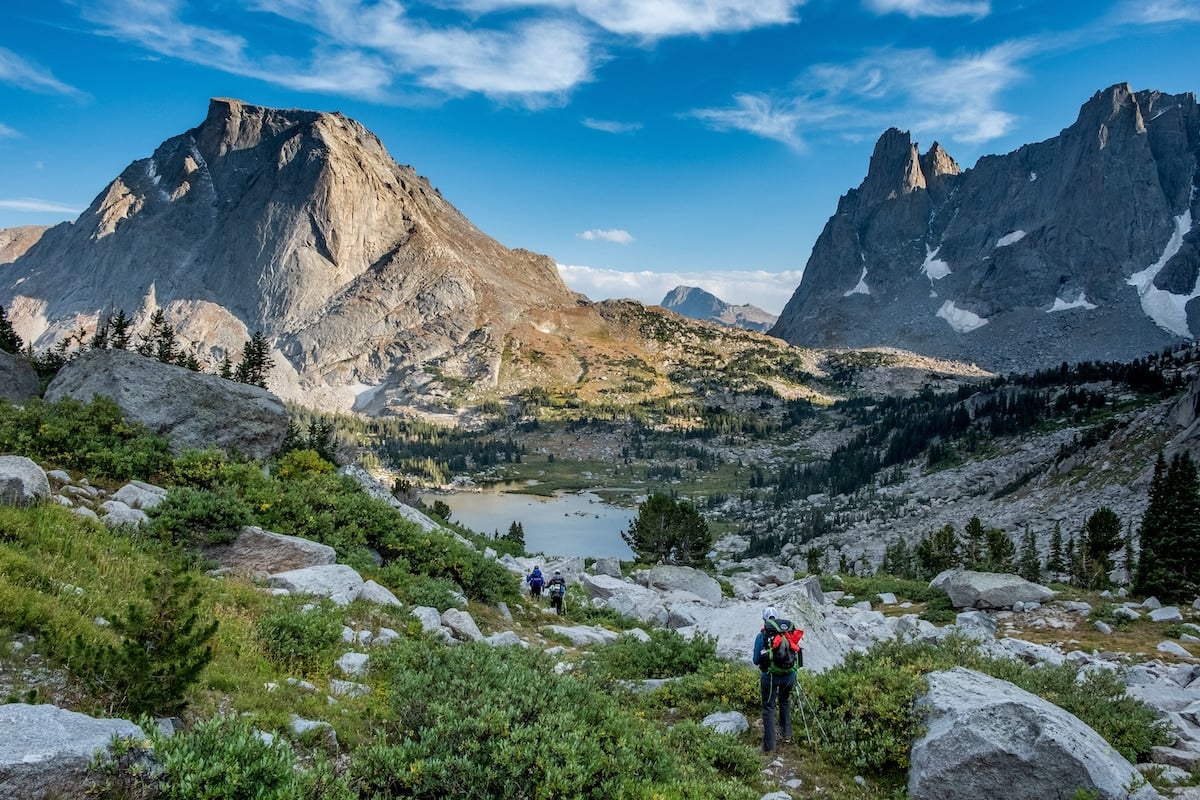
Conquer the Cirque of the Towers: America’s Premier Alpine Rock Destination
The Cirque of the Towers is the crown jewel of Wind River climbing—a dramatic granite amphitheater that hosts two routes from Fifty Classic Climbs of North America: the East Ridge of Wolf’s Head (II, 5.5) and the Northeast Face of Pingora (IV, 5.8). This area is a mecca for alpine trad climbers, offering clean, multi-pitch routes on solid rock with grades ranging from 5.6 to 5.11+.
Must-Climb Routes in the Cirque
- Pingora Peak (12,009 ft): South Buttress (5.6), East Face (5.7), K Crack Variation (5.6)
- Wolf’s Head (12,095 ft): East Ridge (iconic moderate climb), North Face (technical and committing)
- Warbonnet Peak: Striking spire with moderate, well-protected routes
- Sharks’ Nose, Overhanging Tower, Warrior Peak: Additional high-quality climbs with excellent exposure
Access and Camping
- Trailhead: Big Sandy Trailhead (25 miles from Lander or Pinedale)
- Hike-in: ~9.5 miles to Lonesome Lake or Cirque Lake
- Elevation gain: ~3,000 ft
- Best campsites:
- Lonesome Lake: Central but crowded
- Cirque Lake (behind Pingora): Quiet, ideal for East Face climbers
- North side of Texas Pass: Remote, no trail—best for experienced parties
- Big Sandy Area (near Haystack): Less crowded, good for extended stays
Pro Tip: Visit in the first week of July or mid-August to avoid peak crowds.
Climb Efficiently at Deep Lake: Short Approach, Big Reward
Deep Lake, just 6 miles from the Big Sandy Trailhead, offers high-quality alpine rock climbing with minimal elevation gain. At ~10,000 ft, it’s perfect for warm-up climbs, rest-day objectives, or basecamping before tackling the Cirque. The granite is clean, routes are well-protected, and campsites near the shore offer stunning views. It’s also a great spot for anglers—some lakes here hold 18-inch trout.
Immerse Yourself in Titcomb Basin: The Range’s Most Remote Paradise
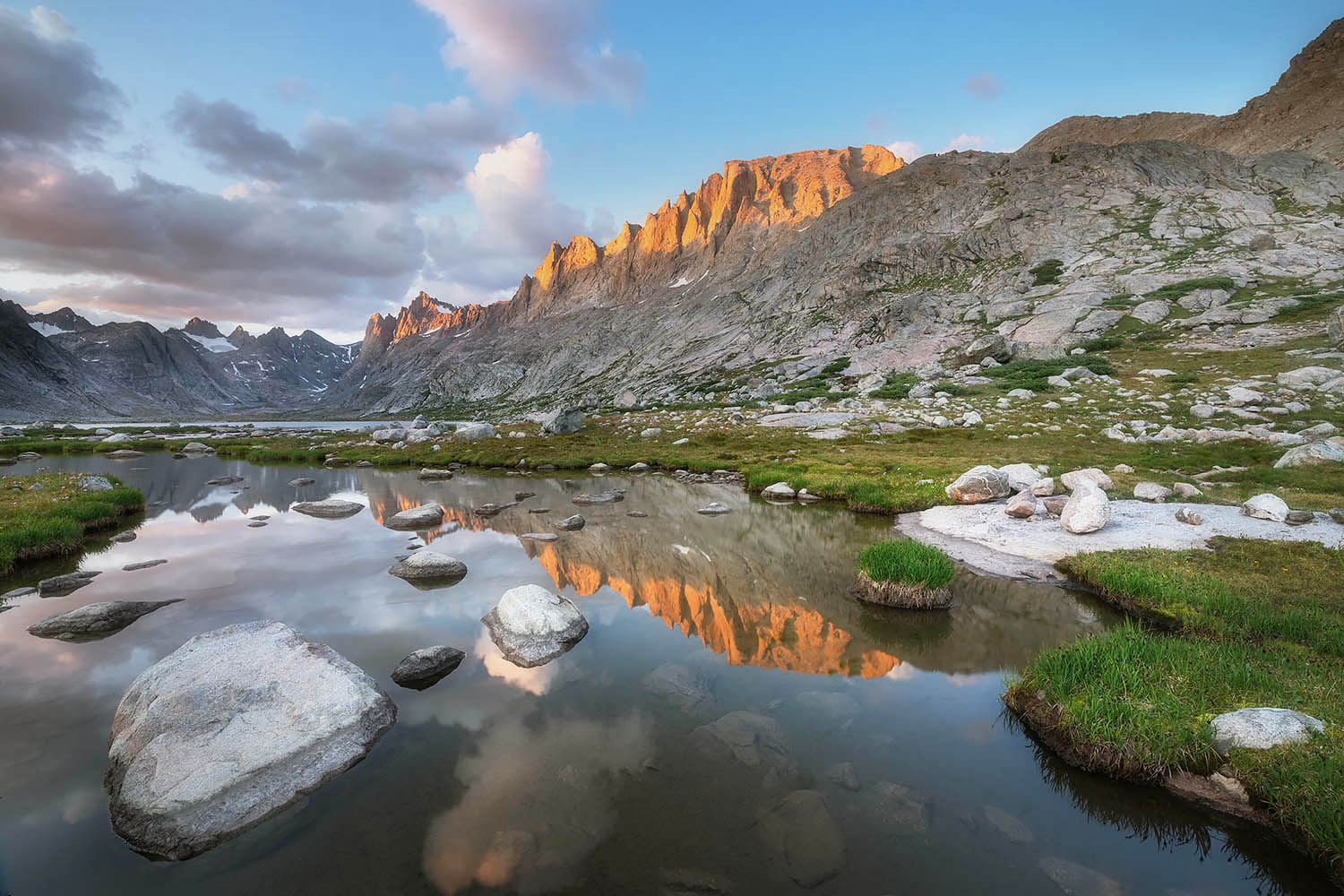
Titcomb Basin is a vast, treeless alpine valley above 10,000 ft, surrounded by rugged peaks and dotted with glacial tarns. It’s the most remote and diverse area in the Winds, ideal for extended backpacking trips. You’ll find walk-up peaks like Mount Sacagawea, technical rock climbs, early-season ice routes, and exceptional fishing. The approach from Elkhart Park Trailhead is long—12–14 miles with significant elevation gain—so plan for 7+ days to fully explore.
Joe Kelsey, author of the definitive guidebook, calls it “the greatest variety in the range.” Fewer climbers venture here, making it a sanctuary for solitude seekers.
Summit Gannett Peak: Wyoming’s Highest and Most Isolated Crown
At 13,809 feet, Gannett Peak is the tallest mountain in Wyoming and one of the most isolated high peaks in the contiguous U.S. Reaching it requires a 6–7+ day expedition through Dinwoody Canyon and across the Dinwoody Glacier. This is serious alpine mountaineering—glacier travel, crevasse rescue skills, and ice axe/crampon use are mandatory. The North Ridge is the most common route (non-technical snow/ice), while the Northeast Ridge involves mixed terrain.
Not for beginners—most parties hire guides or have prior glacier experience. Exum Adventures and Jackson Hole Mountain Guides offer supported trips.
Challenge Yourself on Haystack Mountain: A Classic Alpine Climb

Haystack Mountain (11,978 ft) offers a four-pitch climb on clean granite with dramatic exposure and a totem-pole summit anchor. The approach is relatively short—5.5 miles to Big Sandy Lake, then 1–2 miles to the base—with only ~600 ft of gain to the lake. The route is moderate (around 5.6) but committing, with 360-degree views from the top. It’s ideal for climbers seeking a full-day alpine experience without extreme risk. Often combined with nearby peaks like Steeple Peak or Sundance Pinnacle.
Use the Essential Guidebook: Joe Kelsey’s Climbing and Hiking in the Wind River Mountains
No trip to the Winds is complete without Joe Kelsey’s comprehensive guidebook, the only resource covering technical climbs, hiking routes, and peak bagging in the range.
Why the 3rd Edition (2013) Is a Must-Have
- 448 pages, updated with 200+ new routes since the 1994 edition
- Includes color photos, detailed topos, maps, and access info
- Covers everything from Class 3 scrambles to 5.12 trad
- Trusted by guides and climbers for accuracy
The 2nd edition (1994) is still useful for classic routes, but the 3rd edition is far more complete. Note: The book is climbing-focused—trail descriptions make up only 10–20% of content. Supplement with Gaia GPS, CalTopo, or recent trip reports from Mountain Project.
Master Logistics: Access, Towns, and Travel
Know the Trailhead Roads
- Big Sandy Trailhead (Cirque, Haystack): 25-mile dirt road from Lander or Pinedale. High-clearance vehicle recommended—though sedans have made it.
- Elkhart Park Trailhead (Gannett, Titcomb): 14 miles east of Pinedale on paved road. Large parking lot at 9,380 ft.
No cell service at either trailhead—download maps and routes in advance.
Base Yourself in Lander, Pinedale, or Jackson
- Lander: Gear up at Wild Iris Mountain Sports, stock food at Smith’s, and camp for free at Lander City Park (3-day limit).
- Pinedale: Gateway to Elkhart Park; outfitters sell guidebooks and supplies.
- Jackson, WY: Meeting point for guides, gear rentals at Black Diamond, and air travel hub.
Fly Into Jackson, SLC, or DEN
- Jackson Hole (JAC): 2.5 hours to Lander
- Salt Lake City (SLC): 5 hours, cheaper flights
- Denver (DEN): 6 hours, major airline access
- Riverton (RIW): 30 minutes from Lander, shuttle options available
Tip: Rent a vehicle with ground clearance for the dirt roads.
Stay Safe: Weather, Altitude, and Wildlife
Beat the Storms and Cold
- Afternoon thunderstorms are common—be off ridges by noon
- Temperature swings require layering: synthetic/wool base, rain gear, insulation
- Wind is strong above treeline—carry a buff and shell gloves
Acclimatize to 10,000+ Ft Elevations
- Spend 1–2 days in Lander (5,300 ft) before hiking in
- Hydrate (3–4 liters/day), ascend gradually, rest upon arrival
Watch for Wildlife
- Bears: Use bear canisters, store food 100+ ft from camp
- Moose: Aggressive in September (rutting season)
- Mountain lions, elk: Keep your distance
Follow Leave No Trace Principles
- Camp on rock, gravel, or snow
- Avoid alpine meadows
- Pack out all waste, including toilet paper (use wag bags)
- No campfires—use stoves only
Final Tips for a Successful Trip
- Start early: Begin hikes and climbs by 5–6 AM to beat storms
- Be self-reliant: No cell service, evacuations are slow and expensive
- Carry a satellite communicator (Garmin inReach)
- Know your limits: The Winds are not the place to learn alpine climbing
- Hire a guide if new to multi-pitch or glacier travel
“The summit is for the ego, the journey is for the soul.” – Thomas Gilmore
Climbing and hiking in the Wind River Mountains is about more than peaks—it’s about immersion in one of America’s last great wildernesses. With proper planning, respect for the land, and a spirit of adventure, the Winds will reward you with experiences that last a lifetime.