
You are hiking in the dark and switch your headlamp to red, wondering exactly when to use red light on headlamp for the best results. This specific mode preserves your night vision and keeps your group safe without the harsh glare of white beams.
This guide explains the science behind red light and gives you clear steps for camping, hunting, and emergency situations. You will learn specific times to switch modes to stay safe and avoid blinding your fellow hikers.
Preserve Your Night Vision with Red Light
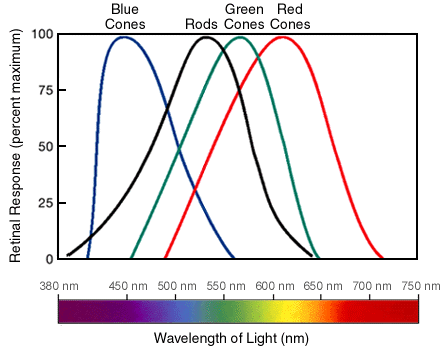
Your eyes use rod cells to see in low light, but these cells are easily overwhelmed by bright white or blue light. Red light has a long wavelength that minimally affects these cells, allowing you to maintain dark adaptation while still seeing your surroundings.
Switch to Red Before Darkness Sets
You should begin using red light about 15 to 20 minutes before you need full night vision. This head start gives your eyes time to adjust without the shock of sudden bright exposure.
If you wait until you are already in total darkness, even a quick flash of white light can reset your adaptation process. It can take up to 30 minutes to fully restore your ability to see in the dark after such exposure.
- Start using red mode during twilight hikes for a smooth transition.
- Avoid white light completely once your eyes begin to adjust.
- Keep your headlamp ready with red mode as the default setting at dusk.
Read Maps Without Losing Adaptation
Reading a map at night with a white beam blinds you and ruins the vision of anyone standing nearby. Switching to red light allows you to see terrain features on your paper map while keeping your night vision intact.
This practice also prevents you from disorienting others in your group who are relying on their own dark adaptation. Some maps may look slightly different under red illumination, so practice reading them before your trip.
- Use red light to trace routes without glare.
- Protect the night vision of your entire hiking party.
- Prevent the temporary blindness caused by sudden white flashes.
Reduce Light Pollution in Camp and Nature

Red light scatters less in the atmosphere than white light, making it less disruptive to both people and wildlife. This quality makes it the ideal choice for group settings and sensitive natural environments where minimizing impact is crucial.
Maintain Campsite Safety Without Glare
When moving around your camp after dark, red light helps you avoid disrupting the night vision of your fellow campers. It prevents the startling effect of sudden bright flashes that can ruin the nighttime experience for everyone.
You can maintain group awareness and navigate safely without creating harsh glare or light pollution. Shining a white beam directly at people, even briefly, can ruin their ability to see in the dark for several minutes.
- Use red mode to pack gear or organize tents at night.
- Walk through camp without waking sleeping neighbors.
- Signal your presence to others without causing visual pain.
Minimize Disturbance to Wildlife
Many animals, including deer and birds, are significantly less sensitive to red light than they are to white light. Hunters and wildlife observers benefit greatly by staying hidden from animal vision while moving quietly.
This reduced visual detection helps you avoid spooking nocturnal species during your observation or hunt. Most mammals have fewer cone cells for detecting red light, which makes red beams much less visible to them.
- Observe animals without altering their natural behavior.
- Move through the woods with a lower risk of detection.
- Respect the natural environment by reducing artificial light impact.
Improve Sleep Quality During Night Operations
Exposure to blue-rich white light at night suppresses melatonin, the hormone that regulates your sleep cycle. Red light has a minimal impact on melatonin production, helping you stay rested during multi-day trips.
Use Red Light in Base Camp Tents
If you need to move around your tent or campsite late at night, activate your red light to avoid disrupting your sleep cycles. This limits the alertness spikes that white light causes, allowing you to return to sleep more easily.
Whether you are checking gear or visiting the restroom, red light keeps your internal clock stable. Astronomers and night-shift workers often use red lighting to stay functional without altering their internal body clocks.
- Navigate your tent interior without waking tentmates.
- Check equipment without triggering full wakefulness.
- Maintain a natural sleep rhythm during overnight adventures.
Navigate Emergency and Tactical Scenarios
Red light is a critical tool in high-stakes environments where visibility, stealth, and situational awareness matter most. It allows operators to function effectively without compromising their position or visual acuity.
Maintain Situational Awareness in Rescue Ops
In search and rescue or emergency response situations, use red light to scan areas without losing your night vision. This allows you to identify hazards and signal teammates discreetly without drawing unnecessary attention.
Red light reduces your silhouette visibility, which is a critical advantage in low-light security operations. You can operate equipment and navigate complex environments while preserving your ability to see in the dark.
- Scan large areas for victims or hazards effectively.
- Communicate with team members using subtle light signals.
- Operate in dangerous areas with reduced visibility to threats.
Avoid Detection in Stealth Missions
Military and law enforcement personnel use red light to navigate without being seen by adversaries. It allows them to operate equipment in darkness and preserve visual acuity during prolonged missions.
In stealth scenarios, your red light should always be dim, as bright red can still be visible at a distance. This rule of thumb ensures you remain undetected while maintaining your own operational capability.
- Move through hostile territory with minimal light signature.
- Read instruments and maps without revealing your location.
- Keep your eyes adjusted for sudden changes in the environment.
Know When Not to Use Red Light
While red light offers significant advantages, it is not always the best choice for every situation. Understanding its limitations regarding depth perception and distance is vital for your safety.
Avoid Red Light for Uneven Terrain
Red light can distort contrast and depth perception, making it harder to navigate rocky or uneven terrain. You may struggle to judge distances accurately or spot trip hazards like roots, holes, or loose stones.
If you must traverse difficult ground, use momentary white light sweeps to check the path, then immediately return to red. This balance ensures you see obstacles clearly while preserving most of your night vision.
- Switch to white light when crossing streams or cliffs.
- Use brief white flashes to identify trip hazards.
- Do not rely on red light for high-speed movement.
Limit Use for Long-Distance Navigation
For trail running or fast-paced hiking at night, red light often lacks the clarity needed for rapid movement. Your peripheral vision is also less effective under red illumination, which can be dangerous on narrow trails.
The best practice is to use white light for active travel and switch to red only when you stop. This ensures you have maximum visibility while moving and preserves your vision when stationary.
- Use white beams for running or fast hiking.
- Reserve red mode for breaks, eating, or resting.
- Prioritize safety over night vision when speed is required.
Optimize Your Headlamp Settings for Best Results

Most modern headlamps include multiple modes, and knowing how to configure them enhances your overall experience. Choosing the right settings ensures you can access red light instantly when needed.
Choose a Dimmable Red Mode
Not all red lights are equal, so look for a headlamp with adjustable brightness levels. Adjustable settings allow you to dial in the exact amount of light needed for your specific task.
Some models offer pulsed or strobe red options, as well as memory settings that recall your preferred mode. Set your headlamp to cycle through modes so red is easily accessible without fumbling in the dark.
- Select a headlamp with variable red intensity.
- Program your device to default to red mode at night.
- Test battery life differences between red and white modes.
Combine Red and White Light Strategically
Adopt a two-mode strategy where you use red light for stationary tasks like cooking or reading. Switch to white light only for movement and active navigation to maximize safety and efficiency.
For example, on a midnight bathroom run, use red to exit the tent, briefly switch to white to check the path, then revert to red. This approach balances visibility with the need to preserve your night vision.
- Use red for all static activities around camp.
- Switch to white only when walking or running.
- Practice switching modes quickly until it becomes second nature.
Best Practices for Effective Red Light Use
Using red light effectively is about timing, context, and awareness of your surroundings. Following simple rules ensures you get the most benefit from this powerful tool.
Follow the Three-Second Rule
If you need light for less than three seconds, use red light exclusively. For longer tasks requiring fine detail, consider using white light with caution and awareness of those around you.
This simple rule helps you develop a habit of preserving night vision whenever possible. It also reduces the chance of accidentally blinding yourself or others during short checks.
- Use red for quick glances at a watch or compass.
- Reserve white light for tasks taking longer than three seconds.
- Train yourself to reach for the red switch first.
Educate Your Group on Red Light Etiquette
Ensure everyone in your party knows why red light matters and when to use it. Shared discipline prevents accidental white-light blinding and creates a more comfortable experience for everyone.
Practice using red light during twilight or low-risk outings to learn how it affects your depth perception. Knowing your gear’s limits ensures you are prepared for any nighttime scenario.
- Brief your group on red light benefits before the hike.
- Demonstrate how to switch modes quickly in the dark.
- Test your ability to read maps under red illumination.
Frequently Asked Questions About Red Light on Headlamps
Does red light really preserve night vision?
Yes, red light has a long wavelength that does not trigger the rod cells in your eyes as aggressively as white light. This allows you to see while maintaining your natural adaptation to darkness.
Can animals see red light from a headlamp?
Most mammals have fewer cone cells for detecting red light, making them less likely to notice it. This makes red light ideal for observing wildlife or hunting without spooking animals.
Will using red light help me sleep better while camping?
Red light has minimal impact on melatonin production, the hormone that regulates sleep. Using it instead of white light at night helps you stay relaxed and return to sleep easily.
When should I avoid using red light on my headlamp?
You should avoid red light when navigating uneven terrain or moving quickly, as it reduces depth perception. Use white light for these activities to ensure you can see obstacles clearly.
How bright should my red light be for reading maps?
Your red light should be dim enough to read by but not so bright that it causes glare. Most modern headlamps allow you to adjust the brightness to find the perfect level for map reading.
Key Takeaways for Using Red Light on Your Headlamp
Knowing when to use red light on headlamp settings can transform your nighttime outdoor experiences. It preserves your night vision, respects the sleep of others, and minimizes your impact on wildlife.
Always switch to red before darkness fully sets in and use it for stationary tasks like reading or cooking. Save white light for active movement on difficult terrain to ensure your safety.
Start practicing with your red light mode on your next evening hike to build confidence. With the right technique, you will navigate the dark more effectively and comfortably than ever before.