
Hiking trails demand stability, and knowing how to choose hiking poles ensures you find gear that reduces joint strain while boosting endurance. Many hikers struggle with heavy or ill-fitting equipment that causes more fatigue than it prevents on the path.
This guide details exactly how to select the right length, material, and grip for your specific hiking style. You will learn to distinguish between aluminum and carbon options while avoiding common sizing errors that lead to discomfort.
Match Poles to Your Specific Hiking Style

Your typical trail conditions dictate the features you need most for a comfortable hike. A day hiker on gentle slopes requires different tools than a thru-hiker crossing rugged mountain passes.
Day Hikers Need Lightweight Simplicity
Focus on lightweight and durable poles if you hike occasionally on established trails. Carbon fiber or aluminum models under 17 ounces per pair work best for these shorter trips.
* Look for ergonomic foam grips and simple wrist straps.
* Choose collapsible three-section designs for easy portability.
* Avoid shock-absorbing systems as they add unnecessary weight.
Pro Tip: Test the pole swing rhythm on pavement before buying. If they feel clunky here, they will feel worse on rough trails.
Backpackers Require Adjustability and Packability
Multi-day trips demand adjustable and collapsible poles that fit inside or strap securely to your backpack. Three-section designs with twist or lever locks allow precise length changes between ascents and descents.
* Shock-absorbing models reduce knee impact over long distances.
* Aim for a total weight under one pound per pair to save energy.
* Carbon fiber reduces fatigue but costs more than aluminum options.
Mountaineers Must Prioritize Durability
Scrambling over scree or post-holing in snow places extreme stress on your gear. Opt for strong aluminum shafts made from 7075-T6 or 7000-series alloy instead of carbon fiber.
* Select aggressive rubber tips or metal baskets for snow and mud.
* Choose cork or textured rubber grips to handle sweat and cold.
* Ensure lever locks are secure for confidence on technical terrain.
Determine the Right Pole Length for Your Height
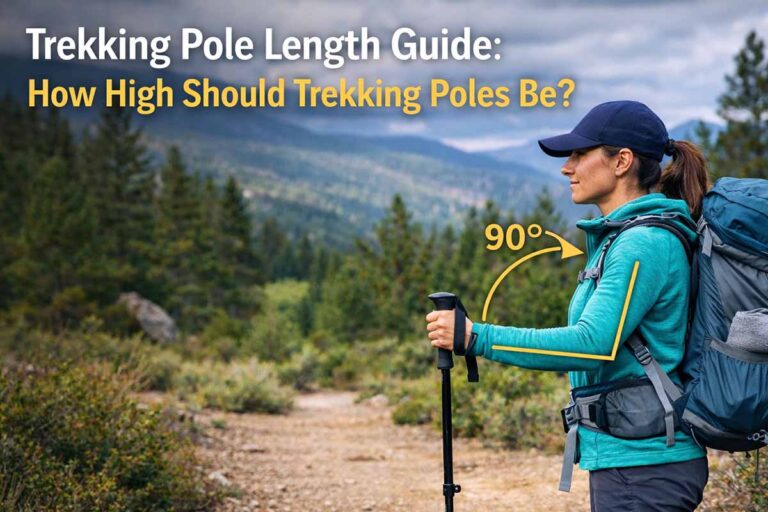
Pole length directly affects your posture, efficiency, and joint protection on the trail. Using poles that are too long or short causes balance issues and shoulder strain.
Use Height-Based Sizing as a Starting Point
Stand straight with the pole tip on the ground to check your baseline fit. Your elbow should bend at a 90-degree angle when holding the handle comfortably.
* Hikers 5’4″ and under need 110–115 cm poles.
* Those between 5’5″ and 5’8″ fit 115–120 cm models.
* Heights from 5’9″ to 6’0″ require 120–125 cm lengths.
* Anyone 6’1″ or taller should look for 125–130 cm poles.
Adjust for Terrain Uphill vs Downhill
Change your pole length as the trail elevation shifts to maintain proper biomechanics. Adjustable poles ranging from 110 to 135 cm suit most hikers best for this versatility.
* Shorten poles by 5–10 cm on steep climbs for powerful pushing.
* Extend poles 5–10 cm on downhills to reduce knee strain.
* Adjust until your forearm is parallel to the slope for optimal length.
Choose the Best Shaft Material for Durability
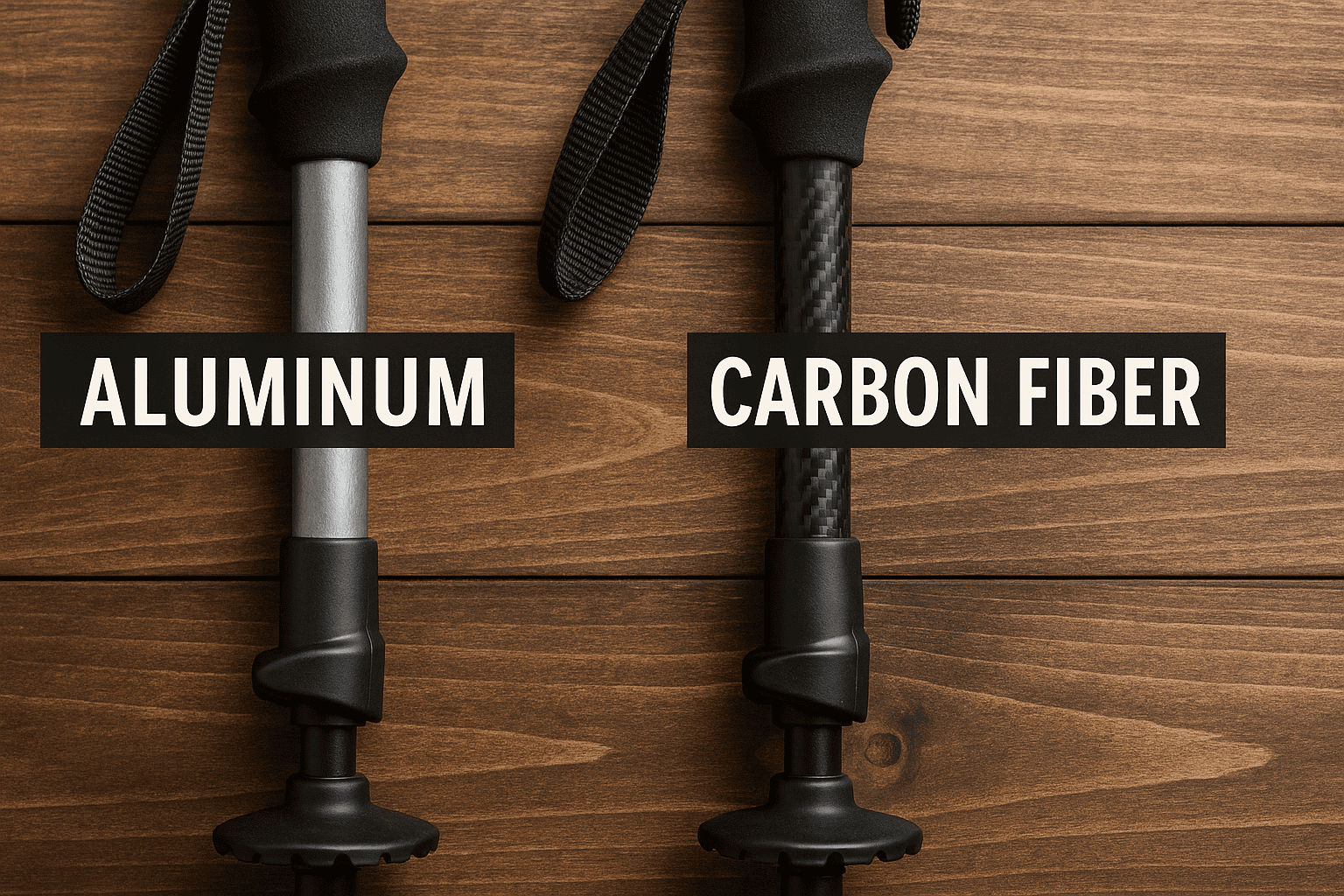
The shaft material determines the weight, strength, and vibration control of your hiking poles. Aluminum and carbon fiber offer distinct trade-offs for different users.
Aluminum Offers Durability and Affordability
Aluminum poles made from 6061 or 7075 alloy are tough, flexible, and budget-friendly for most hikers. They absorb vibrations well and resist shattering on sharp rock impacts.
* Ideal for rocky trails, winter use, or heavier backpackers.
* Heavier than carbon fiber which adds fatigue over miles.
* Higher-grade alloys offer better strength-to-weight ratios.
Carbon Fiber Provides Lightness and Stiffness
Carbon fiber poles significantly reduce arm and shoulder fatigue by weighing 20–30% less than aluminum models. They are stiff, transmit power efficiently, and resist corrosion completely.
* Best for long-distance hikers and those with joint sensitivity.
* More expensive than aluminum options on the market.
* Can fracture under sudden side impacts between rocks.
Pro Tip: Pick models with mixed construction if you want carbon lightness with aluminum durability in the lower sections.
Evaluate Grip Materials and Shape Comfort
Your hands spend hours on these grips, so the right material prevents blisters and numbness. Choosing the correct shape stops fatigue before it starts.
Cork Grips Are Breathable and Moldable
Cork grips warp slightly to your hand shape over time and wick moisture effectively. They feel warm in cold weather and offer a premium tactile experience.
* Ideal for multi-day hikes and warm climates.
* Can degrade if left wet for long periods without drying.
* More expensive than standard foam alternatives.
Foam Grips Provide Cushioning and Durability
EVA or polyurethane foam provides plush cushioning that helps hikers with wrist pain. It is lightweight, inexpensive, and performs well in both wet and dry conditions.
* Best for day hikers and budget-conscious buyers.
* Maintains a consistent feel without molding to hands.
* Easy to clean and replace if damaged during use.
Rubber Grips Deliver High Traction
Rubber or silicone grips offer maximum hold in wet or steep conditions where security matters most. Some include textured patterns for extra control on slippery surfaces.
* Use for secure holds on technical descents or icy trails.
* Can feel sticky in heat and may cause chafing.
* Often found on mountaineering or Nordic walking poles.
Understand Locking Mechanisms for Safety
Pole length adjustments rely on locking systems that must hold tight under pressure. A failed lock mid-hike can lead to injury or significant frustration on the trail.
Twist Locks Are Simple and Reliable
Twist locks require rotating the shaft section to tighten or release the mechanism securely. When properly secured, they are strong and have a low profile design.
* Clean with water and dry thoroughly to prevent slipping.
* Check tightness frequently during your hike.
* Avoid over-tightening which can crack the shaft.
Lever Locks Are Fast and Secure
Lever locks use a camming lever to clamp the shaft quickly and effectively. They are faster to adjust and easier to use when wearing thick gloves.
* High-quality models are extremely secure against slippage.
* Mechanism can bend if impacted against rocks.
* Best for frequent adjusters and cold-weather hikers.
Consider Wrist Straps and Ergonomics
Straps transfer power from your hands to the poles and prevent accidental drops. Poorly designed straps cause chafing or restrict blood flow to your fingers.
Look for Padded Adjustable Straps
Top straps should be wide, padded, and adjustable to fit your wrist snugly. Force applies through the strap rather than your fingers to reduce hand fatigue.
* Adjust so the strap runs across your palm comfortably.
* Avoid narrow, stiff straps that dig into skin.
* Select breathable mesh or quick-dry materials for comfort.
Check Handle Shape and Angle
Ergonomic handles with a slight forward curve align your wrist naturally. This reduces strain compared to straight grips that force a bent-wrist position.
* Angled grips promote a neutral wrist position.
* Helpful for those with carpal tunnel or arthritis.
* Ensures efficient power transfer during each step.
Evaluate Shock Absorption Features
Some poles include internal springs or dampeners to reduce impact on joints during downhill travel. These features offer specific benefits for certain types of hikers.
Joint Protection on Descents
Shock-absorbing poles lessen stress on knees, hips, and wrists over long downhill stretches. The cushioning effect feels smoother on hard-packed trails or rocky descents.
* Useful for hikers with existing joint pain.
* Helpful when carrying heavy loads downhill.
* Provides a smoother ride on rigid surfaces.
Added Weight and Bounce Drawbacks
The mechanism adds 3–6 ounces per pair and may create a slight delay in pole placement. Some users report reduced feedback and precision on technical terrain.
* Not essential for flat or uphill hiking sections.
* Can wear out over time with heavy use.
* Consider only if you hike steep terrain frequently.
Pick the Right Tips and Baskets
The bottom end of your pole matters especially on soft or slippery surfaces where traction is key. Proper tips ensure stability on various ground types.
Carbide Tips Are Sharp and Durable
Most poles come with tungsten-carbide tips that grip rock, ice, and hard soil effectively. Keep them sharp for the best performance on the trail.
* Replaceable when worn down from use.
* Avoid walking on pavement to prevent dulling.
* Essential for rocky and icy conditions.
Use Baskets in Snow or Mud
Removable baskets prevent poles from sinking into soft ground during your hike. Small baskets work for muddy trails while large ones are essential for deep snow.
* Carry screw-on baskets if hiking in variable conditions.
* Remove baskets on rocky trails to prevent catching.
* Store them in your pack until needed for soft ground.
Compare Top Brands and Value Options

Not all hiking poles are created equal regarding engineering and support. Trusted brands offer better warranties and customer service for your investment.
Black Diamond Offers Reliability
Known for durable lever locks and quality ergonomics with a lifetime warranty. Popular models include the Trail Pro and Distance Z for serious hikers.
* Best for those wanting durability and serviceability.
* Innovative designs for various trail conditions.
* Strong reputation in the hiking community.
Leko Provides Precision Engineering
This German brand features smooth twist locks and ergonomic designs for comfort. They offer interchangeable tips and a glove-like grip fit.
* Popular models include Makalu and Micro Vario.
* Focus on precision and build quality.
* Excellent for technical hikers.
Budget Options Exist for Casual Use
Brands like MSR, Coleman, and Hiker Hunger offer functional poles at lower prices. Good for casual use but may lack refined features or durability.
* Check reviews for lock reliability before buying.
* Suitable for occasional hikers on gentle trails.
* May require replacement sooner than premium brands.
Avoid Common Buying Mistakes
Even experienced hikers make errors when selecting poles for their next adventure. Steer clear of these pitfalls to ensure satisfaction with your purchase.
Skipping the Fit Test
Never buy poles without testing the grip and swing in a natural walking position. Check if your wrists stay neutral and if the rhythm feels smooth.
* Hold them as if you are walking on a trail.
* Check return policies if buying online.
* Ensure the weight feels balanced in your hand.
Ignoring Packability Requirements
Ensure poles collapse to a length that fits your specific pack configuration. Some backpacks have designated pole sleeves while others require external strapping.
* Aim for collapsed length under 25 inches.
* Check compatibility with your current gear.
* Consider how you will carry them when not in use.
Final Tips for Long-Term Pole Care
Once you have chosen your poles, maintain them properly for lasting performance on every hike. Proper care extends the life of your investment significantly.
Clean After Every Hike
Rinse off mud, salt, or sand especially from locks and joints after each use. Dry thoroughly before storing to prevent corrosion or mechanism failure.
* Use water to clean dirt from crevices.
* Inspect tips and baskets for wear.
* Ensure all parts are dry before packing away.
Store Properly and Replace Parts
Keep poles unlocked and dry in a cool place to protect internal components. Extended compression can degrade shock systems or seals over time.
* Change carbide tips, grips, or straps as needed.
* Many brands sell replacement kits for repairs.
* Inspect locks regularly for signs of wear.
Frequently Asked Questions About Choosing Hiking Poles
What is the correct angle for hiking pole height?
Your elbow should bend at a 90-degree angle when the pole tip is on the ground and you are standing straight. This baseline works for flat terrain, but you should adjust shorter for uphill and longer for downhill sections.
Are carbon fiber poles better than aluminum?
Carbon fiber is lighter and reduces fatigue but can shatter on sharp impacts. Aluminum is heavier but more durable and flexible, making it better for rocky terrain or budget-conscious hikers.
Do I need shock-absorbing hiking poles?
Shock absorption helps reduce stress on knees and wrists during long downhills. However, it adds weight and can feel spongy, so it is only recommended for hikers with joint issues or those carrying heavy loads.
How often should I replace my pole tips?
Replace tungsten-carbide tips when they become rounded or dull, as sharp tips provide essential traction. Frequency depends on usage, but inspect them before every major hike for wear.
Can I use hiking poles on pavement?
You can use them on pavement, but it will dull the carbide tips quickly. Consider using rubber tip covers if you plan to walk on roads frequently to preserve the metal tips.
Key Takeaways for Choosing the Right Hiking Poles
Selecting the right hiking poles comes down to matching features to your specific needs regarding length, material, and grip. Whether you are a weekend warrior or a trail veteran, the right pair makes every step easier and safer.
Take the time to test different options and compare brands before investing in your gear. Your body will thank you mile after mile with reduced strain and improved stability on the trail.