
Imagine settling into your tent after a long day of hiking, only to realize your phone is dead, your fan won’t run, and it’s too hot to sleep. Without reliable electricity for tent camping, even the best outdoor adventures can turn uncomfortable. Whether you’re camping in the Arizona desert or a shaded forest, access to power can make a huge difference in comfort, safety, and convenience.
Thankfully, modern camping doesn’t mean going completely off-grid. From solar-powered stations to campsite hookups, there are practical and safe ways to bring electricity into your tent. This guide breaks down every option, including portable power stations, solar generators, gas generators, and electrical hookups, so you can choose the right setup based on your needs, budget, and location. You’ll also learn how to connect safely, avoid common hazards, and plan for power in any environment.
Choose the Right Power Source
Match Your Needs to the Right Solution
Not all campers need the same amount of power. Your choice depends on what devices you plan to use and where you’re camping.
Start by listing your essential devices and their wattage. This helps avoid overloading your system and ensures you pack the right gear.
- Low power needs (phones, LED lights, small fans): Use a portable power station or battery-powered devices.
- Medium power needs (mini-fridge, multiple devices, CPAP machine): Add solar panels or use campsite hookups.
- High power needs (air conditioner, coffee maker, electric kettle): Rely on gas generators or 30/50-amp campsite connections.
Portable Power Stations: Silent and Safe

These battery-based units are ideal for tent campers who want clean, quiet power without fuel.
Best for: Off-grid trips, family camping, eco-conscious users
Top features:
– Recharge via solar, car outlet, or wall plug
– No emissions, making them safe to use near tents
– Powers phones, lights, mini-fridges, and small electronics
What to watch:
– Limited capacity based on watt-hours (Wh) rating
– Recharge time varies (solar takes 4–12 hours)
– Higher upfront cost ($200–$1,000)
Popular models like Jackery, EcoFlow, and Bluetti offer 300–2000Wh capacity, enough for 1–3 days of light use.
Solar Generators: Sun-Powered Freedom
A solar generator combines solar panels with a battery to store energy during the day for use at night.
Best for: Sunny climates like Arizona, long off-grid stays
How it works:
1. Solar panels collect sunlight
2. Energy charges a built-in or connected battery
3. Power is available anytime, even after dark
Pros:
– Zero fuel costs
– Silent and emission-free
– Sustainable and renewable
Cons:
– Slower charging on cloudy days
– Needs direct sun exposure since shade reduces efficiency
– Panels must be positioned correctly
For best results, pair a 100W–200W solar panel with a 500Wh+ power station. In Arizona’s bright sun, this combo can fully recharge in 4–6 hours.
Gas Generators: High Power, High Noise

When you need serious wattage, such as for an air conditioner or electric stove, a gas generator delivers.
Best for: Base camps, group camping, hot climates
Output range: 1,000W–4,000W
Fuel types: Gasoline or propane
Advantages:
– Continuous power as long as fuel lasts
– Can run multiple high-draw appliances
– Works day or night, rain or shine
Critical safety rules:
– Never use inside a tent or enclosed space because carbon monoxide is deadly
– Place at least 20 feet from your tent, downwind
– Use only in well-ventilated outdoor areas
Also consider noise levels. Many campgrounds limit generator use to specific hours. Inverter generators (like Honda EU2200i) are quieter and more fuel-efficient.
Campsite Hookups: Reliable Grid Power
Many RV parks and developed campgrounds offer electrical outlets, perfect for longer stays.
Connection types:
– 30-amp: Common for most tent campers
– 50-amp: For high-demand setups (e.g., multiple coolers, AC units)
How to connect:
– Use a proper 16-amp rated hook-up cable
– Plug into the campsite bollard (power post)
– Power flows to a distribution board inside your tent
Benefits:
– Unlimited power
– No need to carry heavy equipment
– Ideal for extended trips
Cost note: Some campgrounds charge extra for electricity, so always check when booking.
Avoid Dangerous Mistakes
Never Use Household Extension Cords
Standard indoor extension cords are not safe for camping electricity.
Why they’re dangerous:
– Not weather-resistant
– Lack RCD (shock protection)
– Can overheat if coiled or overloaded
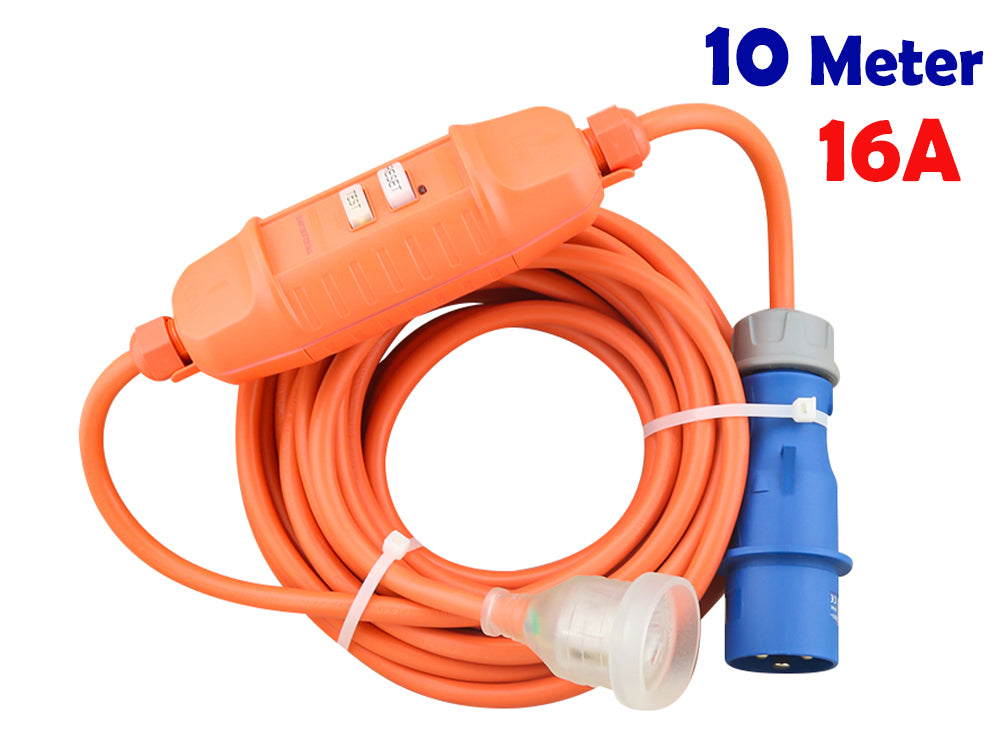
Instead, use a proper camping hook-up set:
– Orange, 25-meter cable (high visibility)
– 16-amp rating
– Built-in RCD and MCB safety devices
These are designed for outdoor use and prevent electric shock and fire hazards.
Prevent Cable Overheating
A coiled cable can overheat and cause a fire, even if it looks fine.
Always:
– Fully uncoil the cable before use
– Lay it flat, away from foot traffic
– Keep connections dry and elevated off wet ground
Inspect for damage before each trip. Frayed wires or cracked plugs are fire risks.
Test Safety Devices Every Time
All quality hook-up sets include:
– RCD (Residual Current Device): Cuts power if a fault is detected
– MCB (Miniature Circuit Breaker): Stops overloads
Test before use:
1. Press the RCD test button. Power should cut immediately.
2. Flip the MCB to “on.” It should stay on.
3. If either fails, do not use the cable.
This simple step prevents electric shocks and equipment damage.
Set Up Your Tent for Power

Plan Your Pitch Early
When arriving at a powered campsite, choose your tent location first, not last.
Tips:
– Measure distance from the bollard to your tent
– Ensure your 25-meter cable can reach comfortably
– Avoid stretching or using multiple extensions
Many tents have a zipped cable access point you can use to run the cord inside without opening zippers.
Route Cables Safely
Do:
– Thread the cable through the tent’s power port
– Keep it off muddy or wet ground
– Use cable protectors in high-traffic areas
Don’t:
– Run cables across walkways (trip hazard)
– Place under mats or furniture (overheating risk)
– Leave connections exposed to rain
If the cable doesn’t reach, reposition the tent rather than improvising with unsafe extensions.
Connect to the Bollard Correctly
Campsite power posts come in two types:
Older bollards:
– Push-in plug with pin alignment
– Simple but less secure
Newer bollards:
– Require two-step activation (e.g., pull lever + press button)
– Prevent accidental disconnection
Always plug in firmly and check that the connection is secure before turning on devices.
Disconnect Safely After Use
Follow the Shutdown Sequence
Never yank the cable out. This damages connectors and risks sparks.
Safe disconnection steps:
1. Turn off all devices in the tent
2. Switch off the distribution board
3. Unplug from the bollard (pull the plug, not the cord)
4. Let the cable cool before coiling
5. Store in a dry bag or case
Doing this protects your gear and prevents electrical faults.
Power Your Trip in Any Weather
Solar Works Best in Sun, But Plan for Clouds
Solar is highly effective in sunny regions like Arizona, but not reliable during storms or heavy cloud cover.
Backup strategies:
– Bring a power station with dual charging (solar + car)
– Carry a car charger for overcast days
– Use battery-powered lights and fans as supplements
Even on cloudy days, solar panels still generate 10–25% of their rated output.
Protect Equipment from Rain
All outdoor electrical gear must be weather-resistant, but not waterproof.
Best practices:
– Cover the bollard and plug with a ziplock or rain hood
– Elevate the distribution board off the ground
– Use GFCI-protected outlets if available
Never touch connections with wet hands.
Save Money and Maximize Value
Are Portable Power Stations Worth It?
For frequent campers, yes; they often pay for themselves.
Break-even example:
– Power station cost: $500
– Campsite electricity fee: $10/night
– After 50 nights, you’ve saved $500
Even if you don’t camp that often, the convenience of having power anywhere, especially in remote areas, makes it worthwhile.
Bonus benefits:
– Use at home during outages
– Power tailgating or outdoor events
– Charge EVs in emergencies
Camp Smart in Hot Climates

Arizona? Prioritize Solar and Battery Fans
In desert heat, electricity isn’t a luxury. It’s a safety need.
Why solar excels in Arizona:
– 300+ sunny days per year
– High solar panel efficiency
– Daily recharging possible
Recommended setup:
– 500Wh+ portable power station
– 100W–200W solar panel
– Battery-powered LED lights and fans
Why battery fans?
– Use 5–10 watts (vs. 50+ for AC units)
– Run all night on a single charge
– Quiet and energy-efficient
This combo keeps you cool without draining your power bank.
Follow These Safety Rules
10 Must-Know Safety Tips
- Never use a gas generator in a tent because carbon monoxide kills.
- Never use indoor extension cords outdoors since they’re not rated for weather.
- Always uncoil cables before use because coiled wires overheat.
- Test RCD and MCB before every use because lives depend on it.
- Keep all connections dry by using covers or plastic bags.
- Inspect cables for damage and replace if frayed or cracked.
- Don’t overload circuits. Check total wattage of connected devices.
- Position generators downwind and 20+ feet away.
- Store fuel safely in approved containers, away from heat.
- Have a fire extinguisher nearby, just in case.
Pick the Best Option for Your Trip
For Most Families: Solar + Power Station
This combo offers quiet, clean, reliable power for lights, phones, fans, and fridges.
Ideal for:
– Weekend trips
– Off-grid camping
– Eco-friendly campers
Add a solar panel for multi-day trips to recharge during the day and use at night.
For Long Stays at RV Parks: Use Hookups
If you’re staying at a developed campground, use the grid power.
You’ll need:
– 16-amp orange hook-up cable (25m)
– Distribution board with surge protection
– RCD/MCB tested and functional
No fuel, no noise, no recharging. Just plug and play.
For High-Power Needs: Gas Generator or 50-Amp Hookup
Running an air conditioner or electric stove? You need serious power.
Options:
– Gas generator (2,000W+ inverter type)
– 50-amp campsite hookup
Both deliver high wattage. Choose based on noise rules and fuel access.
Maintain Your Gear for Long Life
Inspect Before Every Trip
Checklist:
– Cable: No cuts, kinks, or exposed wires
– Plugs: Clean, dry, no corrosion
– RCD/MCB: Test button works
– Solar panels: No cracks, clean surface
Replace damaged parts immediately. Don’t risk safety.
Store Properly After Use
- Let cables cool before coiling
- Store in a dry, shaded place
- Keep batteries at 50–80% charge
- Run generators monthly to prevent fuel issues
Proper care extends equipment life by years.
Frequently Asked Questions About Electricity for Tent Camping
Do campsites charge extra for electricity?
Some campsites include electricity in the base camping fee, while others charge an additional fee. Fees vary significantly between campgrounds and regions, so always ask when booking to plan your budget accurately.
How much electricity do I need for a typical camping trip?
Your needs depend on the number and type of devices, trip duration, and whether you need power for cooling, cooking, or medical equipment. Make a list of everything you plan to run and estimate total wattage before choosing a power source.
Are portable power stations worth the investment?
For frequent campers, yes. They pay for themselves by eliminating campsite fees and fuel costs. Even occasional campers benefit from the convenience of having power anywhere, especially in remote areas without hookups.
Can I use a regular household extension cord for campsite power?
No. Household cords lack weather resistance, overload protection, and RCD safety features. Always use a proper 16-amp orange camping hook-up cable with built-in RCD and MCB devices.
Is it safe to run a generator inside my tent?
Never. Gas generators produce deadly carbon monoxide and must only be used outdoors in well-ventilated areas, placed at least 20 feet downwind from your tent.
Key Takeaways for Safe Tent Camping Power
Electricity for tent camping comes down to matching the right power source to your needs while following basic safety rules. Portable power stations paired with solar panels work for most families, while campsite hookups are best for longer stays. Gas generators handle high-power demands but require strict outdoor placement.
Most important points:
– Use portable power stations for most trips
– Choose solar in sunny areas like Arizona
– Use campsite hookups for long stays at developed campgrounds
– Never use household cords or indoor generators
– Always test safety devices and uncoil cables before use
With the right setup, you can enjoy modern comforts in the wild safely and sustainably. Start by listing your devices, then choose the power source that matches your trip. Charge up, stay cool, and sleep easy under the stars.