
Nothing elevates a tented gathering quite like the right lighting setup. Whether you’re planning a wedding reception, corporate function, or intimate backyard celebration, smart tent lighting ideas can turn an empty canvas into an unforgettable atmosphere. The difference between a flat, forgettable space and a stunning event often comes down to how you illuminate it.
This guide covers professional-grade tent lighting ideas for every occasion and tent type. You’ll learn which fixtures work best for specific events, how to install string lights safely in pole tents, and how to layer lighting for maximum impact. Plus, you’ll discover common mistakes to avoid and shortcuts that save time during setup.
Explore Your Main Tent Lighting Options

String Lights for Classic Warmth
String lights remain the most popular tent lighting idea for good reason. They deliver cozy ambiance, work in any setting, and install quickly with minimal equipment. Available in warm white, cool white, and colored bulbs, they suit both casual gatherings and formal affairs.
For pole tents, run them in grid or zigzag patterns using center poles as anchor points. In frame tents, attach them along perimeter beams or suspend them with wire. Cafe-style Edison bulbs add nostalgic charm, while commercial-grade strands offer heavy-duty durability for repeated use.
Choose 20–25 foot strands to minimize connections and speed up installation. Secure cords to structural bolts at pole-roof junctions for clean lines and balanced weight distribution.
LED Lanterns for Flexible Placement
LED lanterns shine when you need lighting in spots without power access or want portable table illumination. Battery-powered and lightweight, they work on dining tables, entryways, lounge areas, or hanging from tent poles.
Modern LED lanterns often feature programmable color modes, including options like RGB color changing or static warm white. Run down to 8–100+ hours on a single set of batteries, and they outperform older battery-powered fixtures.
Group lanterns in clusters for dramatic effect, vary their hanging heights for depth, or place them on tables for intimate dining ambiance.
Spotlights and Floodlights for Functional Illumination
When visibility matters most, spotlights and floodlights deliver focused, powerful light. Use them for stages, presentation zones, dance floors, and entryways at corporate events or large gatherings.
Spotlights produce narrow 15–45° beams for highlighting centerpieces or speakers. Floodlights cast wide 60–120° coverage for general illumination. Uplights at ground level wash tent walls with color, while overhead downlights brighten tables and pathways.
Mount them on poles or frames for stability, and pair with dimmers to fine-tune beam intensity.
Fairy Lights for Whimsical Atmosphere
Fairy lights create the dreamy, romantic effect many events call for. Their tiny bulbs mimic a starry night when draped across tent ceilings, wrapped around poles, or layered over sheer fabric.
Wedding receptions, garden parties, and intimate celebrations benefit most from fairy lights. Net lights cover large areas fast, while individual strands allow custom draping.
Because they offer minimal functional brightness, pair them with stronger ambient lighting for visibility. Layer them over string lights or drape them in flowing patterns for added depth.
Install String Lights in Pole Tents Like a Pro
Set Up the Perimeter First
Begin by running your first strand along the outer edge of the tent. Use a 6–8 foot ladder to reach the top rail, keeping the cord taut and evenly spaced.
Instead of clipping directly to the tent frame, run the strand along the top rail and secure it at structural bolts where center poles meet the roof. This approach hides connection points and cuts installation time noticeably.
Work with a partner—one on the ladder, one guiding cord on the ground—to prevent tangling. Complete the full perimeter before moving inward.
Build the Central Grid Pattern
For a 40×60 foot pole tent, the most effective layout uses a zigzag grid anchored to center poles. Follow this sequence:
- Run the strand from the perimeter up to a center pole
- Cross diagonally to the opposite side
- Descend to a corner
- Return up to the next center pole
- Repeat across the tent
This approach ensures even spacing, eliminates sagging, and creates symmetry. Use 20–25 foot strands to reduce connection points.
Anchor to Structural Bolts
Attach lights to metal bolts at pole-roof junctions rather than lightweight clips. These points handle weight better and distribute stress evenly across the structure.
Use zip ties for secure fastening or quick-release knots when you need fast teardown. Avoid concentrating too much weight in one spot—space strands evenly.
Pro Tip: Keep one hand on the center pole while working from the ladder. It improves your balance and reduces the fear of working at height.
Design With Layered Lighting
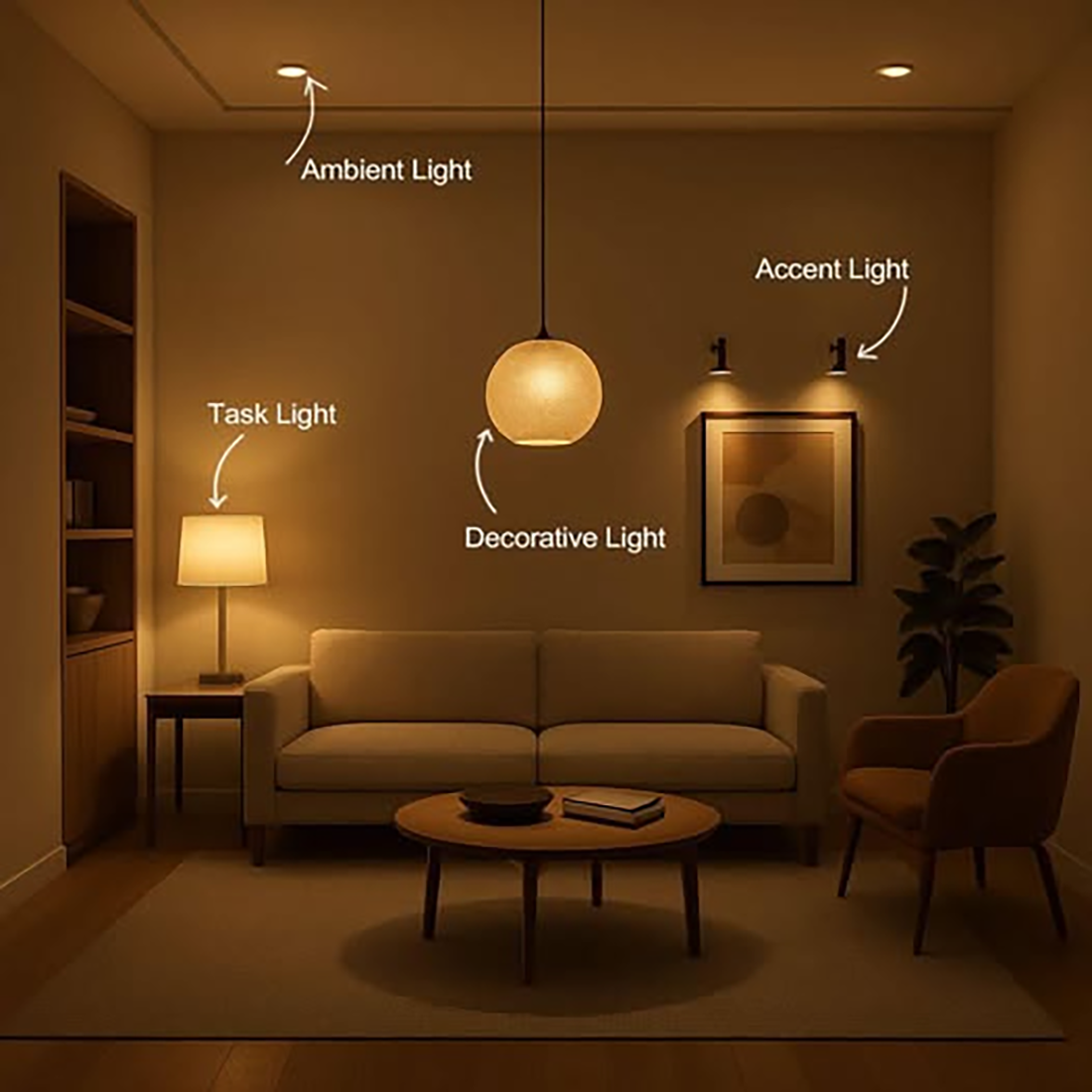
Combine Ambient, Task, and Accent Layers
Great tent lighting uses three distinct layers working together:
- Ambient lighting (string lights, floodlights) provides overall glow
- Task lighting (spotlights, table lanterns) supports specific activities
- Accent lighting (fairy lights, uplights) highlights décor and architecture
Layering creates depth and dimension. Start with warm string lights as your ambient base, add LED lanterns on dining tables, then finish with uplights washing the ceiling in color.
Match Color Temperature to Your Mood
Color temperature dramatically affects how your space feels:
- Warm white (2700K–3000K): Cozy and romantic, ideal for weddings and dinners
- Cool white (4000K–5000K): Crisp and professional, best for presentations
- Colored/RGB: Festive and energetic, perfect for parties and themed events
Avoid using only cool or colored light as your primary source. Build a warm white base, then layer in color accents for flair.
Coordinate Lighting With Event Themes
Your lighting should reinforce the event’s overall style:
- Rustic/Outdoor: Edison bulbs, paper lanterns, warm tones
- Elegant/Formal: Crystal chandeliers, symmetrical grids, white lighting
- Modern/Contemporary: Clean LED lines, geometric patterns, color-changing effects
- Festive/Celebratory: Multicolor fairy lights, marquee letters, dynamic patterns
- Whimsical/Romantic: Draped fairy lights, flameless candles, soft diffusion
Master Power and Safety Essentials
Use Outdoor-Rated Equipment Only
Every electrical component in your setup should be rated for outdoor use. Look for:
- IP65 or higher water resistance ratings
- GFCI-protected outlets
- Heavy-duty extension cords (12–14 gauge)
- Weatherproof power strips
Never substitute indoor-rated lights or cords in a tent. Moisture and temperature swings cause shorts and fire hazards.
Prevent Tripping Hazards
Route cords away from walkways and high-traffic zones. When crossing paths is unavoidable, secure them with cable covers or gaffer tape.
Keep connections elevated when you can. Use cord organizers to prevent tangling and damage throughout the event.
Avoid Circuit Overloads
Add the wattage of all your lights, then divide by voltage (120V in North America) to calculate amperage. Most circuits handle 15–20 amps safely.
Spread your load across multiple circuits. For large installations, use distribution boxes or consult an electrician before setup.
Tailor Lighting to Different Events
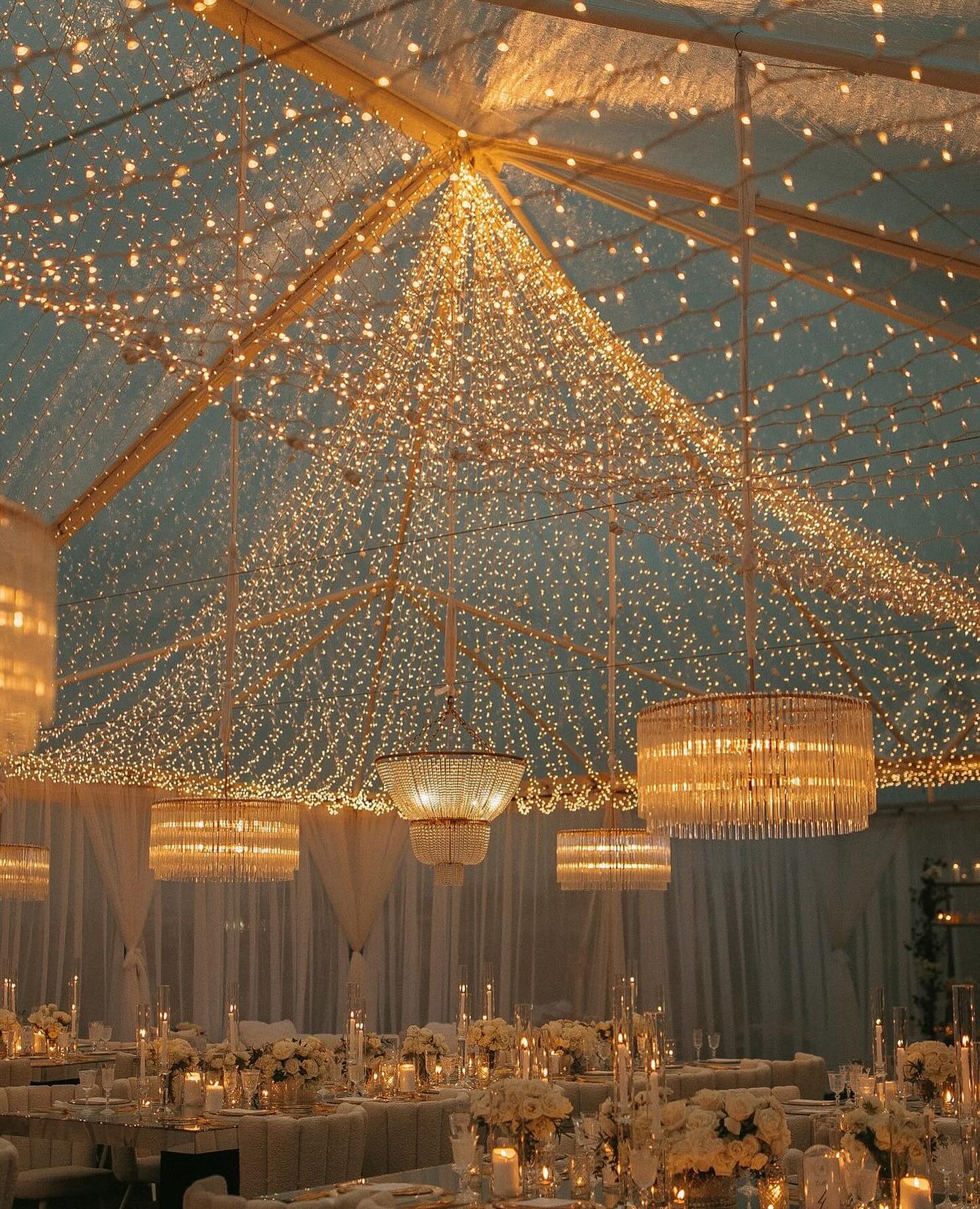
Weddings: Romantic and Photogenic
Create a dreamy atmosphere with:
- Warm white string lights in grid or zigzag patterns
- Fairy lights draped across ceilings or wrapped around poles
- LED lanterns or flameless candles on tables
- Uplighting in soft gold or blush tones
Add dimmers to transition smoothly from dinner to dancing. Warm lighting flatters skin tones and photographs beautifully.
Corporate Events: Professional and Functional
Prioritize clarity and brand alignment:
- Cool white ambient lighting for clear visibility
- Spotlights on presenters and stages
- Uplighting in company colors
- Minimalist fixtures with clean lines
Make sure screens and printed materials stay readable. Avoid glare and shadows in speaking areas.
Festivals and Concerts: Dynamic and Energetic
Go bold with high-impact lighting:
- Color-changing LED string lights
- Moving head lights or strobes for stages
- Pathway markers for safety
- Battery-powered lanterns in rest zones
Add timers or DMX systems for show synchronization. Choose durable, weather-resistant fixtures built for heavy use.
Outdoor Dinners: Intimate and Welcoming
Focus on table-level lighting for atmosphere:
- String lights overhead for ambient warmth
- LED lanterns or mason jar lights on tables
- Fairy lights woven into centerpieces or along railings
- Dimmable controls to adjust as night progresses
Skip overly bright fixtures—soft illumination encourages conversation and makes food look better.
Maintain and Store Your Lighting Properly
Inspect Before Every Use
Check all cords, bulbs, and connectors for:
- Frayed wires
- Cracked plugs
- Loose connections
- Corroded battery compartments
Test every strand before installation. Replace damaged components immediately to avoid event-day failures.
Remove and Coil Carefully
After the event, remove lights gently to avoid kinking cords. Use the over-under coiling method to prevent tangles.
Cut zip ties carefully so you can reuse fasteners at future events.
Store in Labeled, Dry Containers
Keep lights in plastic bins with dividers or dedicated spools. Label each container by type, such as “25ft Warm White String Lights.”
Store in a dry, temperature-controlled space. Remove batteries from lanterns to prevent corrosion during long storage.
Professional Shortcuts That Save Time
Pre-Plan Your Layout
Sketch the tent layout and mark pole positions, power sources, and functional zones. Calculate strand counts based on 6–12 inch bulb spacing.
Pre-wire strands on the ground before lifting them into place.
Use a Two-Person Team
One person on the ladder, one guiding cord from the ground. A second set of hands cuts setup time dramatically while reducing tension and tears.
For a 40×60 foot tent, two people can complete string light installation in 30–40 minutes.
Mix Bulb Colors for Depth
Combine warm white and soft gold bulbs in the same strand. This combination creates visual warmth that mimics candlelight—especially effective for wedding receptions.
Add Chandeliers as Focal Points

Hang a statement chandelier from the main center pole for dramatic visual impact. Choose styles ranging from crystal to rustic wood depending on your theme.
Pair chandeliers with uplighting to draw eyes upward and emphasize the tent’s height.
Light the Entrance
Guide guests inside with pathway lights or lanterns flanking the tent entrance. Warmer tones create a welcoming glow that signals the celebration has begun.
Frequently Asked Questions About Tent Lighting Ideas
What type of lighting works best for wedding tents?
Warm white string lights paired with fairy lights create the most romantic wedding atmosphere. Add LED lanterns on tables and soft uplighting on tent walls for depth. This combination flatters skin tones, photographs beautifully, and transitions smoothly from dinner to dancing.
How many string lights do I need for a 40×60 foot tent?
For a zigzag grid pattern, plan on 8–12 strands of 20–25 foot length depending on bulb spacing. Calculate based on 6–12 inch spacing between bulbs. Always buy extra strands to account for unexpected gaps or backup needs.
Are battery-powered LED lanterns bright enough for table lighting?
Yes, quality LED lanterns provide ample illumination for dining tables. Look for models with adjustable brightness settings and 8–100+ hour runtimes. They’re especially useful for tables without nearby power outlets.
Can I use indoor string lights in a tent?
No, indoor-rated lights pose serious safety hazards outdoors. Moisture, temperature changes, and wind can cause shorts, failures, or fires. Always use lights rated IP65 or higher with GFCI protection for outdoor tent installations.
How do I prevent string lights from sagging in a pole tent?
Anchor lights to structural bolts at pole-roof junctions rather than lightweight clips. Use zigzag patterns between center poles to maintain even tension. Distribute weight evenly across multiple anchor points rather than concentrating it in one area.
Final Thoughts on Tent Lighting Ideas
The best tent lighting ideas blend beauty, function, and safety into a cohesive design. Start by matching lighting types to your event’s purpose, then layer ambient, task, and accent fixtures for depth and dimension. Install with safety in mind, using GFCI protection, weatherproof fixtures, and proper anchoring at structural points.
Your next step: sketch your tent layout, calculate strand counts based on bulb spacing, and test all equipment before installation day. With the right planning and these professional techniques, you’ll transform any tent into a captivating space your guests won’t forget.