Nothing beats the freedom of sleeping under the stars, but a successful tent camping experience starts long before you unroll your sleeping bag. A well-planned tent camping setup turns a patch of dirt into a functional, cozy basecamp. Whether you’re car camping with family or backpacking solo, how you set up your site impacts comfort, safety, and your impact on nature.
From choosing the perfect spot to organizing gear and lighting your nights, every detail matters. In this guide, you’ll learn how to create a campsite that’s not just livable, but enjoyable. You’ll discover how to avoid common mistakes, maximize convenience, and leave no trace when you pack out.
Pick the Best Campsite Location

Your tent’s location sets the tone for the entire trip. A poor choice can mean a wet sleeping bag, constant wind, or uncomfortable slopes. Make the right call by evaluating your options carefully.
Choose Between Campground and Dispersed Sites
Designated campgrounds work well for beginners or anyone who wants built-in convenience. They typically offer flat tent pads, fire rings, picnic tables, restrooms, and sometimes potable water. These sites are marked and often reservable, which reduces setup stress.
Dispersed camping means staying outside developed areas, usually on national forest or BLM land. It delivers solitude and a deeper connection with nature, but it demands more self-reliance. You’ll need to pack in all your water, manage waste properly, and follow strict Leave No Trace rules.
Designated dispersed areas offer a middle ground. You get vehicle access without the full suite of services. They’re great for car campers who want quiet without taking on every off-grid challenge.
Follow Leave No Trace Site Selection Rules
Protecting the environment keeps these spaces open for future trips. A few core guidelines help:
– Camp at least 200 feet from lakes, rivers, and streams, roughly 70 adult steps
– Use durable surfaces like rock, gravel, or dry grass rather than fragile meadows or moss
– Avoid trampling vegetation and stick to established sites when possible
– Never cut trees or branches for shelter or seating
Following these rules preserves natural landscapes and minimizes your footprint.
Prepare Your Tent Site Properly
A flat, clean, and dry tent site is essential for a restful night. Spending 10 extra minutes prepping your spot prevents discomfort and gear damage.
Find a Flat, Level Surface
Look for natural terraces or gently sloped ground. If you must sleep on a slight incline, position your head uphill to avoid blood rushing to your head. Lay a footprint or ground tarp under your tent to create a smooth base and prevent punctures.
Clear Debris and Sharp Objects
Remove rocks, sticks, pinecones, and roots from the tent area. For Leave No Trace compliance, place debris back when you pack up to restore the site. A quick sweep with your hand or a small brush makes a real difference in comfort.
Avoid Water Drainage Traps
Never pitch your tent in a dip or gully, since these become channels for rainwater. Even a small storm can flood your tent overnight. Instead, choose slightly elevated ground. If rain is forecast, dig a small trench downhill from your tent to divert water, then fill it in before leaving.
Use Natural Wind and Sun Protection
Position your tent behind a rock, tree line, or ridge to block wind. Avoid exposed ridges or open fields. In hot weather, pitch in shade, especially for morning or afternoon sun, depending on how long you’re staying. In cooler climates, orient your tent to catch morning warmth.
Set Up a Functional Cooking and Social Zone
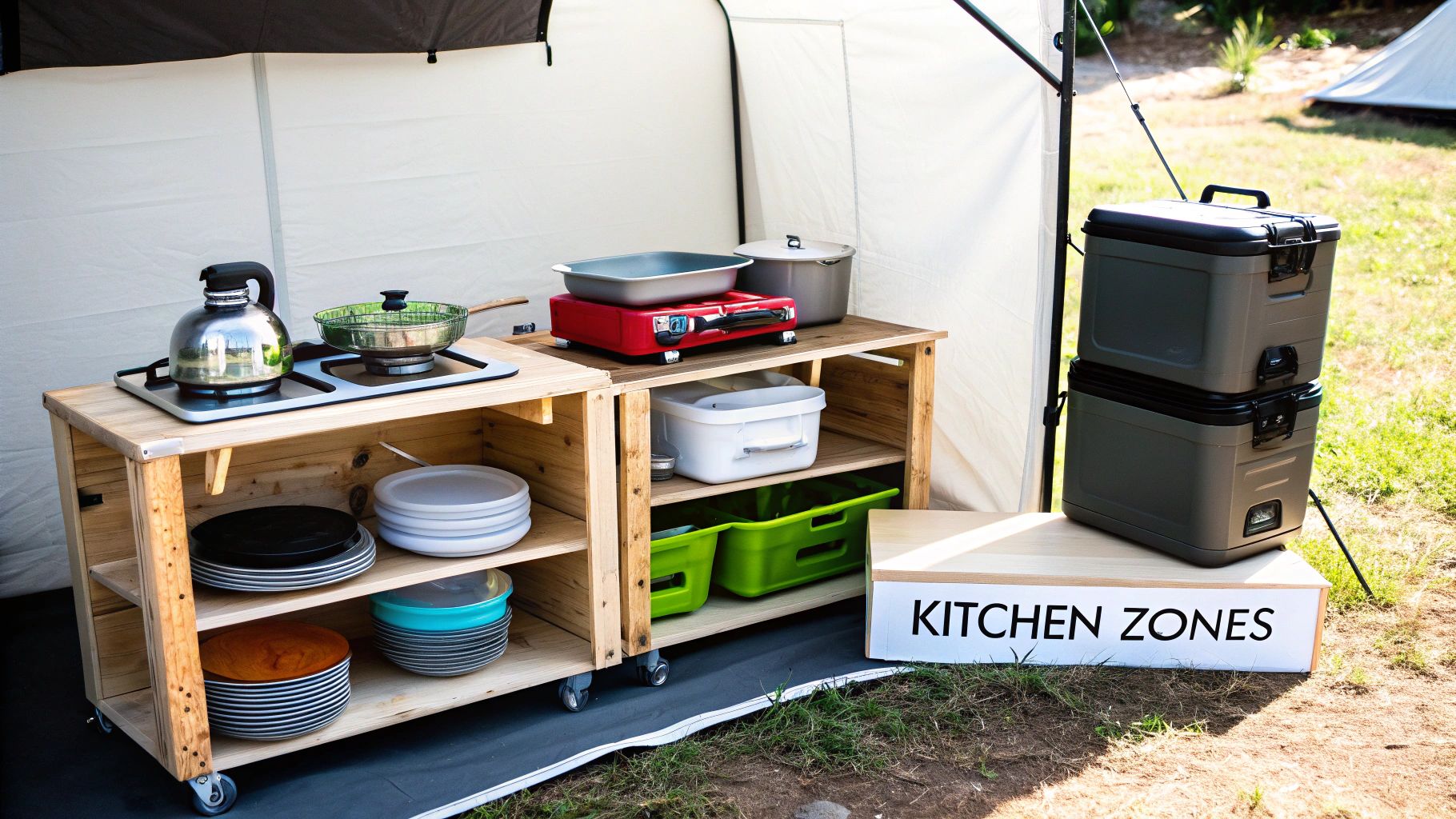
Your common area is the heart of the campsite. A smart layout keeps cooking safe, food secure, and social time enjoyable.
Position the Kitchen Downwind
Always place your camp kitchen downwind from the tent. This keeps cooking smells from drifting toward your sleeping area and attracting wildlife. Use a foldable table or stable surface for food prep. Store food in a bear-proof container or hang it in a bear hang at least 10 feet off the ground and 4 feet from any tree trunk. Never store food, trash, or scented items like toothpaste and deodorant in your tent.
Organize Cooking Gear Efficiently
Use a labeled bin for your stove, fuel, utensils, and cookware. Keep a spill-proof spice container and a collapsible sink for cleanup. Wash dishes at least 200 feet from water sources using biodegradable soap, then strain food scraps and pack them out.
Create a Sheltered Gathering Spot
Arrange seating around a fire pit or picnic table. If fires are allowed, use established rings instead of building new ones, and bring a fire permit if one is required. For no-fire zones, rely on a portable camp stove or a fire bowl with commercial fuel.
Maximize Comfort with Smart Seating

After a long hike, a comfortable seat is priceless. Choose seating that supports both relaxation and social connection.
Choose the Right Camp Chair
A few styles tend to work well:
– Reclining chairs offer back support for long lounging sessions
– Rocking camp chairs provide soothing motion and stability on uneven ground
– Compact folding chairs suit backpackers or tight spaces
For car campers, bring your favorite chair. Your vehicle makes comfort easy.
Add a Hammock for Versatile Relaxation
A hammock with a rain tarp doubles as a napping spot, a reading nook, or even a secondary sleep system. Hang it between two sturdy trees using tree-friendly straps rather than ropes or cords that damage bark. Add a bug net in insect-heavy areas.
Light Your Campsite Safely and Stylishly
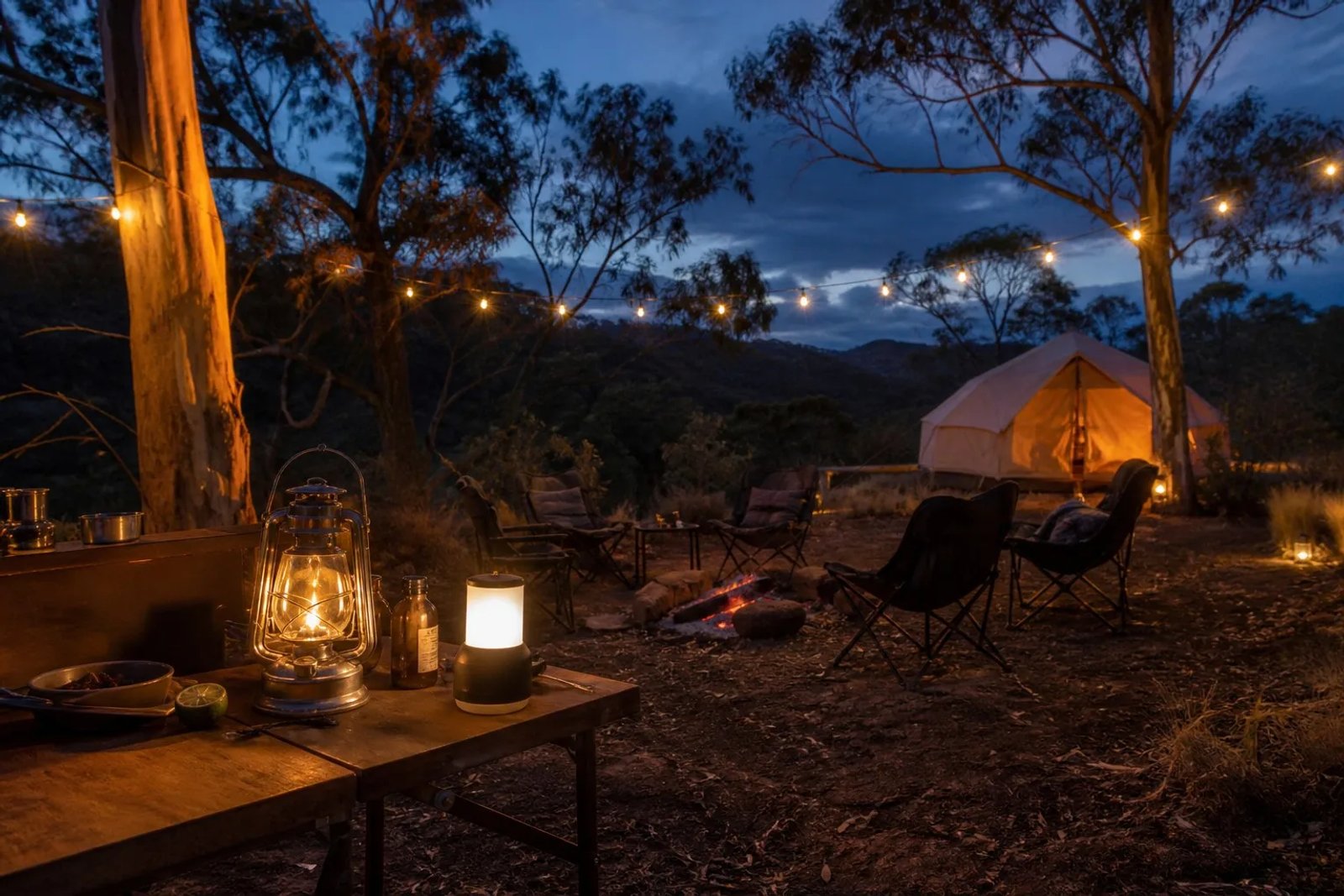
Good lighting prevents tripping, enhances safety, and creates a welcoming vibe after dark.
Equip Each Camper with a Headlamp
Every person should have a headlamp or flashlight, preferably with a red-light mode to preserve night vision and avoid disturbing other campers. Keep one by your pillow inside the tent for midnight bathroom trips.
Use Lanterns for Area Lighting
Hang an LED lantern from a tent pole, tree branch, or dedicated stand. Look for models with adjustable brightness and long battery life. For ambiance, string solar-powered lights along gear lines or around seating areas.
Mark Pathways and Hazards
Use ground-level LED stakes or glow-in-the-dark markers to outline paths to the bathroom, kitchen, or fire pit. Attach collar lights to dogs so you can see them on nighttime walks.
Organize Gear to Reduce Clutter
A cluttered campsite feels stressful and inefficient. Smart organization saves time and prevents lost items.
Use Labeled Storage Bins
Sort gear into color-coded, waterproof bins:
– Blue bin: kitchen supplies
– Red bin: sleep system, including sleeping bag, pad, and pillow
– Green bin: clothing and toiletries
Label each bin clearly so everyone knows where to find and return items.
Hang a Gear Line
String a paracord line between trees to hang wet clothes, towels, or cooking utensils. Use carabiners or S-hooks for quick access. Add a small shelf or mesh bag for phones, keys, or glasses.
Assign a Key Keeper
Designate one person to hold the vehicle keys to avoid misplacement. Store them in a dry bag or magnetic key holder attached to a central post or your picnic table.
Manage Water Like a Pro
Staying hydrated starts with smart water planning, especially in remote areas.
Bring Enough Drinking Water
Plan for 5 gallons per person per day if no potable water is available. Stackable water jugs with spigots make dispensing easier. For longer trips, a foot-pump dispenser cuts down on heavy lifting.
Filter or Purify Natural Water Sources
When refilling from lakes or streams, use a portable water filter like a pump or straw system. Alternatively, treat water with purification tablets or a UV sterilizer. Always treat water before drinking, even if it looks clean.
Store Water Safely
Keep water containers off the ground and in the shade to prevent algae growth. Collapsible jugs save space once they’re empty.
Run Final Setup Checks Before Dark
Don’t wait until bedtime to realize something is missing. A quick pre-dark checklist keeps the night running smoothly.
Run Through a Gear Checklist
Verify you have:
– A first aid kit and emergency supplies
– Rain gear and extra layers
– A power bank for phones or GPS
– Insect repellent and sunscreen
– Trash bags for packing out waste
The REI Expert Advice checklist is a reliable reference.
Share Site Orientation with Everyone
Print or sketch a simple campsite map showing tent locations, the kitchen and fire zone, the bathroom trail, and water storage. Review it with all campers, especially kids, so everyone knows where to go at night.
Test All Equipment
Confirm that tent zippers work smoothly, the stove ignites properly, lights are charged or have fresh batteries, and the bear hang is secure. Fix issues now, not in the dark.
Frequently Asked Questions About Tent Camping Setup
How do I choose between a campground and dispersed camping for my tent camping setup?
Campgrounds offer amenities like restrooms, picnic tables, fire rings, and sometimes potable water, making them ideal for beginners or anyone wanting convenience. Dispersed camping on national forest or BLM land gives you solitude but requires you to bring your own water and manage waste. Designated dispersed areas provide vehicle access without full services, striking a balance for car campers.
What is the most important rule for picking a tent site?
Always camp at least 200 feet from lakes, rivers, and streams to protect water sources and fragile ecosystems. Combined with choosing durable surfaces and avoiding trampling vegetation, this Leave No Trace rule is the foundation of responsible site selection.
How much water should I bring per person for tent camping setup?
Plan for 5 gallons of drinking water per person per day when potable water isn’t available on-site. Stackable jugs with spigots or foot-pump dispensers make access easier, especially for larger groups.
Where should I store food at a campsite to keep wildlife away?
Use a bear-proof container or bear hang placed at least 10 feet off the ground and 4 feet from any tree trunk. Never store food, trash, or scented items like toothpaste or deodorant inside your tent, since smells can attract animals to your sleeping area.
What lighting setup works best for a tent camping setup?
Give every camper a headlamp with a red-light mode, and add an LED lantern with adjustable brightness for general area lighting. Solar-powered string lights add ambiance, while ground-level LED stakes or glow markers help outline paths and hazards after dark.
How can I keep my tent camping setup organized with multiple people?
Sort gear into color-coded, waterproof bins with clear labels, hang a paracord gear line for clothes and utensils, and assign one person as the “key keeper” for vehicle keys. A printed campsite map shared with everyone also reduces confusion at night.
Key Takeaways for a Smooth Tent Camping Setup
A thoughtful tent camping setup comes down to three priorities. First, choose your location wisely by weighing campground convenience against dispersed solitude, and always honor Leave No Trace site rules. Second, prep your tent site with a flat surface, cleared debris, smart drainage, and natural wind or sun protection.
Third, build functional zones around your tent, including a downwind kitchen, comfortable seating, layered lighting, and organized storage. Plan your water, test your gear before dark, and share a simple site map with everyone in your group. With these habits in place, your next campsite becomes a calm, comfortable home base for whatever adventure lies ahead.