
Hiking uphill is more than just a path to breathtaking views—it’s a powerhouse workout disguised as a walk in the woods. Whether you’re scaling a mountain trail or adjusting your treadmill’s incline, walking uphill transforms a simple stroll into a full-body fitness challenge. The benefits of hiking uphill extend far beyond calorie burn, offering measurable improvements in heart health, muscle strength, mental clarity, and long-term disease prevention.
Unlike flat walking or running, uphill hiking forces your body to fight gravity, increasing physical demand while staying low-impact—making it ideal for people of all fitness levels. From boosting endurance and balance to sharpening focus and improving sleep, incline walking delivers comprehensive rewards with every step upward.
In this guide, you’ll discover the science-backed benefits of hiking uphill, learn how to do it safely, and get practical tips to maximize results—no matter your experience level.
Strengthen Your Heart with Every Step
Hiking uphill significantly boosts cardiovascular fitness by increasing heart rate and oxygen demand.
Increase Cardiovascular Intensity Naturally
Even at a slow pace, walking uphill elevates your heart rate. Research shows that a 7% incline increases heart rate by nearly 10% compared to flat walking. This higher intensity improves aerobic capacity over time, helping your heart pump more efficiently and making daily activities feel easier.
Because your muscles require more oxygen during ascent, your cardiovascular system adapts by becoming stronger and more resilient—without requiring longer workouts.
Lower Blood Pressure and Heart Disease Risk
Regular uphill hiking supports long-term vascular health by:
– Improving blood flow
– Reducing arterial plaque buildup
– Lowering triglycerides
– Enhancing cholesterol profiles
These changes reduce the risk of heart disease and stroke—the two leading causes of death globally. Just 30 minutes of uphill walking most days can lead to measurable improvements in blood pressure and overall heart function.
Build Stronger Muscles Without Weights
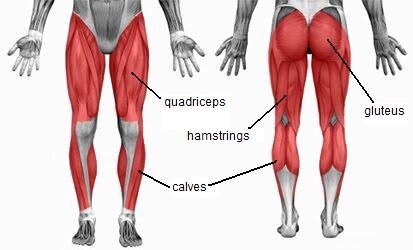
Uphill hiking activates more muscle groups than flat walking, especially in the lower body and core.
Power Up Your Glutes and Hamstrings
Your glutes and hamstrings are the primary engines during ascent. As you push your body upward, these posterior chain muscles work harder than on level ground. Strong glutes improve posture, reduce lower back strain, and enhance performance in sports and daily movements.
Expert Insight (Dr. Aashini Govani, PT, DPT):
“Incline walking works the same muscles as flat walking, but it makes them work harder. The steeper the incline and the faster the pace, the greater the muscle activation.”
Strengthen Quads and Calves
Your quadriceps stabilize the knee with each step, while your calves generate the push-off force needed to climb. On steeper slopes, calf engagement increases dramatically, helping build strength and endurance over time.
Even a 5% grade significantly increases muscle effort—making uphill hiking an effective alternative to stair climbing or leg machines.
Engage Your Core for Better Posture
Maintaining balance on an incline requires constant core engagement. Your abdominal and lower back muscles stabilize your spine, reducing sway and supporting upright posture.
This low-impact core workout helps prevent back pain and improves functional strength for lifting, bending, and twisting—making everyday movements easier and safer.
Burn More Calories in Less Time
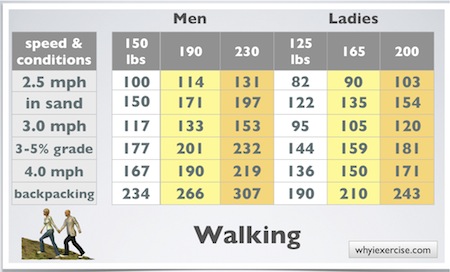
Uphill hiking is one of the most efficient ways to boost metabolism and manage weight.
Maximize Calorie Burn with Incline
A 5% incline increases energy expenditure by 52–69%, according to a 2012 study. At 10%, calorie burn more than doubles compared to flat walking.
| Incline | Calorie Burn Increase |
|---|---|
| 0% (flat) | Baseline |
| 5% | +52–69% |
| 10% | >100% |
Pro Tip: You don’t need to hike for hours. Just 20–30 minutes of uphill walking can deliver significant metabolic benefits.
Build Lean Muscle to Boost Resting Metabolism
As you build leg and core strength, your resting metabolic rate increases—meaning you burn more calories even at rest. Unlike cardio-only workouts, uphill hiking combines endurance and resistance, helping preserve muscle while burning fat.
Improve Balance, Stability, and Coordination
Navigating uphill terrain enhances neuromuscular control and body awareness.
Enhance Proprioception on Uneven Ground
Walking on rocky or uneven trails challenges your proprioception—your body’s ability to sense its position in space. This improves coordination and reduces fall risk, especially as you age.
Expert Insight (Hayley Balls, Master Trainer):
“Hillwalking, especially on difficult terrain or across rocks, is exceptionally good to keep your balance in good form.”
Develop Dynamic Stability
Uphill hiking requires constant micro-adjustments in foot placement and joint angles. These small corrections build dynamic stability, which translates to better movement control in daily life—like walking on icy sidewalks or carrying groceries up stairs.
Elevate Mental Wellbeing and Focus
Hiking uphill delivers powerful psychological benefits through both physical challenge and natural immersion.
Release Mood-Boosting Neurochemicals
Physical exertion triggers the release of:
– Endorphins – natural painkillers and mood lifters
– Serotonin – regulates mood, sleep, and appetite
– Dopamine – enhances motivation and focus
These brain chemicals reduce anxiety and depression symptoms, creating the well-known “hiker’s high.”
Expert Insight (Joanna Hall, WalkActive):
“Being outdoors in the sun increases the release of serotonin, which helps to boost mindfulness and mental wellbeing.”
Reduce Stress and Mental Fatigue
The rhythmic motion of climbing, combined with fresh air and natural scenery, has a meditative effect. This calms the nervous system, lowers cortisol (the stress hormone), and clears mental fog.
Even a short uphill walk during a busy day can reset your mindset and improve concentration.
Build Confidence and Resilience
Reaching a summit or completing a tough climb builds self-efficacy—the belief in your ability to overcome challenges. This sense of accomplishment carries over into other areas of life.
Quote:
“There is no better feeling than knowing you were able to make it to the top!”
Prevent Chronic Diseases and Support Long-Term Health
Regular uphill hiking reduces the risk of multiple long-term health conditions.
Lower Risk of Type 2 Diabetes
Uphill hiking improves insulin sensitivity and helps regulate blood sugar. Because it engages large muscle groups, it enhances glucose uptake—offering greater protection than flat walking.
Over time, this reduces the risk of insulin resistance and metabolic syndrome.
Fight Systemic Inflammation
Chronic low-grade inflammation is linked to heart disease, arthritis, and some cancers. Regular incline walking lowers inflammatory markers, contributing to overall systemic health.
Strengthen Immune Function
Physical activity stimulates the lymphatic system, which removes toxins and fights infection. Combined with outdoor exposure, uphill hiking boosts immune resilience—especially during colder months.
Support Bone and Joint Health Safely
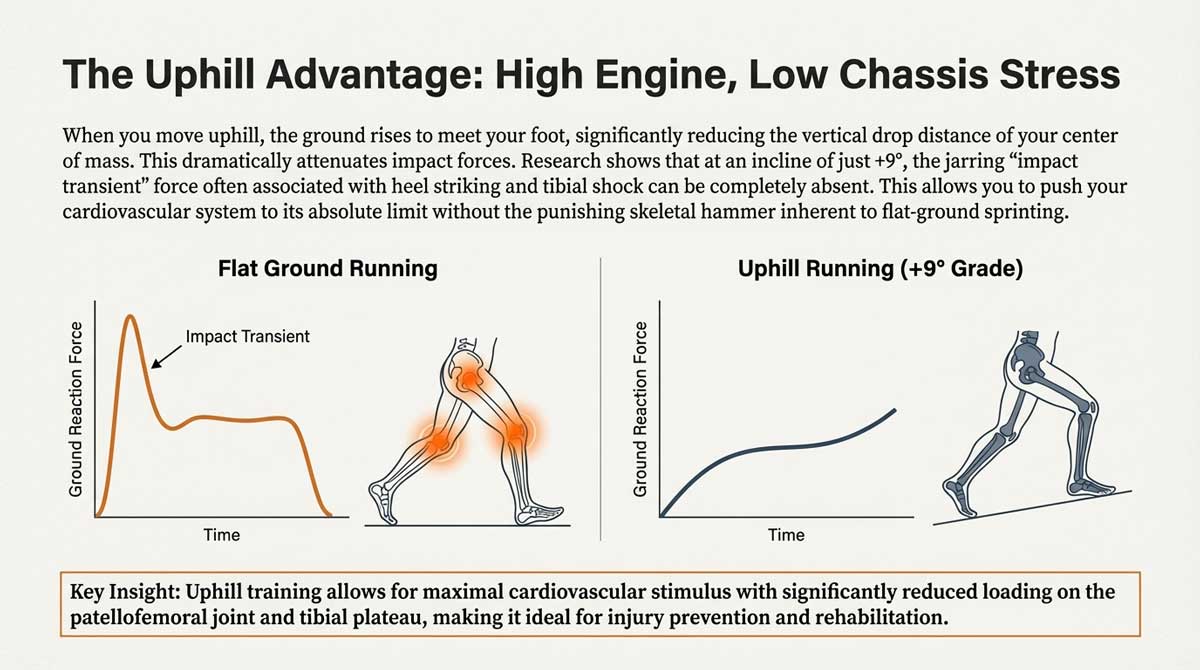
Uphill hiking is a weight-bearing activity that strengthens bones and supports joint function—without high impact.
Increase Bone Density and Prevent Osteoporosis
The low-impact nature of uphill hiking provides enough stimulus to increase bone mineral density, helping prevent osteoporosis, especially in older adults and postmenopausal women.
Unlike high-impact sports, it builds strength without risking injury.
Protect Your Knees
Contrary to popular belief, uphill hiking is easier on the knees than downhill hiking or running. It involves concentric muscle contractions (muscles shortening), which are less stressful than the eccentric loading seen during descent.
Expert Insight (Ashley Paulson, AFAA Certified Trainer):
“It’s less impact on the body than running. A lot of people can’t jog, so we have them walk on an incline instead.”
Improve Joint Lubrication
Continuous motion promotes synovial fluid production, which lubricates joints and reduces stiffness—especially helpful for those with mild arthritis.
Enhance Lung Capacity and Endurance
Uphill hiking challenges your respiratory system, leading to better oxygen efficiency.
Increase Oxygen Uptake and Stamina
As your muscles demand more oxygen, your lungs adapt by increasing lung capacity and oxygen delivery efficiency. Over time, this improves stamina and reduces breathlessness during exertion.
Even at high altitudes, regular uphill training helps the body acclimate faster.
Build Aerobic Endurance Efficiently
You don’t need long hikes to build endurance. Short, consistent uphill sessions improve aerobic fitness quickly.
Expert Insight (Dee Hammond-Blackburn, Personal Trainer):
“A hillwalking workout will ultimately burn more calories than regular walking and you’ll get fitter without needing to increase the duration of your workout, making it a sustainable activity you can stick to.”
Sleep Better After a Climb
Hiking uphill promotes deeper, more restful sleep through physical and mental pathways.
Regulate Your Circadian Rhythm
Exposure to natural light during outdoor hikes helps regulate your internal clock, improving sleep-wake cycles. Physical exertion reinforces this rhythm, making it easier to fall and stay asleep.
Promote Recovery and Relaxation
The combination of physical fatigue, reduced stress, and endorphin release creates ideal conditions for high-quality sleep.
Quote:
“The physical exhaustion and sense of accomplishment promote great sleep.”
Prevent Common Physical Issues
Uphill hiking helps prevent several common musculoskeletal and circulatory problems.
Reduce Back Pain Risk
By strengthening core and back muscles, uphill hiking improves posture and reduces strain on the lumbar spine—helping prevent or alleviate chronic lower back pain.
Prevent Varicose Veins
Improved leg circulation prevents blood pooling in the veins, reducing the risk of varicose veins. The calf-pumping action during uphill walking acts like a natural circulatory assist.
Avoid Age-Related Muscle Loss
Sarcopenia—the natural loss of muscle mass with age—is slowed by regular uphill hiking. It preserves lower-body strength, supporting mobility and independence as you age.
Final Note: Hiking uphill is a simple, accessible, and highly effective way to transform your health. From stronger muscles and a healthier heart to sharper focus and better sleep, the benefits are wide-ranging and scientifically supported. Whether you’re walking a mountain trail or climbing on a treadmill, every upward step builds resilience—for your body and mind. Start slow, stay consistent, and let gravity work for you.