
A high-quality canopy tent is more than just a shelter. It is a mobile brand statement, a weather-resistant workspace, and a critical tool for events, trade shows, and outdoor vendors. The canopy tent design determines how well it performs under wind, sun, and rain, how quickly you can set it up, and how effectively it showcases your branding. From frame strength and fabric durability to full-color printing and smart accessories, every design element impacts real-world usability.
Whether you choose a lightweight pop-up for weekend markets or a commercial-grade shelter for daily use, understanding the engineering behind canopy tent design ensures you invest in reliability, safety, and visual impact. This guide breaks down the key components, including frame materials, roof styles, customization options, and performance specs, so you can select or design the ideal canopy for your needs.
Steel vs Aluminum Frame Materials
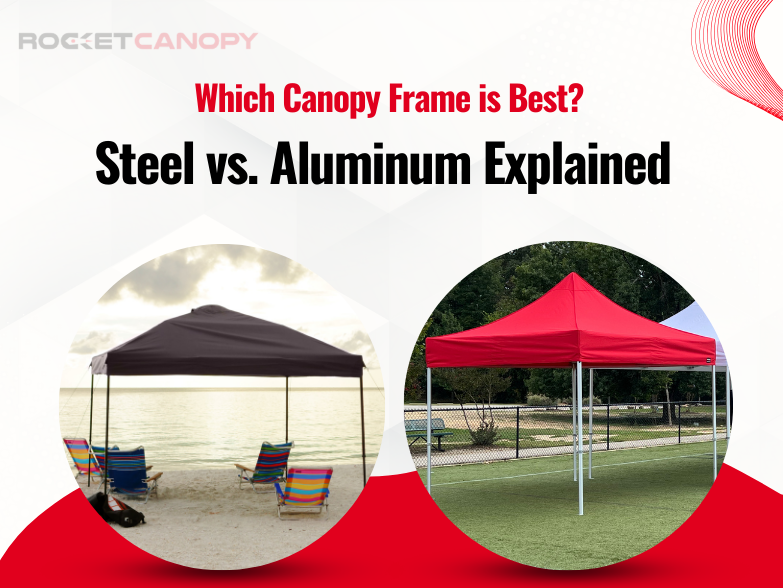
Choose Steel for Strength and Stability
Steel frames deliver maximum durability and wind resistance, making them ideal for frequent outdoor use in variable conditions. Powder-coated mild steel resists rust and offers high impact resistance, though the coating can chip over time if mishandled. A 10×10 ft steel canopy weighs 20.80 kg, making it heavier than aluminum but more stable in winds up to 10 m/s (about 22 mph). Its higher load-bearing capacity suits heavy-duty applications like food vending or long-term installations. However, the added weight makes transport and solo setup more challenging. Steel is best for users who prioritize structural integrity over portability and operate in moderate wind zones with proper anchoring.
Opt for Aluminum for Lightweight Portability
Aircraft-grade aluminum frames offer the best strength-to-weight ratio, favored by professionals needing daily mobility. A 10×10 ft aluminum canopy weighs 16.95 kg, over 3.8 kg lighter than steel, while still supporting strong wind loads up to 8 m/s (about 18 mph). Naturally corrosion-resistant, aluminum won’t rust even with prolonged outdoor exposure. Though slightly less impact-resistant than steel, modern anodized or powder-coated finishes enhance longevity. Ideal for marketers, event staff, and rental services, aluminum frames balance durability and ease of transport. Premium models like Mastertent and E-Z UP use commercial-grade aluminum designed for everyday professional use.
Match Frame Strength Classes to Your Use Case

Recreational (X4 X-Trek): Budget-Friendly for Occasional Use
The X4 X-Trek line features 1.75″ hexagonal steel frames with nylon connectors, built for casual users like weekend market vendors or backyard events. Priced from $249 (10×10) to $499 (10×20), these canopies offer solid performance at an entry-level cost. While durable enough for light commercial use, they lack the reinforced joints and larger profiles needed for high-wind areas or daily deployment. Best suited for 1–2 uses per month, they are a practical choice for small businesses starting out.
Medium (X5 Explorer): Balanced Performance for Regular Events
The X5 Explorer upgrades to a stronger 1.75″ hex steel frame with the same nylon connectors but improved stability. Available in 10×10, 10×15, and 10×20 ft sizes, pricing starts at $525. This tier supports weekly use at festivals, fairs, and promotional events. It strikes a balance between cost and durability, offering better wind resistance and longevity than recreational models, ideal for growing brands needing reliable shelter without commercial pricing.
High (X6 Velocity): Aluminum Frame for Professional Use
The X6 Velocity introduces 1.75″ hexagonal aluminum frames with aluminum connectors, eliminating weak nylon joints. This upgrade enhances structural integrity and corrosion resistance. Sizes include 8×8, 10×10, 10×15, and 10×20 ft, with prices starting at $845. Designed for trade shows and frequent outdoor branding, it is lightweight yet robust, perfect for professionals who need fast setup, portability, and long-term reliability.
Ultra (X7 Tectonic): Heavy-Duty for Extreme Conditions
With a 2.25″ hexagonal aluminum frame and full aluminum connectors, the X7 Tectonic is built for extreme durability. Available in large formats up to 20×20 ft, it supports high-wind environments and long-term installations. Starting at $1,275 (10×10) and reaching $4,045 (20×20), it is used by event agencies, art show exhibitors, and safety organizations. The Art Show Canopy variant (from $1,741) includes specialized features for visual artists requiring pristine display conditions.
Commercial (Q8 Quasar): Premium Build for Daily Deployment
The Q8 Quasar features a 2″ hexagonal aluminum frame, the largest standard profile, engineered for non-stop professional use. With aluminum connectors and commercial-grade materials, it withstands daily setup and breakdown cycles. Prices start at $1,475 (10×10). Trusted by Fortune 500 companies and rental fleets, this class delivers maximum lifespan, safety, and brand consistency for high-impact marketing and permanent outdoor operations.
Frame Design Features That Matter
Telescopic Legs for Ground Flexibility
All premium canopies use telescopic legs with multiple height adjustments, typically three layers, allowing you to level the structure on uneven terrain. Whether setting up on grass, gravel, or pavement, adjustable legs ensure stability and a professional appearance. Hexagonal aluminum legs (BannerBuzz, E-Z UP) provide better torsional strength than square steel, reducing wobble in wind.
Aluminum Connectors Prevent Joint Failure
Nylon connectors, used in recreational and medium-strength frames, are cost-effective but can degrade under UV exposure and stress. Aluminum connectors, found in X6 Velocity and above, eliminate this weak point. They lock securely, maintain structural integrity over time, and resist cracking, which is critical for safety in windy conditions or frequent use.
Reinforced Truss Bars Boost Stability
Custom Tents and other commercial builders add reinforced truss bars across the roof frame to prevent sagging and distribute wind load. Combined with solid steel foot plates, these enhancements deliver amazing stability even in gusty conditions. Look for this feature if operating in open areas or coastal zones with higher wind exposure.
Canopy Roof Styles and Functional Benefits

Classic and Classic with Awning: Timeless Professional Look
The Classic roof style offers a clean, flat top with straight edges, ideal for bold graphics and corporate branding. Available only in Mastertent’s Series 1 line, it provides maximum print area and a sleek profile. The Classic with Awning adds a front overhang for extra sun and rain protection, enhancing comfort for customers or staff at the front of the booth.
The Square and Pagoda: Compact and Aesthetic Options
For smaller spaces, The Square (3×3 ft) and Pagoda (3×3, 4×4, 5×5 ft) offer unique visual appeal. The Pagoda’s tiered roof improves water runoff and adds architectural flair, perfect for craft fairs, garden events, or boutique displays where design distinction matters.
Vented vs Non-Vented Tops: Manage Heat and Airflow
Vented tops (e.g., Custom Pyramid™ Vented) include mesh panels at the peak to release hot air, reducing interior temperature by up to 15°F. This is crucial for summer events or enclosed setups. Non-vented canopies provide maximum coverage and are slightly more wind-resistant. Choose vented for comfort in heat; non-vented for weather protection in rain or wind.
Canopy Fabric: Durability, Safety, and Print Quality
Standard vs Eco-Friendly vs Recycled FR Fabrics
Standard Light Weight Fabric (230 GSM) is cost-effective but less durable, best for occasional use. Eco Friendly Medium Duty (270 GSM, 600D) uses thicker, denser fibers for superior strength, water resistance, and UV protection. It is Reach Certified and chemical-free but not fire retardant. 100% Recycled FR Fabric with Premium Finishing (270 GSM) combines sustainability with safety: GRS-certified, fire-retardant, and double-sided anti-fading coating. Ideal for regulated events or long-term outdoor exposure.
Waterproofing and Fire Safety Standards
Mastertent canopies are 100% waterproof as standard, tested to EU EN 13501-1:2002 and classified as M2 fire-retardant, a requirement for many public events. BannerBuzz’s recycled fabric is also fire-retardant; its eco option is not. Always verify fire certification if using in urban festivals, schools, or government-organized events.
Color Options: Standard and Premium Choices
All major lines offer White, Yellow, Blue, Red, Black, and Green as standard. Premium shades like Gray, Fossil, Ocean, Maroon, and Purple add brand sophistication. X5 through Q8 models support full premium color ranges, giving you flexibility to match corporate identities.
Custom Printing: Maximize Brand Impact
Dye Sublimation for Vivid, Fade-Resistant Graphics
Dye sublimation printing (used by BannerBuzz, E-Z UP, Custom Tents) embeds ink into the fabric at the molecular level, producing photo-realistic images, smooth gradients, and fade-resistant colors. Unlike screen printing, it does not crack or peel. Full 360° coverage is possible, so you can print your logo on the roof, valance, and all four sidewalls for total brand immersion.
Pantone Matching Ensures Brand Accuracy
For exact color consistency, Pantone matching (offered by Custom Tents and Extreme Canopy) guarantees your canopy matches your logo’s official shades. Essential for Fortune 500 companies and national campaigns where brand integrity is non-negotiable.
Design Services and 3D Visualization Tools
E-Z UP and Mastertent provide in-house design teams to help create layouts, adjust artwork, and ensure print readiness. Mastertent’s 3D Design Center lets you build and preview your canopy in augmented reality using a smartphone. Scan a QR code to see how it looks in your actual event space, revolutionizing pre-event planning.
Sidewalls and Enclosures: Expand Functionality
Full, Half, and Printed Wall Options
Full walls (7 ft tall) provide complete weather and wind protection. Half walls allow visibility while blocking lower gusts. Printed walls turn your entire canopy into a billboard. Extreme Canopy sells 10′ printed walls from $265, with full kits (4 walls) available for enclosed setups.
Enclosed Packages for All-Weather Use
Custom Tents’ Enclosed Package ($619) includes sidewalls, enhancing protection and branding. When paired with a waterproof roof, it creates a semi-permanent outdoor office, food stall, or retail kiosk. Ideal for winter markets, pop-up shops, or safety command posts.
Size Selection: From 8×8 to 20×20 ft
10×10 ft: Most Popular for Trade Shows and Markets
The 10×10 ft canopy (100 sq ft) fits standard booth spaces and accommodates 10–15 people without furniture. It is the go-to size for trade shows, farmers’ markets, and brand activations. Lightweight models can be set up by one person; larger ones benefit from two.
Larger Sizes for High-Traffic or Display-Heavy Booths
10×15, 10×20, 13×26, and 20×20 ft canopies serve as large exhibit spaces, food vendor zones, or event lounges. The X7 Tectonic line supports all these sizes with ultra-strength frames. While pricier and requiring two-person setup, they offer unmatched space for product demos, seating, or team operations.
Pricing: What to Expect by Tier
Budget to Premium Frame Lines Compared
| Strength Class | 10×10 Price Range | Best For |
|---|---|---|
| Recreational (X4) | $249 | Occasional use, small budgets |
| Medium (X5) | $525 | Weekly events, growing brands |
| High (X6) | $915 | Trade shows, professional use |
| Ultra (X7) | $1,275 | Art shows, high-wind areas |
| Commercial (Q8) | $1,475 | Daily use, corporate clients |
Custom-printed canopies start at $1,095 (10×10, Extreme Canopy) and rise with size and features. E-Z UP’s Custom Eclipse® MAX starts at $959, while Custom Endeavor® USA hits $1,752 for domestic craftsmanship.
Essential Accessories for Performance and Branding

Anchoring: Secure in Wind with Weights or Stakes
Use sandbags ($100), water weights ($280), or ground screws ($110/set) to prevent tipping. In grass, stakes work well; on pavement, weights are essential. Never rely on frame weight alone. Proper anchoring is critical for safety.
Lighting and Electronics: Extend Usability After Dark
Add truss bar lights ($165) or frame light bars ($110) for evening events. Integrated lighting turns your canopy into a 24/7 branding asset at festivals, night markets, or emergency operations.
Transport: Wheels and Bags for Easy Mobility
Most canopies include carry bags; models with wheels (or optional frame wheel sets from $100) make transport effortless. BannerBuzz and E-Z UP offer compact folding that fits in SUVs or rental vans.
Replacement Parts: Extend Canopy Lifespan
Roof replacements start at $138 (standard) and $282 (premium). Keep spare legs, pins, and connectors on hand, especially for rental fleets or high-use scenarios.
Maintenance: Keep Your Canopy Looking New
Clean Fabric Without Damaging Coatings
Do not machine wash. Use warm water, a soft sponge, and non-detergent soap. Rinse thoroughly and air dry in sunlight to prevent mold. Never store damp, as this degrades fabric and frame over time.
Inspect Joints and Locks Regularly
Check leg locks, connectors, and pins before each use. A stiff mechanism (common out of the box) usually loosens with use. Apply silicone lubricant if needed, but avoid oil-based products that attract dirt.
Who Should Use Which Canopy?
Trade Show Exhibitors: Prioritize Branding and Setup Speed
Choose X6 Velocity or higher with dye sublimation printing, Pantone matching, and coordinated accessories (table covers, banners). Fast setup and professional appearance are critical in high-traffic expo halls.
Food Vendors: Need Durability and Weather Protection
The Food Vendor Package ($619, Custom Tents) includes walls, stability features, and easy-clean fabric. Use vented tops to reduce heat and waterproof roofs for all-weather operation.
Art Show Participants: Require Premium Display Conditions
The X7 Tectonic Art Show Canopy (from $1,741) offers superior stability, color accuracy, and protection for high-value artwork. Its large profile and wind resistance ensure a secure, professional display.
Rental Companies: Invest in Commercial-Grade Longevity
Q8 Quasar or X7 Tectonic models withstand daily wear. Aluminum frames resist corrosion, and reinforced joints reduce maintenance. Pair with a replacement parts inventory and protective covers to maximize ROI.
Frequently Asked Questions About Canopy Tent Design
What is the best frame material for a canopy tent?
Aluminum frames are best for portability and corrosion resistance (16.95 kg for a 10×10), while steel frames offer maximum strength and higher wind stability (20.80 kg, up to 10 m/s wind). Choose aluminum for daily transport; choose steel for stationary, high-wind applications.
How much wind can a canopy tent withstand?
A 10×10 steel frame canopy handles winds up to 10 m/s (about 22 mph), while an aluminum frame model handles up to 8 m/s (about 18 mph). Proper anchoring with weights or stakes is always required for safety.
What is the difference between vented and non-vented canopy tops?
Vented tops feature mesh panels at the peak to release hot air, reducing interior temperatures by up to 15°F. Non-vented tops provide maximum coverage and slightly better wind resistance. Choose vented for summer heat and non-vented for rain or wind protection.
Are canopy tent fabrics waterproof and fire-retardant?
Mastertent canopies are 100% waterproof as standard and classified as M2 fire-retardant under EU EN 13501-1:2002. BannerBuzz’s 100% Recycled FR Fabric is fire-retardant and GRS-certified, while the Eco Friendly Medium Duty option is not fire-retardant but is Reach Certified.
What size canopy tent do I need for a trade show?
A 10×10 ft canopy (100 sq ft) fits standard trade show booths and accommodates 10–15 people without furniture. For larger exhibits, food vendors, or product demos, consider 10×15, 10×20, or 20×20 ft models requiring two-person setup.
How do I clean and maintain my canopy tent?
Wash with warm water, a soft sponge, and non-detergent soap. Never machine wash or use strong detergents. Air dry completely in sunlight before storage to prevent mold and fabric degradation.
Key Takeaways for Choosing the Right Canopy Tent Design
A well-designed canopy tent blends engineering, aesthetics, and functionality. Prioritize frame strength based on your usage frequency: X4 for occasional use, X6 for weekly events, and Q8 for daily professional deployment. Match fabric to your environment, choosing fire-retardant options for public events and waterproof tops for rain protection. Invest in dye sublimation printing and Pantone matching if brand consistency matters. Always anchor your canopy properly with weights or stakes, and maintain it with gentle cleaning to extend its lifespan. With the right canopy tent design, you turn every outdoor space into a branded, protected, and professional environment.