
Selecting the correct headlamp bulb type is essential for maintaining visibility and ensuring safety on the road. With so many options available, finding the right match for your vehicle can feel confusing without a clear guide.
This article explains the differences between halogen, HID, and LED bulbs to help you choose the best upgrade. You will learn how to identify your current bulb, compare performance specs, and avoid common installation errors.
How Halogen Bulbs Power Traditional Lighting
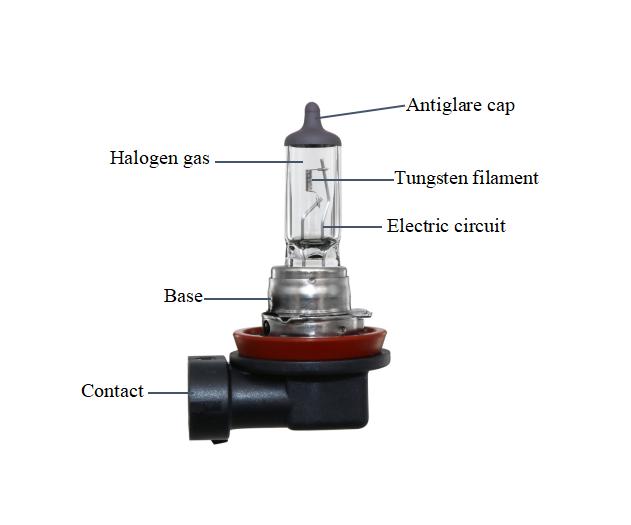
Halogen bulbs remain the most common headlamp bulb types in vehicles manufactured before the 2010s. They rely on a tungsten filament and halogen gas to produce a warm, yellowish light that many drivers recognize.
The Mechanics of Halogen Filaments
Electricity flows through a tungsten filament to create intense heat and light. The halogen gas inside the bulb recycles evaporated tungsten back onto the filament to extend its life. This simple process makes them affordable but less efficient than modern alternatives.
Common Halogen Designations
You will encounter several specific codes when shopping for replacements. Knowing these codes ensures you buy the correct part for your car.
- H1: Single filament design often used for high beams.
- H4: Dual filament bulb supporting both high and low beams.
- H7: Single filament unit common in modern low-beam applications.
- H11: Frequently used for low beams or fog lights with higher output.
- 9005 (HB3): Standard high beam bulb in many dual-filament systems.
- 9006 (HB4): Typical low beam bulb found in many American vehicles.
Pro Tip: Always verify the base markings on your old bulb or check your owner’s manual before purchasing.
Advantages and Disadvantages
Halogen bulbs offer distinct benefits despite their age. They are inexpensive, widely available at any auto parts store, and very easy to replace. However, they have a shorter lifespan of 400 to 1,000 hours and generate significant heat. Their brightness usually caps around 1,000 lumens, which is lower than newer technologies.
Why HID Xenon Bulbs Offer Brighter Light
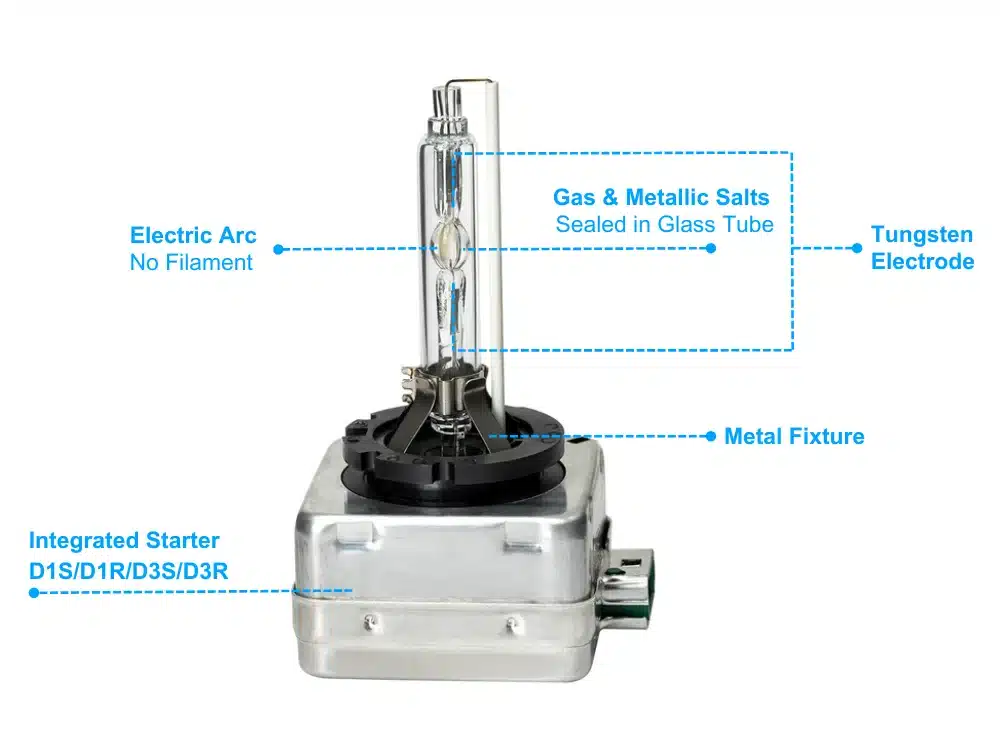
High-Intensity Discharge (HID) bulbs, often called xenon bulbs, provide a much brighter and whiter light than halogens. These headlamp bulb types became popular in premium vehicles from the early 2000s through the 2010s.
Arc Technology in HID Systems
HID bulbs create light by sending an electrical arc through xenon gas rather than heating a filament. This process requires a ballast to boost voltage and ignite the gas effectively. The result is a powerful beam that takes a few seconds to reach full brightness.
Identifying HID Bulb Codes
Factory HID systems use specific bulb designs that differ from halogen units.
- D1S: Features an integrated ballast and igniter for factory systems.
- D2S: The most common HID bulb requiring an external ballast.
- D1R: Designed specifically for reflector housings with a shield.
- D2R: Similar to D2S but includes built-in shielding for reflectors.
Visual Cue: HID lights typically display a bright white or slightly blue hue when activated.
Performance Trade-offs
The primary advantage of HID bulbs is their high output, often exceeding 3,000 lumens with a lifespan of 2,000 to 5,000 hours. However, they come with a higher initial cost and require complex components like ballasts. They also have a slow warm-up time and can cause dangerous glare if not aligned properly.
Warning: Installing HID bulbs in housings designed for halogen is illegal in many regions due to improper beam patterns.
LED Bulbs as the Modern Standard

LED (Light Emitting Diode) technology represents the latest evolution in headlamp bulb types. These units are increasingly common as factory installations and aftermarket upgrades due to their efficiency.
Semiconductor Light Production
LEDs generate light when an electrical current passes through a semiconductor material. This process produces very little heat and consumes significantly less power than halogen or HID systems. Most units include heat sinks or fans to manage thermal output.
Popular LED Replacements
Manufacturers produce LED versions of standard bulb sizes for direct replacement.
- H7 LED: Direct swap for halogen H7 low beams.
- H11 LED: Common upgrade for low beams or fog lights.
- 9005 LED (HB3): High beam upgrade option.
- 9006 LED (HB4): Low beam replacement for many trucks.
- D2S LED: Retrofit option for existing HID systems.
Note: Many LED bulbs include built-in fans or large heat sinks for thermal management.
Longevity and Efficiency Benefits
LEDs boast an impressive lifespan of 15,000 to 30,000 hours and turn on instantly. They are highly energy-efficient and offer bright white light options up to 10,000K color temperature. The main drawbacks include a higher upfront cost and potential fitment issues with large heat sinks. Some vehicles may also require CANBUS decoders to prevent error messages.
Expert Tip: Look for DOT or SAE certified LED bulbs to ensure road legality and proper beam patterns.
Steps to Identify Your Current Bulb Type
Determining your exact headlamp bulb type is the first step before any replacement or upgrade. Using the wrong bulb can lead to fitment issues or electrical problems.
Consult the Owner’s Manual
The fastest method to find your bulb type is checking the “Lighting” or “Bulb Replacement” section of your vehicle manual. This document lists the exact specifications required by the manufacturer.
Inspect the Existing Bulb
You can remove the old bulb to read the markings printed on the base. Halogen bulbs show codes like H4 or 9006, while HID bulbs display D1S or D2S. LED bulbs often have model numbers like LXH7.5 or 9012LED printed on the housing.
Utilize Online Lookup Tools
Auto parts websites allow you to enter your vehicle year, make, model, and trim for exact recommendations. Brands like Sylvania and Philips offer databases that match your car to the correct headlamp bulb types.
Safe Upgrading Practices for Headlights
Many drivers want brighter lights, but upgrading headlamp bulb types requires caution. Not all conversions are safe, legal, or effective without proper modifications.
Converting Halogen to LED
Switching from halogen to LED is possible if you follow specific guidelines. Ensure the LED bulb is designed as a direct halogen replacement and check that the heat sink fits your housing. You may need to install CANBUS resistors if your car reports bulb-out errors. Avoid bulbs with a 6000K blue tint as they reduce visibility in rain and fog.
Pro Tip: Choose LEDs with a 5000K to 5500K color temperature for optimal clarity.
Risks of Halogen to HID Conversion
Converting halogen housings to HID is generally not recommended. This process requires projector lenses, ballasts, and wiring kits to function correctly. Without these components, you risk blinding oncoming traffic and failing vehicle safety inspections.
OEM Versus Aftermarket Options
OEM bulbs match factory specifications and offer reliable performance. Aftermarket bulbs provide a wider range of brightness and color options, but quality varies significantly. Cheap aftermarket options may not meet safety standards or last long.
Comparing Brightness, Color, and Lifespan
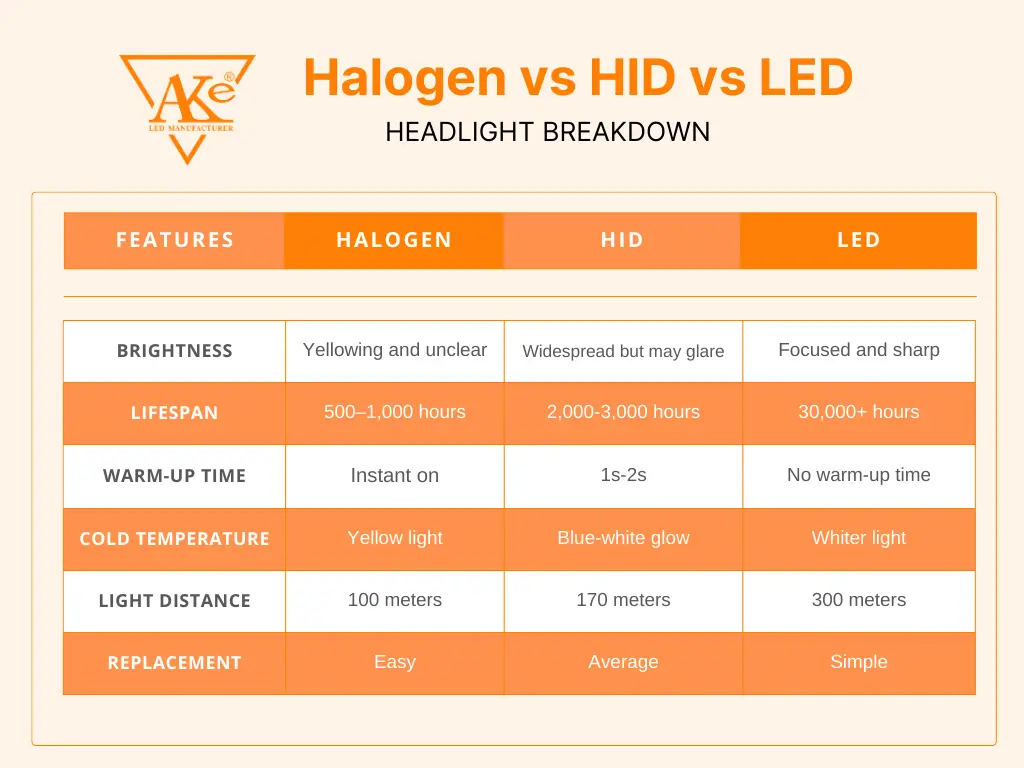
Understanding the technical specs helps you choose the best headlamp bulb types for your needs. Brightness, color temperature, and longevity vary widely between technologies.
Lumens and Brightness Levels
Lumens measure the total amount of visible light emitted by the bulb. Higher lumens mean better road illumination if the light is properly focused.
- Halogen: 700 to 1,200 lumens
- HID: 3,000 to 4,500 lumens
- LED: 2,000 to 6,000+ lumens
Color Temperature Guidelines
Color temperature measured in Kelvin (K) determines the hue of the light.
- 3000K: Yellow light, best for fog lights.
- 4300K: Warm white, the standard for OEM HID systems.
- 5000K: Pure white, offers the best visibility for most drivers.
- 6000K: Cool white or blue, primarily for aesthetic appeal.
- 8000K+: Deep blue, reduces visibility and is for style only.
Rule of Thumb: A 5000K color temperature offers the best balance of brightness and clarity.
Expected Lifespan Differences
Durability is a major factor when comparing headlamp bulb types. Halogen bulbs last 400 to 1,000 hours, while HID bulbs range from 2,000 to 5,000 hours. LED bulbs outperform both with a lifespan of 15,000 to 30,000 hours, lasting up to 30 times longer than halogens.
Mistakes to Avoid During Replacement
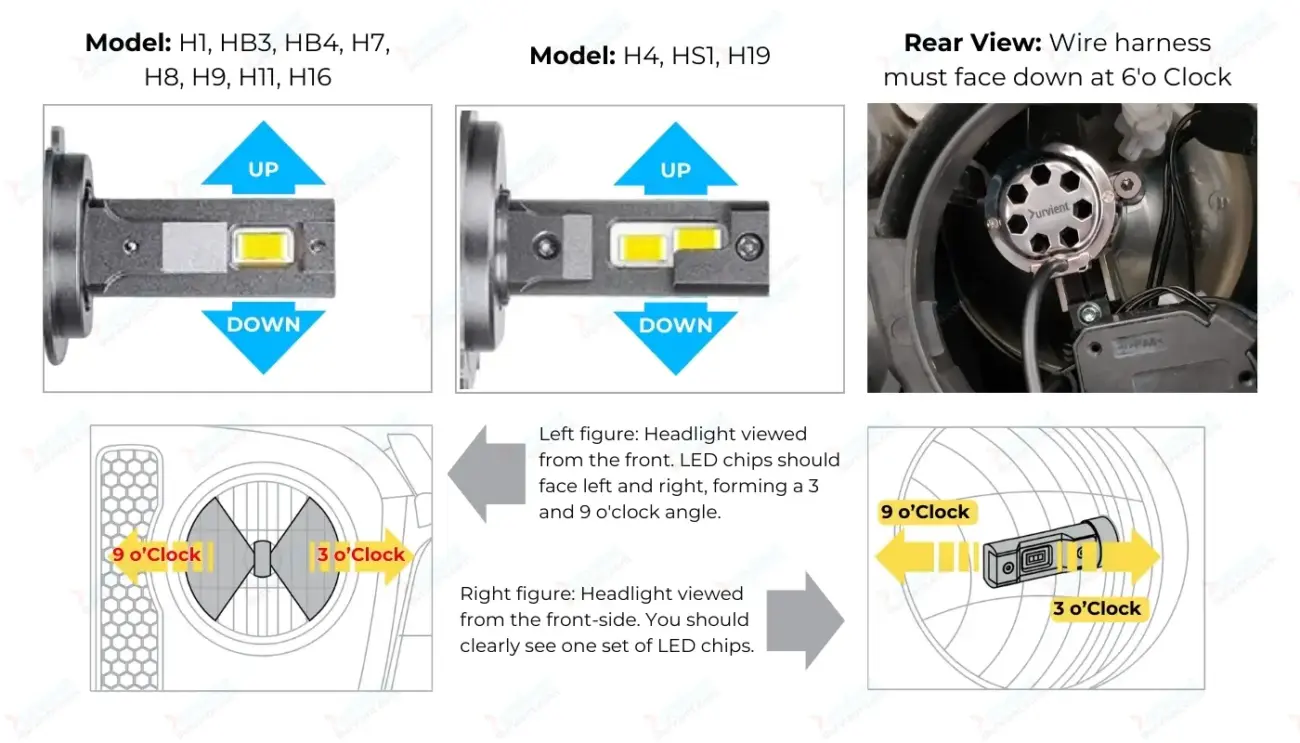
Even simple bulb swaps can go wrong if you ignore basic precautions. Avoiding these common errors ensures your new headlamp bulb types perform correctly.
Touching the Glass Surface
Never touch the glass of a halogen bulb with bare fingers. Skin oils create hot spots on the glass that lead to premature failure. Always use gloves or a clean cloth when handling the bulb.
Improper Installation Techniques
Incorrect installation can damage the bulb or the headlight housing. Common errors include inserting the bulb at the wrong angle, forgetting to click it into place, or failing to reconnect the wiring harness. Turn on your headlights after installation to confirm both beams work.
Ignoring Beam Alignment
Replacing bulbs with brighter LEDs or HIDs requires checking beam alignment. Misaligned lights can point too high and blind other drivers on the road. Adjust the aim according to your vehicle manual if necessary.
Using Incorrect Bulb Sizes
Bulbs like H7 and 9006 may look similar but are not interchangeable. Using the wrong size can damage the socket or fail to seal the headlight housing. Always verify the base code before installation.
Maintenance Tips for Longer Bulb Life
Proper care extends the life of your headlamp bulb types and maintains optimal performance. Regular maintenance prevents premature failure and ensures consistent lighting.
Cleaning Headlamp Lenses
Yellowed or foggy lenses can reduce light output by up to 80 percent. Clean your lenses regularly or use a restoration kit to remove oxidation. Clear lenses allow maximum light to reach the road.
Inspecting Wiring and Connectors
Corroded or loose connectors cause flickering or premature bulb failure. Inspect your wiring every six months to ensure tight and clean connections. Replace any damaged wires immediately.
Preventing Moisture Buildup
Ensure headlamp seals remain intact to keep water out. Moisture inside the housing can short-circuit LEDs or damage other bulb types. Check seals if you notice condensation after washing your car.
Replacing Bulbs in Pairs
Replace both headlights even if only one bulb burns out. The older bulb is likely near failure and will dim over time, creating uneven lighting. Pairing ensures consistent brightness and color.
Frequently Asked Questions About Headlamp Bulb Types
Can I install LED bulbs in a halogen housing?
Yes, but you must choose LEDs designed specifically as halogen replacements. Ensure they have the correct beam pattern and fit within the housing without blocking the lens.
Why do my new LED bulbs cause dashboard error messages?
Some vehicles require more power than LEDs draw, triggering a bulb-out warning. Installing CANBUS decoders or resistors usually resolves this issue.
What is the brightest legal color for headlight bulbs?
A color temperature of 5000K provides pure white light and is generally considered the brightest legal option. Colors above 6000K become blue and may reduce visibility in bad weather.
How long do halogen bulbs last compared to LEDs?
Halogen bulbs typically last 400 to 1,000 hours, whereas LED bulbs can last 15,000 to 30,000 hours. LEDs offer significantly longer service life.
Is it illegal to put HID bulbs in halogen headlights?
Yes, in many regions, installing HID bulbs in housings designed for halogen is illegal. The beam pattern is incorrect and creates dangerous glare for other drivers.
What does the letter ‘S’ or ‘R’ mean in HID bulb codes?
The letter ‘S’ indicates the bulb is for projector lenses, while ‘R’ means it is designed for reflector housings. Using the wrong type results in poor light distribution.
Key Takeaways for Choosing Headlamp Bulb Types
Selecting the right headlamp bulb types depends on your vehicle’s design and your specific driving needs. Halogens offer affordability, HIDs provide intense brightness for factory systems, and LEDs deliver superior longevity and efficiency.
Prioritize proper fitment, beam alignment, and legal compliance over raw brightness when upgrading. Check your owner’s manual today to identify your current bulb type and plan your next upgrade safely.