
You’ve just woken up refreshed after a bug-free night in your mosquito net tent, and now you’re staring at a floppy cloud of mesh wondering how it ever fit into that tiny storage bag. If you’ve ever wrestled with tangled netting or shoved the whole thing into a sack like a stuffed pillow, you’re not alone. Learning how to fold a mosquito net tent correctly transforms packing from a frustrating chore into a quick, repeatable routine you can finish in minutes.
This guide breaks down the exact folding technique used by seasoned campers and travelers. You’ll discover the right order of steps, how to align the corners like a pro, what to do when things go wrong, and the small habits that keep your net in top shape for years.
Zip Both Openings Completely Before Anything Else
The very first move sets the tone for everything that follows. Before you lift, squeeze, or fold a single inch of mesh, both zippers on your mosquito net tent need to be fully closed.
Why Zipping Comes First
A fully zipped net behaves like a sealed pouch. It holds its shape, resists tangling, and lets you control the compression much more easily. Open zippers create flaps that snag on folds, catch between layers, and slowly wear down the mesh over time.
Visual cue: After zipping, the net should resemble a closed envelope or cocoon with no gaps at either end. Run your fingers along both zipper tracks to be sure nothing is caught.
Compress the Net Into a Manageable Bundle
Once the zippers are sealed, the next job is reducing volume. This step turns an airy tent into something compact enough to hold in one hand.
Push One Corner Inward to Start the Fold
Lift the net slightly off the ground and choose one of the four bottom corners. Push that corner gently toward the center of the net. The fabric will collapse inward, and you’ll see the structure start to shrink.
- Use both hands for steady control
- Move slowly to avoid sharp creases
- Aim for a rounded, centralized shape
Squeeze Gently to Reach Soccer-Ball Size
After folding in the first corner, cup the net with both palms and apply even pressure from every direction. The goal is a soft, dense bundle roughly the size of a soccer ball.
Pro tip: If the net refuses to compress, one of the zippers is probably still open. Air trapped inside acts like a balloon and fights every squeeze.
Stack All Four Corners Against Your Knee

Corner alignment is the heart of folding a mosquito net tent properly. Using your knee as a brace gives you stability and frees up both hands for precision work.
Anchor the First Corner on Your Knee
Stand with your feet shoulder-width apart and bend one knee slightly. Press one corner of the compressed bundle firmly against your thigh. Your leg now acts as a clamp holding that corner in place.
Fold the Opposite Corner Over the Top
Take the corner directly across from the one on your knee and drape it over the top of the stack. Pull it smoothly so it lands flat and aligned with the bottom corner.
Pull the Last Two Corners Into the Stack
Grab the two remaining side corners and fold them inward, one at a time, stacking them neatly on top of the first two. Adjust as needed so all four legs sit flush and point the same direction.
Final check: All four corners should form a tidy vertical column, just like the shape the net had when it arrived from the factory.
Secure the Bundle With the Elastic Band
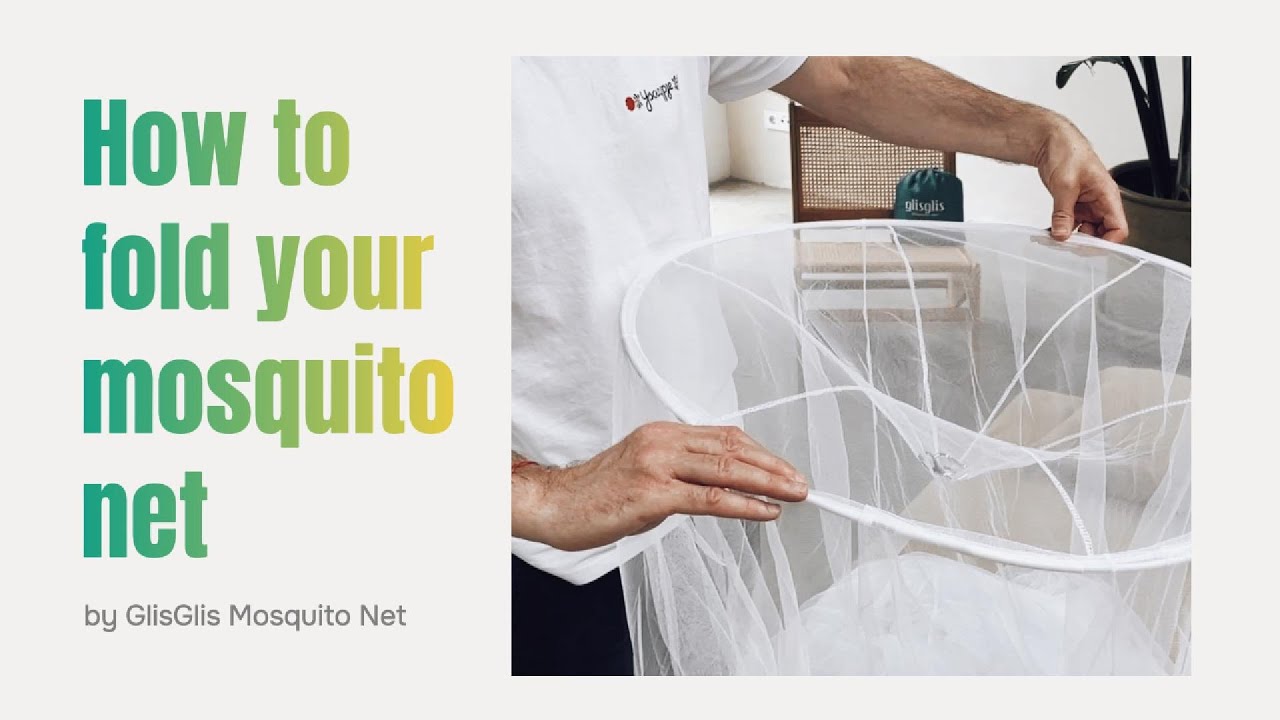
A perfectly folded net won’t stay that way without something holding it together. The elastic band included with your net is designed for exactly this purpose.
Wrap the Band Tightly Around the Base
Stretch the elastic band around the base of the stacked corners. Make two or three loops, working from the bottom upward, so it grips firmly without overstretching.
Why Securing Matters
A loose bundle can spring open inside your bag, creating the exact tangle you were trying to avoid. A tight band keeps the compression locked in and the mesh protected during transport.
Note: If the original elastic band is missing or has lost its stretch, swap in a sturdy rubber loop with similar tension. Never skip this step.
Slide the Net Into the Original Storage Bag

The final move is placing the secured bundle into the bag that came with your net. That bag is cut to the exact dimensions of the folded tent, so it should slide in smoothly.
- Hold the bag open with one hand
- Gently guide the bundle in without shoving
- Close the bag fully when the net is inside
Storing the net in its original bag protects it from dust, moisture, sunlight, and curious pests. For long-term storage, toss a small silica gel packet inside to absorb any residual humidity.
Troubleshoot Common Folding Problems
Even with clear instructions, things can go sideways. Here’s how to fix the most frequent issues quickly.
The Zipper Won’t Close
Stop and inspect the zipper track for trapped mesh or debris. Pull the slider back gently, clear the obstruction with a soft cloth, and try again. A tiny bit of beeswax or zipper lubricant works wonders if the teeth feel sticky.
The Net Won’t Compress
Nine times out of ten, an open zipper is the culprit. Check both ends again. Folding a damp net also makes compression nearly impossible, so let it dry completely first.
Warning: Never store or fold a wet mosquito net. Moisture trapped in the mesh encourages mold growth and weakens the fibers over time.
The Corners Won’t Stay Aligned
Unwrap the elastic band, restart the stacking process, and take an extra 30 seconds to line up each leg precisely. Clean alignment is the difference between a flat pack and a lumpy mess.
The Elastic Band Is Lost
Replace it right away. Without that band, the net will unfold in storage and undo all your careful work. Keep a spare rubber band in your travel kit for emergencies.
Model-Specific Folding Notes
This folding method works best for standard double bed mosquito net tents that have four legs, two zippered entrances, and a collapsible ring or hoop frame.
When to Use a Different Approach
- Pop-up instant nets collapse on their own with a simple twist
- Hanging canopy nets without frames don’t have corners to stack
- Single-person travel domes may use a smaller version of the same steps
Always peek at your owner’s manual if you’re unsure. For most standard double nets, though, the steps above are universal.
Best Practices That Extend Your Net’s Lifespan
Folding is maintenance in disguise. Every time you pack up, you have a chance to catch small issues before they become big ones.
- Fold on a clean bed, table, or mat to keep grit out of the mesh
- Inspect for holes, frayed seams, or worn zippers during each fold
- Practice folding once at home right after purchase so you’re not learning on the road
- Replace the elastic band and storage bag if they ever wear out
Time and Skill Expectations
Wondering how long this whole process takes? Here’s a realistic breakdown:
- First attempt: 4 to 5 minutes while you learn the sequence
- After a few practice runs: 2 to 3 minutes
- With experience: Under 2 minutes
No special tools, strength, or technical skill are required. Just patience, a clean surface, and a willingness to follow the same sequence each time.
Frequently Asked Questions About Folding a Mosquito Net Tent
How do I fold a mosquito net tent so it fits back in the bag?
Zip both openings fully, push one corner inward, squeeze the net into a soft ball, stack all four corners against your knee, wrap the elastic band around the base, and slide the bundle into the storage bag.
Can I fold a mosquito net tent while it’s still damp?
No. Always let the net air-dry completely before folding. Moisture trapped inside leads to mildew, odor, and weakened fibers over time.
What if I lost the elastic band that came with my net?
Replace it with any sturdy rubber loop of similar tension. Without something holding the bundle tight, the net will unfold in storage and lose its compact shape.
How long does it take to fold a mosquito net tent?
Most people finish in 2 to 5 minutes. Beginners may take closer to five minutes, while experienced users can do it in under two.
Is the folding method the same for all mosquito net tents?
The corner-stacking method works for standard double bed tents with four legs. Pop-up nets, hanging canopies, and single-person travel domes may use different folding techniques.
How often should I fold and unfold my net to keep it in good shape?
Fold it after every use and practice the full sequence once at home after buying it. Frequent, gentle folding actually helps maintain the fabric’s memory and makes each session smoother.
Key Takeaways for Folding Your Mosquito Net Tent
Mastering how to fold a mosquito net tent comes down to a simple five-part rhythm: zip, compress, stack, secure, and store. Zip both openings first to lock in the shape, compress gently into a softball-sized bundle, stack all four corners neatly against your knee, wrap the elastic band tight, and slide everything into the original storage bag.
Fold on a clean surface, inspect the mesh each time you pack up, and never fold a wet net. With a little practice, you’ll go from frustrated fumbling to a smooth two-minute routine that keeps your net protected, compact, and ready for the next adventure.