
Towing a tent trailer can transform your road trip into a comfortable outdoor adventure, but only if you get the weight right. Tent trailer weight is more than just a number on a spec sheet; it directly impacts your vehicle’s performance, safety, and fuel efficiency. Many campers make the mistake of focusing solely on dry weight, only to discover later that their loaded setup exceeds their towing capacity. This can lead to transmission failure, brake wear, or dangerous handling, especially in mountainous terrain.
From ultralight models under 1,000 pounds to high-wall campers over 3,500 pounds, tent trailers come in a wide range of weights based on size, features, and construction. Choosing the right match for your tow vehicle isn’t optional; it’s essential. In this guide, you’ll learn how to calculate real-world loaded weight, select a compatible vehicle, avoid common mistakes, and tow safely no matter where the road takes you.
Ultralight Tent Trailers Under 1,000 lbs
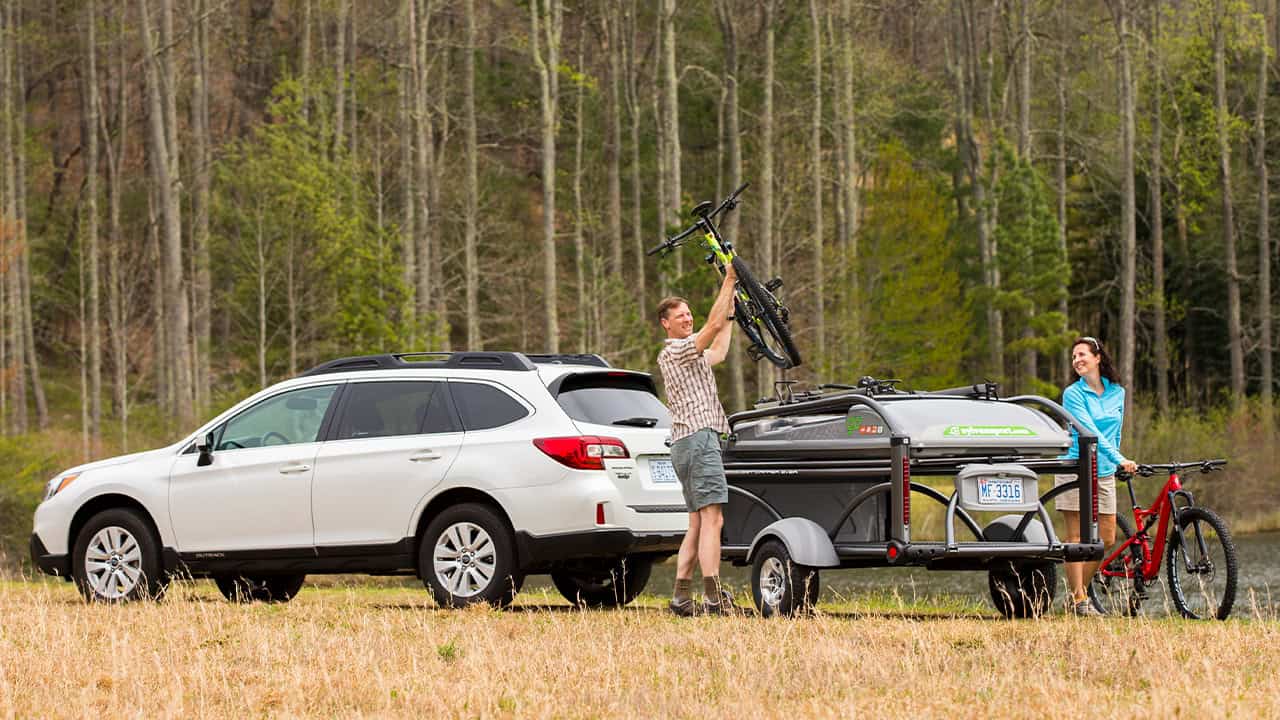
Ultralight pop-up campers are game-changers for drivers with smaller vehicles. These models typically weigh under 1,000 pounds dry, making them ideal for sedans, compact SUVs, hybrids, and even some electric vehicles. Their low weight opens up camping possibilities without requiring a truck or large SUV.
Ideal for Small Vehicles
You don’t need a V8 to tow an ultralight camper. Models like the SylvanSport GO (840 lbs dry) can be pulled by almost any vehicle with wheels and a hitch, including minivans and hybrids. This makes them perfect for urban dwellers, weekend warriors, and eco-conscious travelers who want to keep fuel costs low.
Still, always verify your vehicle’s towing specs. Just because a car can tow doesn’t mean it should regularly push its limits. Check the owner’s manual for maximum towing capacity and ensure your hitch is rated appropriately.
Key Features of Ultralight Designs
- Aluminum frame construction: Reduces weight while maintaining strength
- Minimalist interiors: Fewer amenities mean less bulk
- Quick setup (under 10 minutes): One-person operation with pneumatic dampening systems
- High cargo-to-weight ratio: The SylvanSport GO carries nearly 1,000 lbs of gear despite weighing only 840 lbs
These campers prioritize portability and versatility. Many include rooftop racks for bikes, kayaks, or ATVs, turning your trailer into a mobile adventure hub.
Standard Pop-Up Campers: 1,700 to 2,000 lbs
Most traditional tent trailers fall into the 1,700 to 2,000 lbs dry weight range. These mid-sized models offer more interior space, sleeping for four or more, and often include basic kitchens.
Vehicle Compatibility
Towing these requires a capable V6 engine and proper equipment. Common compatible vehicles include:
– Toyota Sienna minivan
– Midsize SUVs (e.g., Honda Pilot, Ford Explorer)
– Crossovers with factory towing packages
While many V6-powered vehicles are rated for 3,500+ lbs, remember that dry weight isn’t total weight. Once you add water, propane, food, and gear, you’re easily adding 500 to 1,000 lbs.
Avoid the Dry Weight Trap
Many buyers assume their vehicle can handle a 1,800 lb camper because the manual says “tow rating: 3,500 lbs.” But that number assumes ideal conditions. Real-world factors like passenger weight, cargo in the vehicle, elevation changes, and wind resistance can quickly eat into your safety margin. Always calculate loaded weight before hitting the road.
High-Wall Models: 3,100 to 3,500 lbs Dry
High-wall pop-up campers offer near-RV comfort with standing room, full kitchens, and sometimes even bathrooms. But this luxury comes at a cost: weight.
Space vs. Towing Demands
These models typically weigh 3,100 to 3,500 pounds dry, and when loaded, can exceed 4,000 pounds. That means you’ll need serious towing muscle.
Required Tow Vehicles:
- Full-size trucks (e.g., Ford F-150, Chevrolet Silverado)
- Heavy-duty SUVs (e.g., Tahoe, Suburban)
- Vans with enhanced towing packages (e.g., Ford Freestar with tow package rated up to 4,000 lbs)
Even with a powerful vehicle, upgrades may be necessary for safe, long-term use.
Why Upgrades Matter
Frequent towing, especially in hilly areas, puts stress on critical systems:
– Transmission overheating: Install a transmission cooler
– Brake fade on descents: Upgrade brake pads or add auxiliary brakes
– Engine strain: Enhanced cooling systems help manage heat
Without these, you risk premature wear or failure. One downhill run through the mountains could leave you needing a new brake job, or worse.
Dry Weight vs. Loaded Weight

Understanding the difference between dry weight and loaded weight is the single most important factor in safe towing.
What Is Dry Weight?
Dry weight is the trailer’s weight empty: no water, propane, gear, or people. It’s a starting point, not your real-world number.
Manufacturers report dry weight because it looks better on paper. But once you load up:
– Freshwater tank: ~80 lbs per 10 gallons
– Propane tanks: ~20 lbs each
– Food, clothes, camping gear: 200 to 500+ lbs
– Passengers and cargo in tow vehicle: 400 to 800+ lbs
That’s easily 1,000 lbs added.
Real-World Example
| Item | Weight |
|---|---|
| Camper dry weight | 3,100 lbs |
| Water, propane, gear | +600 lbs |
| Passengers + vehicle cargo | +700 lbs |
| Total Combined Weight | 4,400 lbs |
Now check your Gross Combined Weight Rating (GCWR), the maximum allowed weight of your vehicle, passengers, cargo, and trailer. Exceeding it risks transmission failure, brake wear, poor handling, and warranty voidance.
Vehicle Compatibility by Weight Class
Matching your vehicle to the trailer isn’t guesswork. Use this guide to find what works.
Under 1,000 lbs: Small Vehicles Welcome
| Tow Vehicle | Suitable? |
|---|---|
| Sedans | Yes (if rated) |
| Compact SUVs | Yes |
| Hybrids/EVs | Possible (check specs) |
| Minivans | Yes (e.g., Toyota Sienna) |
Pro Tip: Even if your vehicle can tow 1,500 lbs, consider how it handles with the load. Lighter trailers reduce strain and improve fuel economy.
1,700 to 2,000 lbs: Midsize Power Needed
| Tow Vehicle | Suitable? |
|---|---|
| V6 Minivans | Yes (e.g., Sienna) |
| Midsize SUVs | Yes |
| Crossovers | Only with towing package |
| 4-Cylinder Cars | Not recommended |
These campers demand more from your vehicle. Ensure your transmission has a cooler and your brakes are in top condition.
3,000+ lbs: Trucks and Heavy-Duty SUVs Only
| Tow Vehicle | Suitable? |
|---|---|
| Full-Size Trucks | Yes |
| Heavy-Duty SUVs | Yes |
| Vans with Tow Package | Yes (e.g., Ford Freestar) |
| Midsize SUVs | Risky unless specifically rated |
At this weight, stability and braking become critical. Consider adding a weight-distribution hitch, trailer brakes (if not standard), and a transmission cooler.
Critical Safety Ratings You Must Check
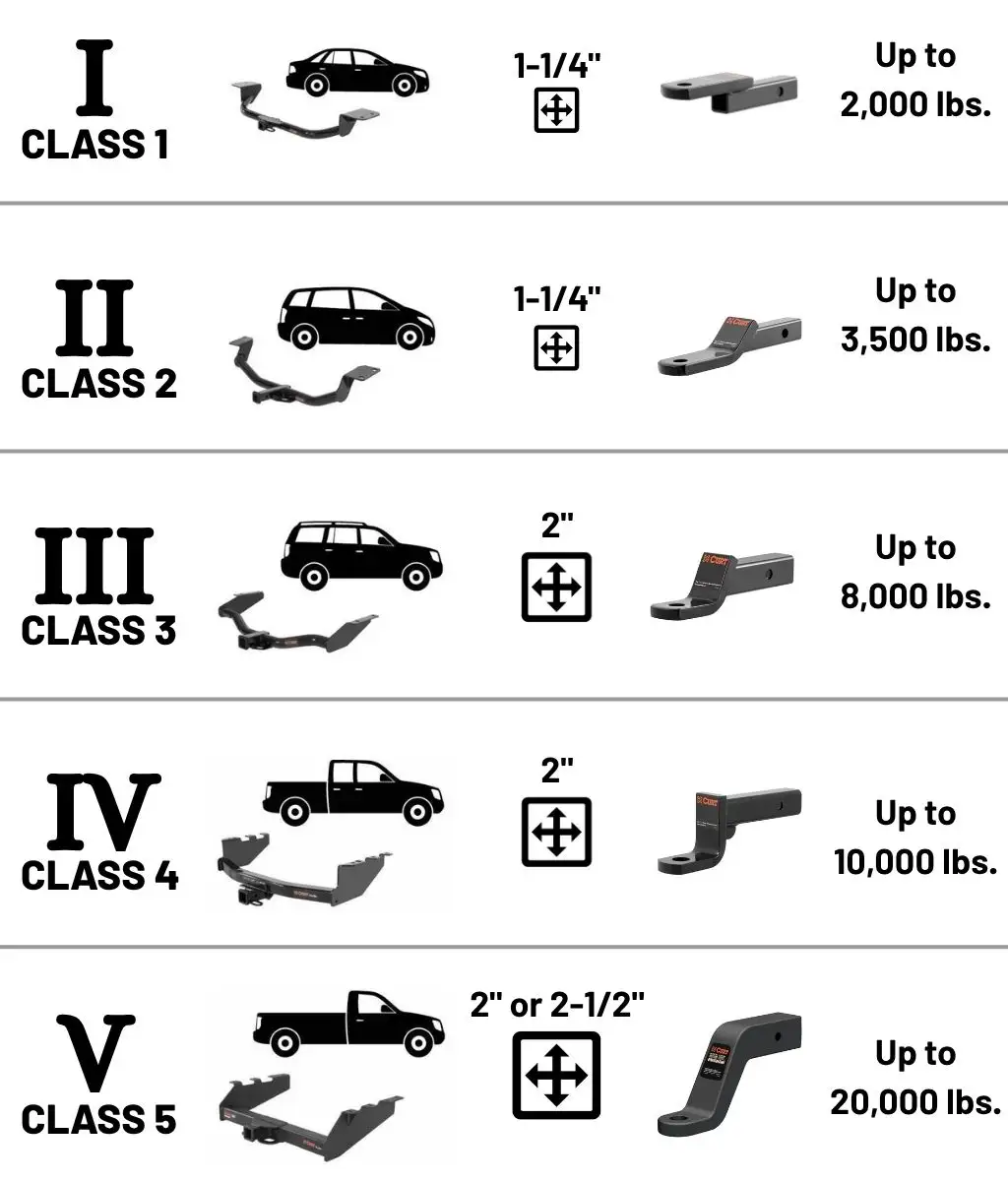
Don’t just look at hitch ratings. Three key metrics determine safe towing.
Gross Combined Weight Rating (GCWR)
GCWR is the total weight your vehicle and trailer can safely handle together. It includes vehicle weight, passengers, cargo, and the loaded trailer.
Exceeding GCWR damages components and compromises safety. Always calculate total combined weight and compare it to your vehicle’s GCWR.
Payload Capacity
Payload is the weight your vehicle can carry inside, including passengers, cargo, and the tongue weight of the trailer (typically 10–15% of trailer weight).
For a 3,500 lb trailer, tongue weight equals roughly 400 to 500 lbs. That eats into your payload fast.
Hitch Class Ratings
| Class | Max Weight | Best For |
|---|---|---|
| I | 2,000 lbs | Ultralights |
| II | 3,500 lbs | Standard pop-ups |
| III | 8,000 lbs | High-wall models |
| IV | 12,000 lbs | Heavy-duty |
Ensure your hitch matches or exceeds your trailer’s loaded weight.
Mountain Towing: Brake and Engine Risks
Driving in hilly or mountainous terrain multiplies the risks of towing.
Brake Fade on Downhills
Long descents generate intense heat. Relying only on service brakes can lead to brake fade (loss of stopping power), warped rotors, or complete brake failure.
Solution: Use engine braking. Shift to a lower gear (L, 2, or manual mode) to let the engine slow the vehicle. This reduces brake wear and keeps you in control.
Transmission Overheating
Towing uphill strains the transmission. Without a cooler, fluid temperatures can spike, leading to slipping gears, internal damage, and costly repairs.
Always install a transmission cooler if you plan to tow frequently or in hilly areas.
Design Features That Affect Weight
How a trailer is built determines its weight and your towing experience.
Weight-Saving Innovations
- All-aluminum frames: Lighter than steel, resistant to rust
- TIG-welded construction: Stronger joints without added bulk
- Pneumatic lift systems: Reduce physical effort and mechanical complexity
- Adjustable frames: Maintain low profile for better aerodynamics
The SylvanSport GO exemplifies these features: 840 lbs dry with a 1,000 lb cargo capacity.
Weight-Adding Features
Features that increase comfort often add significant weight:
– Kitchen sinks: +100+ lbs (can push total over 2,000 lbs)
– Standing height interiors: Requires taller walls and stronger frame
– Self-inflating mattresses: Convenient but heavy
– Full bathrooms: Rare in tent trailers, but found in high-end models
Ask yourself: Are you willing to sacrifice fuel economy and handling for extra amenities?
Pre-Purchase Checklist
Before buying a tent trailer, answer these questions.
Is Your Vehicle Capable?
- What is your vehicle’s maximum towing capacity?
- What is the GCWR?
- Does it have a transmission cooler?
- Are brakes rated for towing?
- Is the hitch Class II or higher?
If you’re unsure, consult your owner’s manual or dealership.
Do You Need Upgrades?
If your vehicle lacks a transmission cooler, heavy-duty brakes, or a factory tow package, you may need to upgrade or choose a lighter trailer.
Consider Your Typical Trips
- Flat terrain? Lighter trailers work well.
- Mountainous regions? Prioritize braking and cooling.
- Frequent travel? Invest in durable systems.
Common Mistakes to Avoid
Even experienced campers get this wrong.
Mistake #1: Ignoring Loaded Weight
Focusing only on dry weight is the #1 error. Always add 500 to 1,000 lbs for real-world conditions.
Mistake #2: Checking Hitch Rating Only
The hitch might handle 3,500 lbs, but does your engine, transmission, or braking system?
Mistake #3: Overlooking Payload
Too much weight in the vehicle, especially in the rear, can destabilize the trailer.
Mistake #4: Assuming All V6s Are Equal
Not all V6 engines are towing-ready. Some lack cooling systems or frame reinforcements.
Frequently Asked Questions About Tent Trailer Weight
What is the average weight of a tent trailer?
Tent trailer weight varies widely. Ultralight models weigh under 1,000 lbs dry, standard pop-ups range from 1,700 to 2,000 lbs, and high-wall models can reach 3,100 to 3,500 lbs. Your loaded weight will typically be 500 to 1,000 lbs more than the dry weight.
Can a small car tow a pop-up camper?
Yes, if it’s an ultralight model under 1,000 lbs. Vehicles like compact SUVs, hybrids, and even some sedans can tow these campers safely. Always verify your vehicle’s towing capacity in the owner’s manual before hitching up.
What is the lightest tent trailer available?
The lightest tent trailers, sometimes called spartan or motorcycle campers, weigh around 600 lbs empty. The SylvanSport GO at 840 lbs is a popular ultralight option that balances low weight with high cargo capacity.
How much does a loaded pop-up camper weigh?
A loaded pop-up camper typically weighs 500 to 1,000 lbs more than its dry weight. For example, a camper with a 1,800 lb dry weight may weigh 2,300 to 2,800 lbs once you add water, propane, food, and gear.
What size vehicle do I need to tow a high-wall pop-up camper?
High-wall pop-up campers weighing 3,100 to 3,500 lbs require a full-size truck, heavy-duty SUV, or van with an enhanced towing package. Examples include the Ford F-150, Chevrolet Silverado, Tahoe, or Ford Freestar with tow package.
How do I calculate my vehicle’s towing capacity?
Check your owner’s manual for three key ratings: maximum towing capacity, Gross Combined Weight Rating (GCWR), and payload capacity. Compare these against your loaded trailer weight plus passengers and cargo.
Key Takeaways for Safe Tent Trailer Towing
Towing a tent trailer should be enjoyable, not stressful. Always match your trailer to your vehicle’s real-world capabilities, calculate loaded weight before every trip, and check your GCWR, payload, and hitch ratings. Invest in upgrades like a transmission cooler and heavy-duty brakes if you plan to tow frequently or in hilly terrain.
Next Step: Before your next trip, weigh your loaded trailer at a public scale and confirm your tow vehicle meets all safety ratings. A few minutes of preparation can prevent costly breakdowns and keep your family safe on the road.