
Dirty cork handles feel slick and dangerous when you need reliable traction on steep trails. Sweat, dirt, and oils build up in the porous material over time, reducing your grip security during critical moments.
This guide explains how to clean cork trekking pole handles using simple supplies like alcohol and a soft sponge. You will learn to restore tackiness, apply protective sealant, and prevent future damage in under 30 minutes.
Essential Tools and Safety Preparation

Gathering the right supplies prevents accidental damage to your poles before you begin. Cork is porous and delicate, so using harsh chemicals or excessive water can cause swelling or cracking.
Required Cleaning Supplies
You need specific items to ensure effective cleaning without harming the cork structure.
* 70% isopropyl alcohol for oil removal and sanitization
* Soft microfiber cloth or a Magic Eraser type sponge
* Clean dry towel for immediate drying
* Painter’s tape to shield metal and foam parts
* Small brush for precise sealant application
* Cork sealant such as U40 Cork Seal
Avoid bleach, strong detergents, or alcohol concentrations above 90 percent. These substances dry out the material or cause discoloration.
Protecting Non-Cork Components
Trekking poles often feature metal ferrules, rubber collars, or foam extensions near the cork.
1. Wrap painter’s tape tightly around metal locking mechanisms and adjacent foam sections.
2. Ensure the tape creates a complete seal to stop liquid seepage.
3. Remove rubber grips or straps if your pole design allows it.
This step prevents corrosion in moving parts and stops sealant from ruining adjacent materials.
Selecting the Best Cleaning Method
Choose between an alcohol wipe-down or a sponge scrub based on how dirty your handles are. Heavy mud requires different care than oily residue from sweaty hands.
Alcohol Wipe for Oily Residue
Use this method when handles feel slick or have visible stains from skin oils. Alcohol dissolves grease effectively while sanitizing the surface without soaking the cork.
1. Lightly dampen a microfiber cloth with 70% isopropyl alcohol.
2. Wipe the cork using small circular motions on high-contact zones.
3. Work in two-inch sections to monitor progress closely.
4. Re-dampen the cloth only as needed to maintain light moisture.
Pro Tip: Let the alcohol sit on stubborn spots for 10 seconds before wiping to break down tough grime.
Sponge Scrub for Caked-On Dirt
Select this approach if your poles have dried mud or deep trail gunk.
1. Dampen a soft sponge with water or mild soapy water.
2. Gently scrub the cork using back-and-forth strokes along the handle length.
3. Avoid pressing hard since cork tears easily under pressure.
4. Never scrub diagonally across the grain to prevent fraying.
5. Pat the handle dry immediately with a clean towel.
Warning: Excessive water weakens adhesives beneath the cork. Use only enough moisture to lift dirt.
Drying Techniques to Prevent Damage
Trapped moisture leads to warping, softening, and eventual delamination of the cork grip. Proper drying time depends entirely on your chosen cleaning method.
Air-Drying After Water Cleaning
If you used a wet sponge or soapy solution, the cork needs significant time to dry.
* Place poles horizontally in a well-ventilated area.
* Keep them away from direct sunlight or heat sources.
* Allow at least 8 to 12 hours before proceeding.
Quick Drying After Alcohol Cleaning
Alcohol evaporates rapidly compared to water.
* Let poles sit for 5 to 10 minutes.
* Touch the base and finger grooves to confirm no dampness remains.
* Proceed to sealing only when the surface feels completely dry.
Cleaned cork often appears lighter initially but will darken slightly once sealed.
Applying Cork Sealant for Protection
Sealing is optional but highly recommended to block moisture and resist future staining. A good sealant preserves the natural texture while extending the life of your grips.
Preparing for Sealant Application
Ensure your workspace is ready before opening the sealant bottle.
1. Reapply painter’s tape to any exposed metal or foam areas.
2. Verify the cork is completely dry and free of dust.
3. Shake the sealant bottle gently to mix the contents.
Applying Thin Even Coats
Using too much product creates a slippery surface instead of a protective one.
1. Dip a small brush lightly into the cork sealant.
2. Apply a single drop to cover an entire grip section.
3. Brush the sealant up and down following the grain of the cork.
4. Spread evenly to avoid puddling or visible streaks.
5. Cover all surfaces including ends and crevices.
Key Rule: The finish must remain matte. A glossy surface indicates you applied too much sealant.
Curing Time Requirements
Patience during curing ensures maximum durability and protection.
* Touch-dry time is approximately 30 minutes.
* Full cure time requires 24 hours.
Do not handle or store poles during the curing process. Premature use compromises bond strength and protection levels.
Fixing Common Cleaning Mistakes

Even careful users sometimes make errors during the cleaning or sealing process. Here is how to correct them without buying new grips.
Correcting Over-Applied Sealant
Symptom: The handle feels glossy, sticky, or slippery after drying.
Fix:
1. Wait 24 hours for the sealant to cure fully.
2. Lightly buff the surface with a dry microfiber cloth.
3. Sand severe buildup gently with 600-grit sandpaper.
4. Reapply a thinner coat if necessary.
Addressing Gouged or Torn Cork
Cause: Applying too much pressure during scrubbing.
Prevention: Always use a light touch and let the cleaning agent do the work.
Remedy: Minor gouges do not affect function. Deep damage may require grip replacement or a tape overlay for comfort.
Resolving Moisture in Joints
Sign: Fogging, stiffness, or corrosion near pole segments.
Action:
1. Disassemble poles completely.
2. Dry each section with a cloth and air-dry upright for 24 hours.
3. Apply light silicone lubricant to metal threads after drying.
Maintenance Schedule for Peak Performance
Regular upkeep prevents deep buildup and keeps your poles reliable in all weather conditions. Consistent care reduces the need for aggressive cleaning later.
Routine Cleaning After Hikes
Wipe handles with an alcohol-dampened cloth after every few hikes. This takes less than two minutes and prevents oil accumulation. Store a travel-sized alcohol wipe in your pack for trailside touch-ups.
Annual Deep Clean and Reseal
Schedule one full maintenance session per year for best results.
* Perform this at the end of hiking season or before a major trek.
* Reapply sealant even if the cork looks fine.
* Inspect for cracks, loose sections, or unusual wear patterns.
Proper Storage Practices
Store poles in a cool, dry place away from direct sun. Avoid leaving them in hot cars or damp basements. Loosen twist locks to relieve tension on cork and mechanisms during storage.
Why This Cleaning Process Works

Cork is a natural material prized for being lightweight and shock-absorbing when clean. Its porosity makes it vulnerable to contamination, which this protocol addresses directly.
Isopropyl alcohol removes hydrophobic residues like oils and sweat that reduce friction. Minimal water use prevents structural damage while sealant forms a protective barrier. Proper curing ensures durability and maintains the natural texture.
Users report a dramatic return of like-new tackiness and confidence in their grip. This is critical when descending rocky slopes or crossing streams where safety matters most.
Frequently Asked Questions About Cork Handle Care
Can I use regular household soap to clean cork handles?
Mild soapy water works for surface dirt but is less effective on oils than alcohol. Use only a few drops of dish soap per cup of water to avoid residue buildup.
How often should I reseal my cork trekking poles?
Resealing once a year is sufficient for most hikers. Perform this task at the end of the hiking season or before a major trip to ensure maximum protection.
Will cleaning make my cork handles look brand new?
Cleaning restores the natural color and removes grime, making old gear look significantly fresher. The cork may appear slightly darker after sealing, which is normal.
What happens if I get sealant on the metal parts of my pole?
Sealant on metal can interfere with locking mechanisms and cause aesthetic issues. Always use painter’s tape to shield non-cork components before application.
Can I use this method on EVA foam grips?
No, this alcohol and sealant method is specific to cork. EVA foam requires different cleaning agents and should be taped off during cork maintenance.
Key Takeaways for Cleaning Cork Trekking Pole Handles
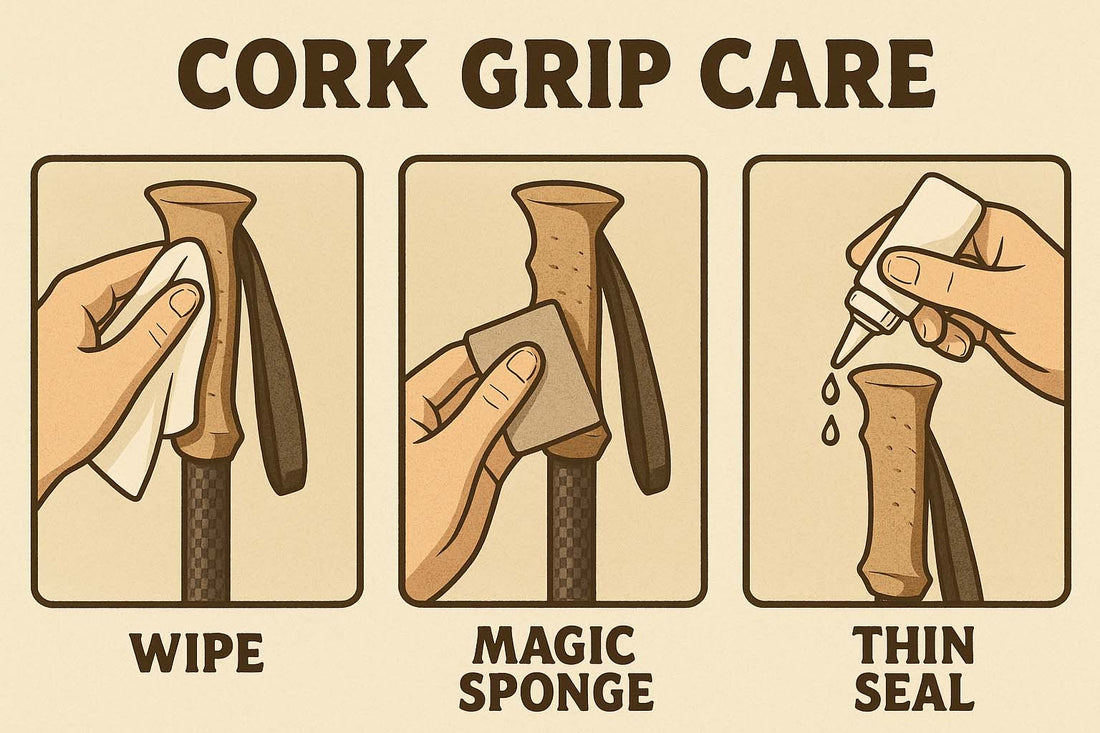
Restoring your cork handles requires only 70% isopropyl alcohol, a soft cloth, and proper drying time. Following the correct steps ensures you remove dangerous oils without damaging the porous material.
Apply a thin coat of cork sealant annually to protect against moisture and extend the life of your gear. This simple routine improves safety and comfort on every hike.
Start your next maintenance session by gathering supplies and taping off metal parts. Your poles will feel secure and reliable for years to come.