
If you’ve ever summited a ridge after hours of climbing, legs burning but spirit soaring, you’ve felt it—hiking doesn’t just test your limits; it expands them. The answer is clear: yes, hiking increases stamina, and it does so in ways that outperform many traditional workouts. Unlike repetitive gym routines, hiking delivers a full-body endurance challenge that builds cardiovascular fitness, muscular resilience, and mental toughness—all while immersing you in nature. Supported by science and embraced by elite athletes, hiking is more than recreation—it’s a proven, sustainable method for boosting stamina.
Stamina isn’t just about lasting longer on the trail. It’s the ability to sustain physical effort over time, recover efficiently, and perform consistently. Whether you’re training for a long backpacking trip, improving daily energy, or enhancing athletic performance, hiking offers measurable, real-world gains. This guide breaks down exactly how hiking builds stamina, the science behind its benefits, and actionable strategies to maximize your results.
Boost Cardiovascular Endurance Through Natural Movement
Hiking is a dynamic aerobic workout that strengthens your heart and lungs far more effectively than flat, predictable walking. Trails with elevation and uneven terrain keep your heart rate elevated for extended periods, training your cardiovascular system to deliver oxygen more efficiently.
Sustain a Higher Heart Rate in Real-World Conditions
Most hikes last 1–6 hours, providing prolonged cardiovascular stimulation. A 2023 PLOS One study found that hikers’ average heart rate was 6 beats per minute higher during a mountain hike than on a treadmill, even with identical physical effort. Why? Unpredictable footing, wind resistance, and elevation changes naturally increase exertion.
Even moderate hikes (2–3 mph on rolling trails) elevate your heart into the aerobic training zone (60–80% of max HR), where endurance adaptations occur. Over time, this leads to:
– Improved VO2 max (your body’s maximum oxygen uptake)
– Greater capillary density in muscles for better oxygen delivery
– Enhanced mitochondrial function, boosting energy production
Train Aerobic Capacity with Long, Slow Distance Hikes
Long, slow distance (LSD) hikes are the foundation of stamina building. These 2+ hour hikes at a conversational pace train your body to burn fat as fuel, preserving glycogen for when you really need it—like a steep final climb.
Pro Tip: Schedule one long hike weekly. Start at 1.5 hours and add 10–15 minutes each week. Keep your pace easy—able to speak in full sentences.
This method builds aerobic base without overstressing joints, making it ideal for long-term stamina gains.
Build Muscular Endurance Across Key Hiking Muscles

Hiking isn’t just cardio—it’s a full-body strength and endurance workout. Every step activates multiple muscle groups, especially on inclines and descents.
Engage Major Lower Body and Core Muscles
Hiking recruits a powerful combination of muscles:
– Quads: Power uphill strides
– Glutes: Drive hip extension and stabilize the pelvis
– Hamstrings: Control knee bend and hip movement
– Calves: Push off and stabilize ankles
– Hip flexors: Lift legs on steep ascents
– Core: Keeps your torso upright, especially with a pack
Carrying a backpack amplifies this effect. Even a 15–20 lb pack increases muscular demand by 15–20%, turning a casual walk into a functional strength session.
Strengthen Through Eccentric Loading on the Descent
Descending is where many hikers hit their limit. The eccentric loading on your quads—muscles lengthening under tension—builds resilience and joint stability. This type of training is crucial for preventing knee pain and fatigue.
“The descent can be just as or more of a workout than the hike up.” — Nika Cortese, Physical Therapist
To prepare, practice controlled step-downs or slow stair descents. These exercises reduce soreness and injury risk on long downhills.
Maximize Stamina Gains with Progressive Training
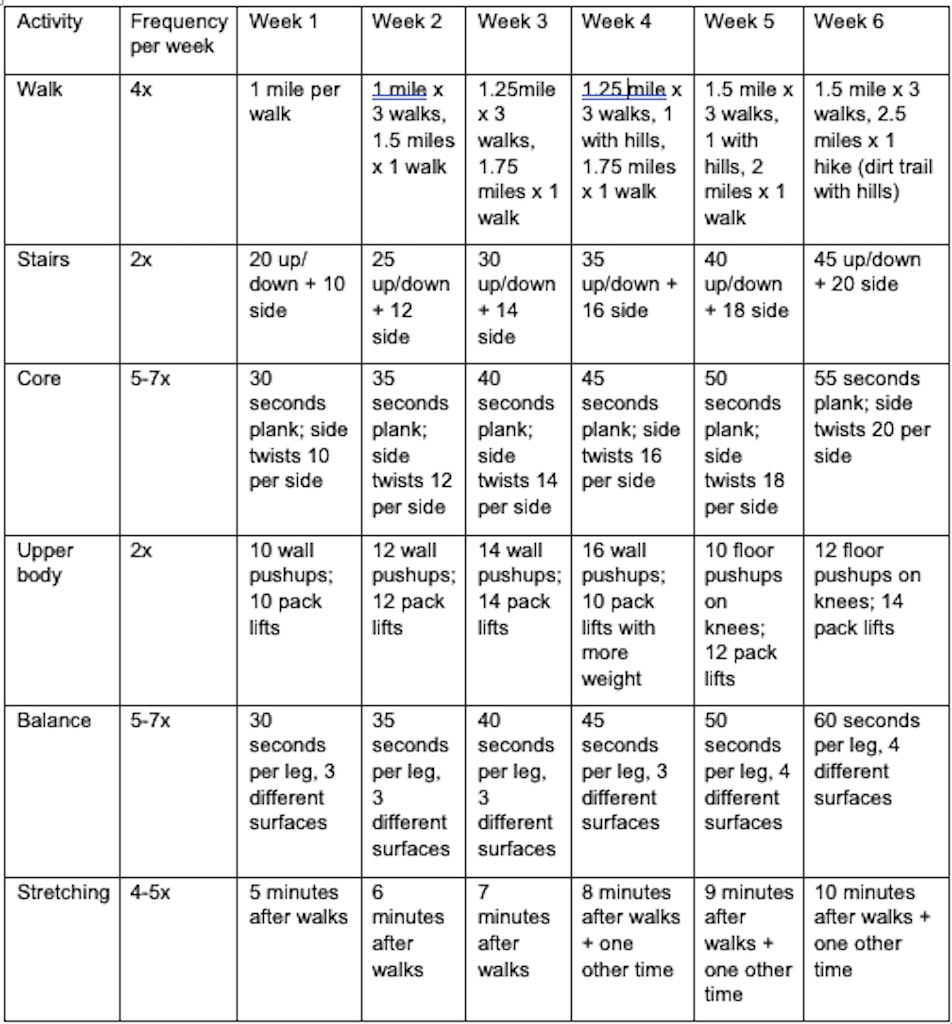
To turn hiking into a structured stamina program, apply proven training principles like progressive overload and functional specificity.
Increase Distance and Elevation Gradually
Avoid injury by progressing slowly:
– Add 10–15 minutes or 0.5 miles per week
– Limit weekly mileage increases to 10%
– Match new hikes to your current fitness level
Example: If your longest hike is 4 miles, aim for 4.4 next week, then 4.8—letting your body adapt.
Add elevation carefully. Start with 500 feet of gain and increase by 100–200 feet weekly.
Train with a Loaded Pack (Rucking)
Rucking—walking with a weighted backpack—is one of the best ways to simulate hiking and build stamina faster.
- Start with 10–20% of your body weight (e.g., 15–30 lbs for a 150 lb person)
- Wear it during errands, walks, or stair climbing
- Gradually increase to 80% of your expected trail load
Carrying 10 lbs more than planned on training hikes builds strength without adding distance.
Hike Hills and Use Stairs for Specific Conditioning
Hills and stairs replicate trail demands and build targeted strength.
- Stair climbing: Builds quad and glute endurance
- Downhill stair work: Improves eccentric control
- Lateral steps: Train hip stabilizers for uneven terrain
Workout idea: Climb 10 flights, walk down slowly. Repeat 3–5 times, 2x/week.
Supplement With Strength and Cross-Training
Hiking builds endurance, but pairing it with strength and cross-training multiplies results.
Target Key Hiking Muscles with Strength Work
Aim for 2 strength sessions per week focusing on functional movements:
Lower Body
- Squats: Build leg power
- Lunges (walking, reverse): Improve balance and unilateral strength
- Step-Ups/Step-Downs: Mimic trail ascents and descents
- Single-Leg Deadlifts: Boost hip stability
- Calf Raises: Enhance ankle control
Core Stability
- Planks, dead bugs: Stabilize torso under load
- Mountain climbers, heel taps: Improve dynamic control
- Supermans: Strengthen lower back
“A strong core helps maintain balance on uneven trails.” — Best Exercises for Hiking
Add Cross-Training for Balanced Conditioning
Don’t rely on hiking alone. Cross-train to build endurance while protecting joints.
- Cycling, swimming, brisk walking: Low-impact cardio
- Treadmill at 2.5–3 mph with 10–15% incline: Simulates uphill hiking
- HIIT intervals: Boost both aerobic and anaerobic capacity
Elite coach Jesse Kropelnicki uses a 2.85x multiplier: A 2-hour run = a 5.7-hour hike.
Improve Balance and Stability for Trail Efficiency
Trails are unpredictable. Training balance prevents injuries and improves hiking efficiency.
Practice Functional Balance Exercises
- Single-Leg Glute Bridges: Isolate glutes, improve pelvic control
- Bosu Ball Squats: Mimic uneven terrain
- Single-Leg Deadlift to High Knee: Challenge balance and hip control
- Side Steps with Resistance Band: Activate hip abductors
“Stability helps control joint motion and prevent ankle rolls.” — Training for Hiking Strength, Stability and Endurance
Do 2–3 sets, 2x/week, focusing on control.
Optimize Breathing for Better Oxygen Use
Efficient breathing fuels endurance. Shallow chest breathing limits oxygen; diaphragmatic breathing maximizes it.
Practice Deep Belly Breathing
- Inhale through the nose, expanding your belly
- Exhale slowly through the mouth
- Take 3–4 deep breaths every 10 minutes on the trail
“Something often overlooked is breath.” — 5 Tips to Improve Hiking Stamina
This calms your nervous system, reduces fatigue, and improves oxygen delivery—especially at altitude.
Use Gear to Enhance Training and Protection

The right gear doesn’t just protect—it can actively build stamina.
Trekking Poles
- Engage upper body and core
- Reduce knee impact by up to 25%
- Improve balance and enable a bounding gait for added power
Weighted Vests or Packs
- Wear during daily walks to simulate trail load
- Start with 10–20 lbs and increase gradually
Proper Footwear
- Choose hiking shoes with ankle support and grip
- Avoid sneakers on rocky or slippery trails
- Use microspikes in icy conditions
“Everyone needs a good pair of shoes that fit well and feel comfortable.” — Nika Cortese
Recover Smart to Build Stamina Sustainably
Stamina grows during recovery. Train hard, but recover smarter.
Active Recovery
- Light walks, yoga, or stretching on rest days
- Promotes blood flow and muscle repair
Post-Hike Stretching and Foam Rolling
- Stretch calves, hamstrings, hip flexors at the trailhead
- Foam roll quads, IT bands, glutes at home
- Follow Nika Cortese’s rule: “Undo what you just did”
Rest and Listen to Your Body
- Take 1–2 rest days per week
- Don’t push through sharp pain
- Fatigue is a signal—not a challenge
Follow a Weekly Training Plan for Consistent Progress
Consistency beats intensity. Use this beginner-to-intermediate plan:
| Day | Activity | Duration | Notes |
|---|---|---|---|
| Monday | Ruck Walk (15 lb pack) | 30 min | Flat or rolling terrain |
| Tuesday | Strength Training | 45 min | Squats, lunges, core |
| Wednesday | Stair Climbing | 10–20 flights | Add lateral steps |
| Thursday | Pack Walk or Ruck | 45 min | Increase weight gradually |
| Friday | Rest or Active Recovery | 20–30 min | Light walk or yoga |
| Saturday | Long Hike (LSD) | 2–4 hours | Progressive distance |
| Sunday | Mobility Work | 30 min | Stretching, foam rolling |
Adjust based on fitness. The goal is progress, not perfection.
Gain Mental Stamina and Long-Term Benefits
Hiking builds mental resilience as much as physical endurance.
Reduce Mental Fatigue
- Nature exposure lowers anxiety and rumination
- “Soft fascinations” (trees, water, light) reduce perceived effort
- 90-minute nature walks reduce brain activity linked to depression
Enjoy Sustainable Fitness
- Low-impact, joint-friendly
- Transfers to trail running, skiing, backpacking
- Enjoyable enough to stick with for life
“People tend to stick with activities they enjoy.” — Dr. Martin Niedermeier, PLOS One study
That enjoyment is key—the best workout is the one you’ll do consistently.
Hiking is a complete stamina-building system—cardiovascular, muscular, and mental. By hiking regularly, progressing smartly, and supporting it with strength and recovery, you’ll build lasting endurance that powers every aspect of your active life. The trail isn’t just a destination—it’s your training ground.