
If your hands cramp during long hikes or your poles feel like a burden, you are likely using the straps incorrectly. Proper technique transforms these loops from simple holders into tools that reduce fatigue and boost your stride.
This guide teaches you how to use trekking pole straps to drive forward momentum while keeping your grip relaxed. You will learn specific adjustments for flat ground, steep climbs, and dangerous descents where safety comes first.
Adjust the Strap for Your Hand Size

A poorly fitted strap defeats its purpose by causing slippage or cutting off circulation. You must find the sweet spot where the webbing supports your weight without pressure points.
Find the Right Fit
- Slide your hand up through the strap from below so your palm faces the grip.
- Close your hand around the handle in your normal hiking position.
- Pull the loose tail of the strap until it lies flat and snug across your palm.
- Secure the buckle or Velcro closure to lock the tension in place.
The webbing should rest comfortably across your palm without digging into the base of your thumb.
Test Before You Hike
Open your fingers completely to ensure the pole stays suspended by the strap alone. Close your hand to confirm you can grip firmly without shifting the strap position. Swing your arm naturally to verify the pole moves with your body rhythm.
If you must squeeze to keep the pole, the strap is too loose. If it pinches your skin, it is too tight.
Pro Tip: Adjust straps at the start of each hike since hands swell during activity and temperature changes affect tension.
Use the Strap to Reduce Hand Fatigue
Most hikers hold trekking poles like crutches by gripping hard with fingers and palm. This mistake causes rapid fatigue over time, especially on long ascents or flat sections.
The correct method uses the strap to offload grip pressure so your hand stays relaxed throughout the journey.
Let Your Arm Work Through the Strap
- Place your hand up through the loop until the strap crosses the center of your palm.
- Grip the handle lightly, using just enough force to guide the pole tip.
- Push down through the strap with your entire forearm as you step forward.
- Release pressure smoothly as your arm swings back behind you.
This creates a push-and-release rhythm where you drive into the pole rather than holding it. The strap transfers force from your hand to your wrist and forearm, letting your fingers stay open.
Common Mistake: Ski-Style Hand Loop
Many assume trekking pole straps work like ski pole loops by placing the hand over the top. That method locks your wrist and forces a constant, tiring grip.
- Correct: Hand enters from below, grip is light, push comes from the forearm.
- Incorrect: Hand goes over the top, grip is tight, pull strains the wrist.
Switching to the proper technique may feel awkward at first, but your hands will thank you within a mile.
Optimize Strap Use by Terrain
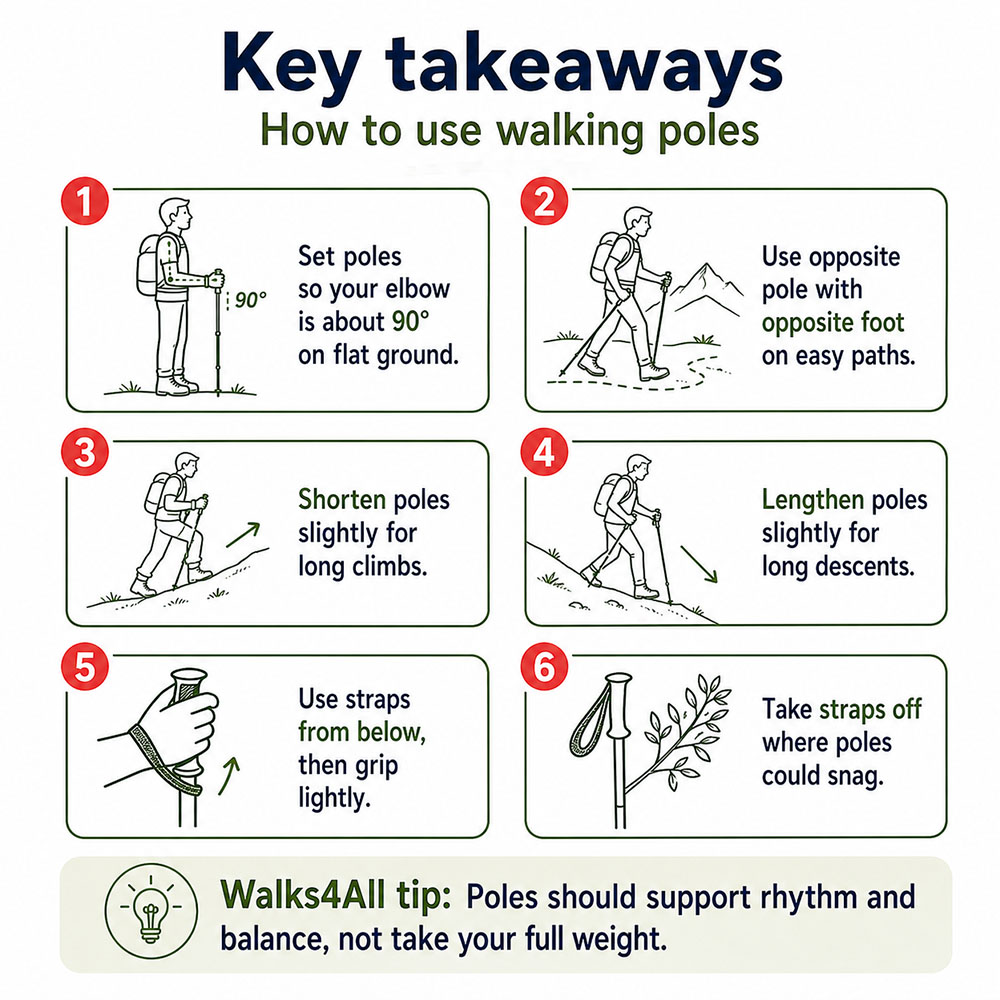
Straps are not always helpful and can become a hazard on steep or technical terrain. Knowing when to use them or remove them entirely is critical for your safety.
Flat and Rolling Terrain
On even ground, use straps to maintain rhythm and conserve energy for the long haul. Keep your elbows bent at ninety degrees and plant the pole opposite your forward foot.
Push down through the strap as you step and let go slightly between plants. This synchronizes your upper and lower body, turning each pole plant into forward momentum.
Expert Note: On long flats, let the pole swing freely between plants and only re-grip when planting to mimic Nordic walking.
Uphill Sections
On moderate climbs, straps help maintain balance and reduce strain on your legs. Adjust your pole length shorter for steep inclines and use the strap to support weight lightly.
Keep your grip relaxed and avoid pulling yourself up aggressively. However, on very steep or rocky ascents, you should skip the strap entirely.
Grip the pole shaft directly below the handle to use the extended grip for better leverage. This keeps your arms free to release quickly if you slip on loose rock.
Downhill Sections
Never use straps on steep descents because they pose a significant injury risk. If you fall, a strapped pole can twist your wrist or prevent you from breaking your fall with your hands.
Remove your hand from the strap completely and hold the pole by the grip or pommel. Use the poles like ski poles by planting one, stepping around it, and applying pressure through the top for braking.
This gives you full control and instant release if you lose your footing on the trail.
Visual cue: If you are leaning back and braking with your legs, it is time to unstrap immediately.
Maintain and Inspect Straps Regularly
Even perfect technique fails with worn gear since straps degrade over time from UV exposure and sweat. Regular inspection ensures your equipment remains safe and functional.
Check for Wear Monthly
Look closely for fraying on the webbing edges and test the buckle function. Ensure the locking mechanism secures tightly and inspect stitching near the attachment point.
Replace straps immediately if any part shows damage, as most manufacturers sell replacement kits.
Clean After Muddy or Wet Hikes
Dirt and moisture break down materials fast, so clean your gear after every wet trip. Wipe down the strap with a damp cloth and remove mud from the buckle mechanism.
Air dry the straps completely before storage and never store them while wet or folded.
Warning: Never dry straps with direct heat from a radiator or dryer because it weakens the fibers.
When to Skip Straps Altogether
Straps are not mandatory, and experienced hikers often go strap-free in certain conditions. Understanding these scenarios helps you prioritize control over efficiency.
Scenarios to Hike Without Straps
- Technical scrambling: You need quick release and flexible hand placement on rocks.
- Fast trail running: Straps slow hand entry and exit during rapid terrain changes.
- Snow or ice: Wet straps freeze to gloves, so use wrist loops or bare grips instead.
- Crowded trails: Avoid accidental hooking on other hikers in tight spaces.
In these cases, direct grip control matters far more than energy efficiency.
Pro Tip: Some hikers use shorter straps or removable models for versatility if they switch modes often.
Troubleshoot Common Strap Issues
Even with correct use, problems arise, but you can fix most of them fast with simple adjustments.
Strap Slips Off Wrist
Cause: The strap is too loose or you entered with your hand incorrectly.
Fix: Re-enter your hand from below and tighten the webbing across your palm.
Hand Numbness or Tingling
Cause: The strap is pressing directly on palm nerves.
Fix: Loosen the strap slightly and ensure padding is centered under your hand.
Buckle Won’t Stay Closed
Cause: Dirt is stuck in the mechanism or the clip is worn out.
Fix: Clean the buckle with a toothbrush or replace it if damaged.
Strap Feels Restrictive
Cause: You are using a ski-style grip or the pole length is incorrect.
Fix: Use the full-arm technique and trim excess strap length for a better fit.
Final Tips for Long-Distance Comfort
Mastering how to use trekking pole straps is about endurance, safety, and efficiency on the trail.
Key Takeaways
- Adjust straps before every hike to account for hand swelling.
- Use full-arm drive through the strap instead of a tight hand grip.
- Remove straps on steep downhills to prevent wrist injury.
- Inspect gear monthly for wear and clean after wet hikes.
- Avoid the ski-style hand-over loop method entirely.
Upgrade Considerations
If your poles came with basic straps, consider replacing them with padded, ergonomic designs. Quick-adjust buckles and removable models offer great versatility for mixed terrain hiking.
Some hikers even switch to trail running poles with minimalist grips and no straps for speed. Choose the setup that keeps you moving comfortably for miles.
Frequently Asked Questions About Trekking Pole Straps
How should I wear trekking pole straps correctly?
Slide your hand up through the bottom of the loop so the strap crosses your palm. Grip the handle lightly and push down through the strap with your forearm to reduce hand fatigue.
Should I use trekking pole straps on downhill sections?
No, you should never use straps on steep descents. If you fall, the strap can trap your hand and cause wrist injuries, so hold the pole by the grip instead.
Why do my hands hurt when using trekking poles?
Hand pain usually comes from gripping the pole too tightly or using a ski-style loop. Use the strap to support your weight and keep your fingers relaxed to prevent cramping.
When should I not use trekking pole straps?
Skip straps during technical scrambling, fast trail running, or on icy trails where quick release is vital. They are also unsafe on steep downhills where a fall could twist your wrist.
How tight should trekking pole straps be?
The strap should be snug enough to support your hand when your fingers are open but loose enough to avoid cutting off circulation. Test it by opening your hand; the pole should stay suspended.
Key Takeaways for Using Trekking Pole Straps Safely
Using trekking pole straps correctly transforms your hiking experience by reducing fatigue and improving propulsion. Remember to thread your hand from the bottom, push through your forearm, and always remove straps on dangerous descents.
Practice these techniques on your next flat trail before tackling steep terrain. With the right adjustments, you will hike longer with less pain and greater stability.