
You’re halfway up a steep mountain trail, lungs burning, legs heavy, and your breath coming in short, panicked gasps. Sound familiar? Most hikers focus on gear, fitness, and navigation—but overlook the one thing they do thousands of times on every hike: breathe.
Breathing techniques for hiking aren’t just about catching your breath—they’re a powerful tool to boost endurance, reduce fatigue, and make tough climbs feel easier. When you optimize your breathing, you work with your body, not against it. You stay in the aerobic zone longer, recover faster between switchbacks, and maintain steady energy from trailhead to summit.
This guide reveals the science-backed breathing techniques used by elite hikers, mountaineers, and outdoor educators. From diaphragmatic breathing to rhythmic step patterns and altitude-specific strategies, you’ll learn how to synchronize your breath with movement, control your pace, and train your respiratory system like a pro. Whether you’re tackling a 14er or a weekend trail, mastering breathing techniques for hiking transforms how you move through the mountains.
360° Breathing: Unlock Full Lung Capacity
Efficient hiking starts with how you inhale and exhale. Most people breathe shallowly into the chest, but 360° breathing—also known as diaphragmatic or belly breathing—engages the full lung capacity and powers long-distance endurance.
How to Perform 360° Breathing
- Lie on your back, knees bent, feet flat.
- Place one hand on your chest, the other on your belly.
- Inhale slowly through your nose (4–5 seconds), feeling your belly rise, ribs expand sideways and back, and chest lift slightly.
- Exhale through pursed lips (6–8 seconds), gently drawing the lower abdomen inward like zipping up tight jeans.
- Focus on even, full expansion—front, sides, back, and bottom.
Think of your torso as a balloon inflating in all directions.
Why It Works on the Trail
- Activates the diaphragm, the most efficient breathing muscle.
- Reduces reliance on neck and shoulder muscles, preventing tension.
- Increases oxygen delivery while lowering heart rate.
- Enhances core stability by coordinating the diaphragm and pelvic floor.
Pro Tip: Practice 3 sets of 5–10 breaths daily. Make it automatic before hitting the trail.
Pressure Breathing: Power Through Steep Ascents
When the trail turns vertical, standard breathing may not cut it. Pressure breathing—a forced exhalation technique—clears carbon dioxide and makes room for more oxygen with each breath.
How to Use Pressure Breathing
- Inhale deeply through your nose.
- Exhale forcefully through pursed lips or a slightly open mouth, engaging your abdominal muscles.
- Aim for a “ha” or “pfft” sound—like fogging a mirror.
- Repeat rhythmically with each step on steep ascents.
Used by high-altitude climbers above 20,000 feet to maintain oxygen saturation.
Best For:
- Long, grueling uphill sections
- High-altitude trails (above 8,000 ft)
- When you feel breathless despite pacing
Warning: Don’t overdo it early. Save pressure breathing for when you need it—like the final push to the summit.
Rhythmic Breathing: Sync Your Steps to Your Breath
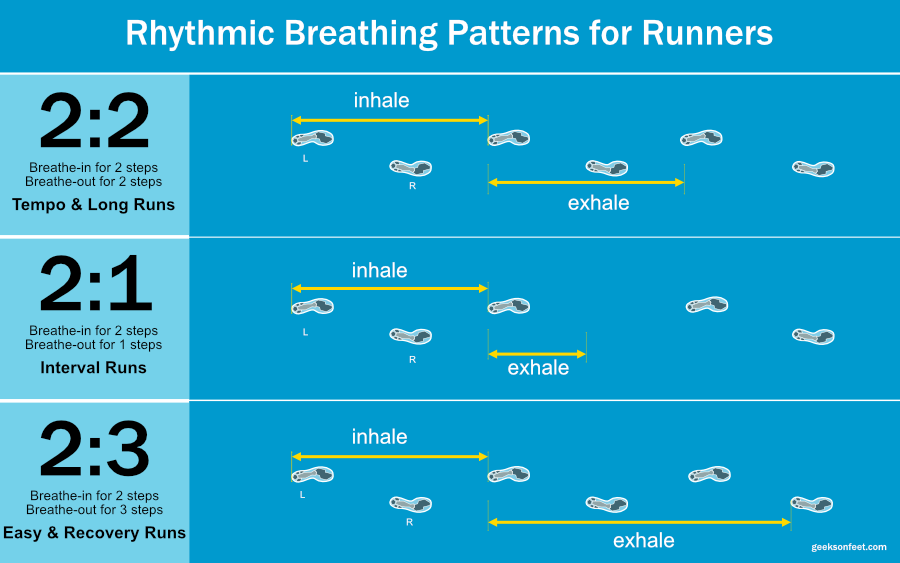
Pacing is everything in hiking. The rhythmic breathing method, popularized by NOLS founder Paul Petzold, uses breath to control effort—so you don’t burn out before the halfway point.
Step-to-Breath Ratios by Terrain
| Terrain | Ratio | Technique |
|---|---|---|
| Flat ground | 3:3 | 3 steps inhale, 3 steps exhale |
| Slight incline | 2:2 | 2 steps per breath |
| Steep climb | 1:1 | 1 step inhale, 1 step exhale |
“The breath sets the pace—not your legs.”
How to Apply It
- Pick a ratio based on slope.
- Breathe through your nose on inhale, mouth on exhale.
- Adjust stride length to maintain the rhythm.
- Let your body slow down naturally—don’t strain.
Result: Steady energy output, reduced heart rate spikes, and no “run-and-stop” fatigue.
Trekking Pole Sync
If you use poles, double the rhythm:
– Inhale: Right foot + left pole forward.
– Exhale: Left foot + right pole forward.
This full-body coordination improves balance and breathing efficiency.
Nose Breathing: Stay Aerobic and Avoid Burnout
Want to hike longer without gasping? Nose breathing is your secret pacing tool.
Why Nose Breathing Works
- Restricts airflow, naturally capping intensity.
- Keeps you in the aerobic zone, where fat is burned efficiently.
- Reduces lactic acid buildup.
- Warms and filters air—critical in cold or dusty conditions.
How to Practice
- Inhale through the nose for 3–4 steps.
- Exhale through the mouth for 4–6 steps (to fully release CO₂).
- If you can’t maintain it, slow down.
“If you can’t talk in full sentences, you’re out of your aerobic zone.”
Bonus: Nose breathing calms the nervous system—fewer jitters on exposed ridges.
Conversational Pace: The Talk Test for Sustainable Hiking
Can’t nose breathe due to allergies or congestion? Use the conversational pace instead.
How It Works
- Hike at a speed where you can speak full sentences without pausing for breath.
- If your speech breaks up, you’re going too hard.
- Adjust stride or take a brief pause to reset.
This isn’t about fitness—it’s about oxygen efficiency.
Perfect for: Long-distance hikes, beginner hikers, or high-altitude acclimatization.
Optimal Posture: Breathe Easier with Better Alignment
Even perfect technique fails with bad posture. How you hold your body directly affects lung expansion.
Avoid These Postures
- Slouching forward: Compresses the diaphragm and limits ribcage expansion.
- Overarching lower back: Flares ribs, reduces abdominal engagement.
- Hunching shoulders: Restricts upper lung space.
Optimal Uphill Posture
- Slight forward lean from the ankles (not waist).
- Spine neutral, head stacked over pelvis.
- Shoulders relaxed and slightly back.
- Eyes focused 10–15 feet ahead.
Imagine a rope pulling you forward from your chest—smooth and balanced.
Upper Body Support Tips
- Trekking poles: Reduce load on legs, open the chest, and improve rhythm.
- Hands on thighs: Use during “rest-stepping” to offload upper body.
- Hands on hips: Opens ribcage slightly—helpful on short breaks.
Train Your Breath Off the Trail
Breathing is a skill—and the best hikers train it deliberately. These drills build respiratory strength and core control.
Hookline 360° Breathing
Purpose: Train full diaphragmatic engagement.
How to Do It:
– Lie on back, knees bent.
– Inhale for 5 seconds, filling pelvis to chest.
– Exhale for 10 seconds, “zipping up” from lower abs.
– Hold at end of exhale (3–5 sec), then release.
– Repeat 3 sets of 8–10 breaths.
Simulates the “rebound” breath used during hiking exertion.
Pallof Press with Backpack
Purpose: Build core stability under load while breathing.
How to Do It:
– Anchor resistance band at chest height.
– Wear a light backpack (10–15% body weight).
– Stand sideways to anchor, hold band at sternum.
– Exhale as you press forward (no rotation).
– Inhale as you return.
– 3 sets of 8 reps per side.
Mimics breathing under pack strain—great for steep terrain prep.
Breathing Lunges with Band
Purpose: Coordinate breath with movement.
How to Do It:
– Anchor band at knee height.
– Step into band, other foot back.
– Inhale as you lunge down (2 counts).
– Exhale as you rise (2 counts).
– Keep ribcage stacked over pelvis.
– 3 sets of 8 reps per side.
Builds hiking-specific endurance with breath control.
Pranayama for High-Altitude Hiking
Yogic breathing techniques—pranayama—are proven tools for altitude acclimatization and mental focus.
Diaphragmatic Breathing (Daily Practice)
- 5–10 minutes daily.
- Focus on deep belly expansion and full exhalations.
- Best done lying down or seated.
Benefits: Calms nerves, improves O₂/CO₂ exchange.
Anulom Vilom (Alternate Nostril Breathing)
How to Do It:
– Sit upright, spine straight.
– Close right nostril, inhale left (3 sec).
– Close both, hold (optional).
– Open right, exhale (6 sec).
– Inhale right, close, exhale left.
– Repeat 5–15 rounds.
Benefits: Balances nervous system, reduces anxiety.
Ideal before sunrise hikes or high-exposure sections.
Avoid if: High blood pressure, pregnancy, heart conditions.
Kapalbhati (Skull Shining Breath)
How to Do It:
– Sit tall.
– Passive inhale.
– Forceful abdominal exhale (belly snaps in).
– 30 reps per round, 1–5 rounds.
Benefits: Clears airways, boosts lung capacity.
Not recommended at extreme altitude without acclimatization.
Avoid if: Hypertension, gastric issues, recent surgery.
Adapt Breathing to Environmental Conditions
Environmental conditions demand breathing adjustments.
High Altitude (Above 8,000 ft)
- Oxygen drops—pace becomes critical.
- Use rhythmic breathing (1:1) and pressure breathing.
- Practice pranayama for 4–6 weeks pre-trek.
- Ascend slowly—allow time to acclimatize.
Used on early K2 expeditions to manage thin air.
Cold Weather Breathing
- Inhale through nose to warm and humidify air.
- Exhale through mouth to release moisture.
- Wear a neck gaiter or balaclava to trap heat and prevent bronchospasm.
Avoid rapid mouth breathing—it can trigger coughing or chest tightness.
Bug Season: Breathe Through Your Nose
- Open-mouth hiking = higher chance of inhaling bugs.
- Switch to nose breathing in mosquito or black fly zones.
- Wear a buff or face mask if needed.
“I’ve inhaled my share of midges. Now I keep my mouth closed—and my breath steady.”
Avoid These Common Breathing Mistakes
Even experienced hikers make these errors—don’t let them sabotage your hike.
Shallow Chest Breathing
- Problem: Uses neck muscles, reduces oxygen intake.
- Fix: Practice 360° breathing daily until belly breathing becomes automatic.
Holding Breath During Effort
- Problem: Increases blood pressure, causes dizziness.
- Fix: Exhale during exertion—like stepping over a log or lifting a leg.
Mouth Breathing at Low Intensity
- Problem: Activates stress response, dries airways.
- Fix: Use nose breathing or conversational pace to stay relaxed.
Over-Striding Uphill
- Problem: Wastes energy, increases oxygen demand.
- Fix: Take shorter steps, increase cadence, sync with breath.
Poor Pack Fit
- Problem: Hip belt or chest strap restricts diaphragm.
- Fix: Adjust load so weight sits on hips, not shoulders. Loosen chest strap slightly.
Rest-Step and Recovery Breathing

Use micro-pauses to reset your breath and legs.
Rest-Step Technique
- Lock your forward knee on each step.
- Shift weight onto the straight leg.
- Take a deep 360° breath.
- Swing the other leg forward.
Allows momentary muscle recovery without stopping.
Best for: Long, steep ascents.
Break Breathing Routine
Every 15–20 minutes:
– Stop and stand tall, pack off if needed.
– Take 3–5 full, deep breaths.
– Perform forced exhalation to clear CO₂.
– Stretch shoulders and neck.
Prevents breath stacking and mental fatigue.
Final Tips: Train Your Breath Like a Pro
Breathing is a skill—and the best hikers train it deliberately.
By Experience Level
- Beginners: Focus on conversational pace and 360° breathing on flat trails.
- Intermediate: Add rhythmic breathing and short hill repeats with breath focus.
- Advanced: Practice pranayama, interval training, and pressure breathing.
Off-Trail Training
- Practice breathing drills 2–3 times per week.
- Combine with core work or yoga.
- Simulate trail conditions (e.g., wear pack during lunges).
“You train your muscles to perform. Time to train your breath, too.”
Summary: 10 Breathing Rules for Hiking
- Breathe deep—use full lung capacity.
- Exhale longer—clear CO₂ for better O₂ intake.
- Sync breath to steps—use 3:3, 2:2, or 1:1 ratios.
- Nose breathe when possible—stay aerobic.
- Talk test it—if you can’t speak, slow down.
- Maintain posture—neutral spine, open chest.
- Use trekking poles—improve rhythm and reduce load.
- Train off-trail—make breathing automatic.
- Adapt to altitude—use pressure and pranayama.
- Listen to your body—adjust in real time.
Mastering breathing techniques for hiking isn’t just about performance—it’s about presence. When your breath is steady, your mind is calm, your legs feel lighter, and the trail feels less like a battle and more like a journey. Whether you’re hiking for fitness, adventure, or peace, your breath is your constant companion. Learn to work with it, and you’ll go farther, feel stronger, and enjoy every step.